Custom Wood Insignia – Paralee and Aaron’s Wedding – Curly Maple – DIY

Our friends Paralee and Aaron got married last week in one of the coolest wedding ceremonies we’ve had the privilege of attending. They literally got married on a mountain, inviting their guests to ride the ski lift at Arapahoe Basin, Colorado to the ceremony at the mountain lodge. For the procession, everyone watched as Paralee and her father rode the ski lift to the top and then walked down the aisle. They served keg after keg of Aaron’s homebrew at the reception, along with Elk medallions and squash bisque. It was super cool.

For such a unique couple, we wanted to give them a gift that was also unique. Since I’ve been playing around with woodworking over the last six months, I had the idea that maybe I could cut their wedding insignia out of some fancy wood. Go.
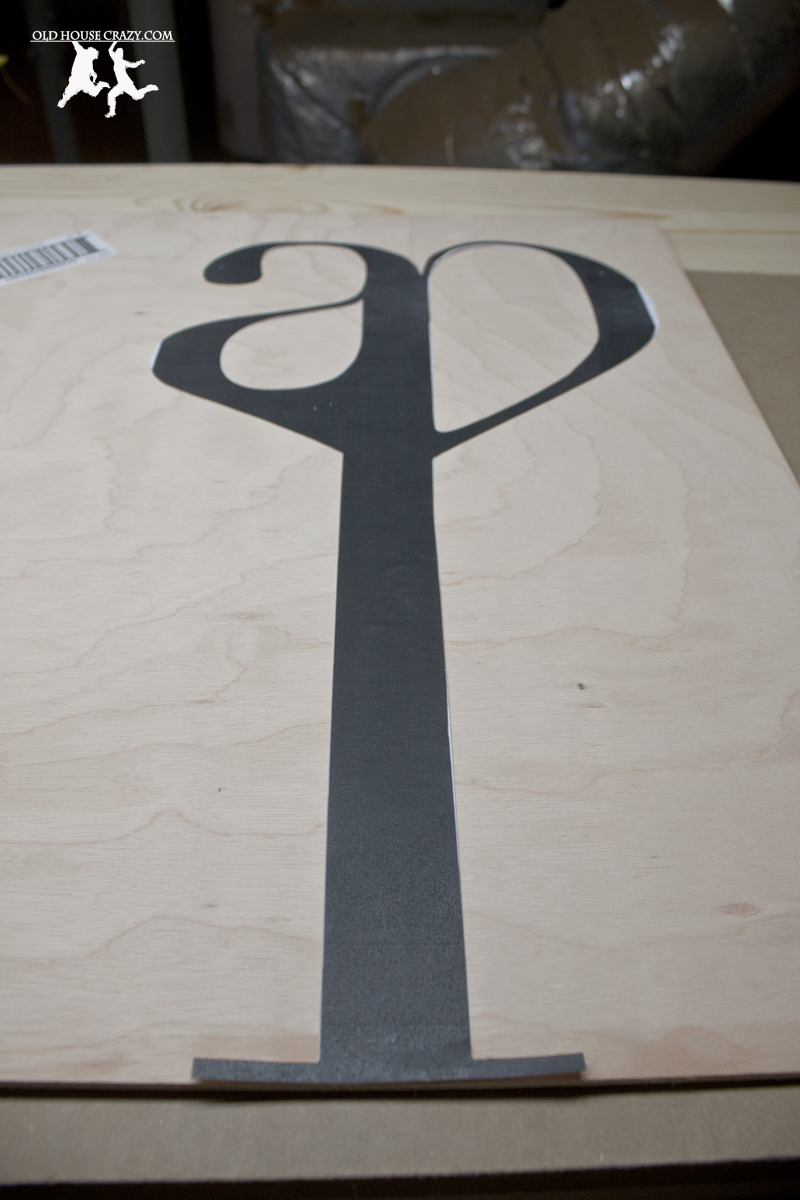
Making the template out of 1/4″ plywood, a printout of the image, and double sided tape.

In order to begin, I asked Paralee to send me the large format image file of the insignia via email. I wanted the gift to be mostly a surprise, but couldn’t get started without the actual file. I told her it was for a homemade gift and hope she forgot about it until the wedding. After I’d gotten the file, I went to Fedex Office (RIP Kinkos) and had them print the file at 24″ x 12″ on a big sheet of paper. Combined with the double sided tape I purchased, I spent about 10 bucks there.

Using the double sided tape, I attached the paper to a 1/4″ thick piece of plywood and cut the outline with an exacto knife, leaving a thin groove in the shape of the insignia. For the actual gift insignia, I wanted a wood that was beautiful by itself, so I made a trip to Rockler in Sandy Springs. The guys there helped me choose Curly Maple for the project because of its unique wood grain. If you look in the photos, you can see that the wood looks like it is rippled, almost like waves on the surface of a puddle. The wood is actually perfectly smooth. Very cool. The seven foot board cost about thirty bucks and I’m using the scrap to make two bread boards (posts coming soon).

A major problem I ran into was the fact that the insignia was 12 inches wide, but the widest board I could find was 7 inches wide. In order to complete the project, I needed to join two sections of the board. I cut two lengths of board, 24″ and 10″ and positioned them side by side to accommodate the insignia, as seen in the photo above. Now, the boards weren’t perfectly flat-sided when I bought them, so Don over at Out Yonder Studios used his jointer to smooth the edges perfectly flat.
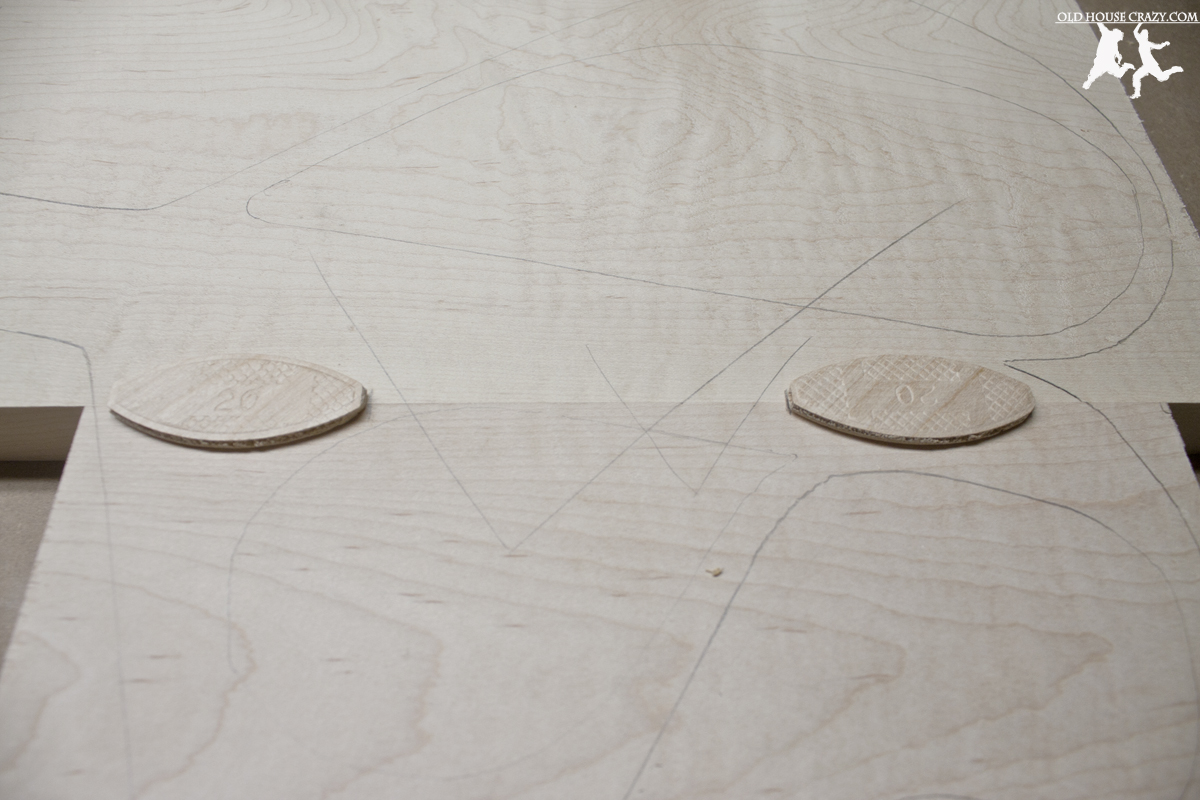
Once the boards were perfectly flush, I traced the design of the insignia onto the boards with a pencil. It fit very nicely. For the actual joinery, I used two biscuits, cut into the thickest parts of the insignia.

You can see in the photo above how the biscuits will just barely fit inside the design. That’s cool, just so long as I don’t fudge the cuts.

I spread glue into the biscuit slots and along both surfaces, then clamped them tightly and placed some heavy boards above and below to make sure the boards would dry flat.

You can see in the photo above where the boards are glued together in the design. After sanding, the glue line vanished.

I had originally planned to cut the design out using the template and the router, but decided in the end to use the jigsaw. I’d been using the jigsaw on a couple of other projects and my confidence level was up. I would not recommend using a jigsaw on something precise like this unless you’ve had some practice on several other projects. Even with my increased confidence, I still had to use the rasp and sander to reshape several mistakes.

In order to cut out the inside of the letters, I drilled a 1/2″ hole first.
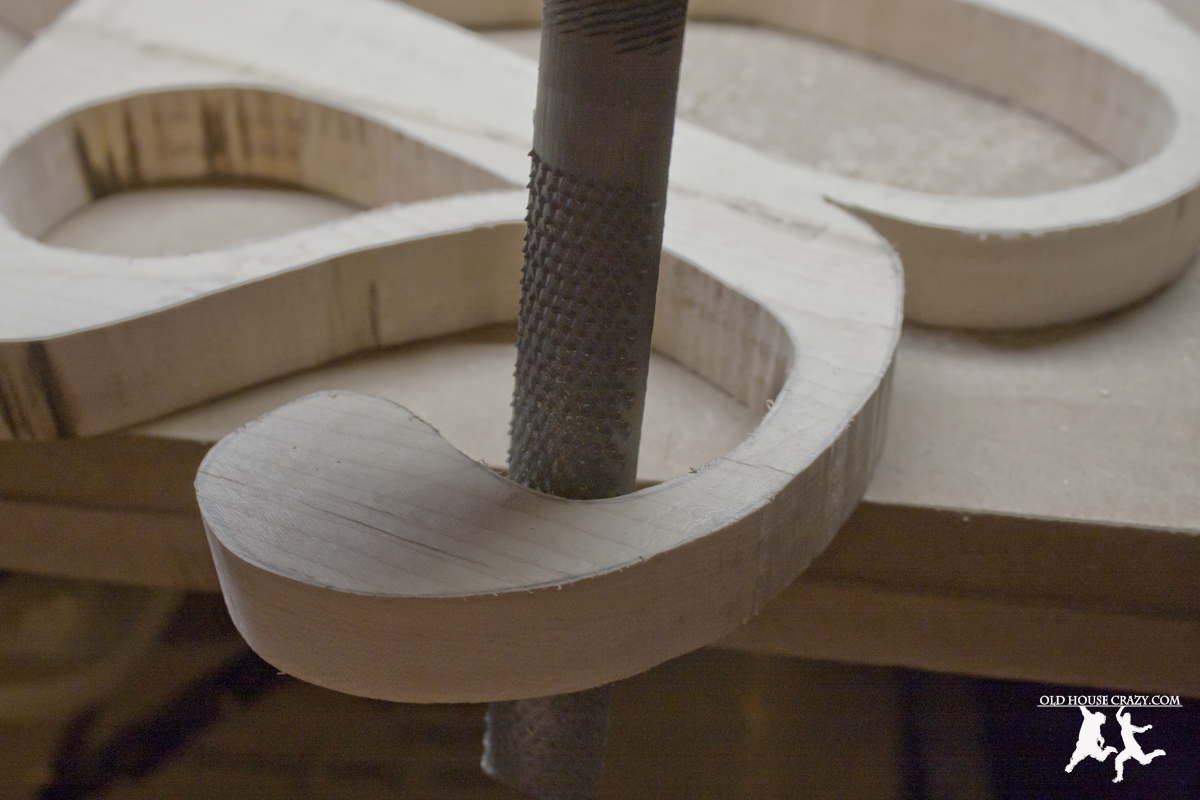
I used a shoe rasp to round out the curves nicely and to clean up my blunders with the jigsaw. The shoe rasp worked really nicely for this, as seen in the photo above. The final step was to round over the edges using my router and a 1/4″ round over bit.

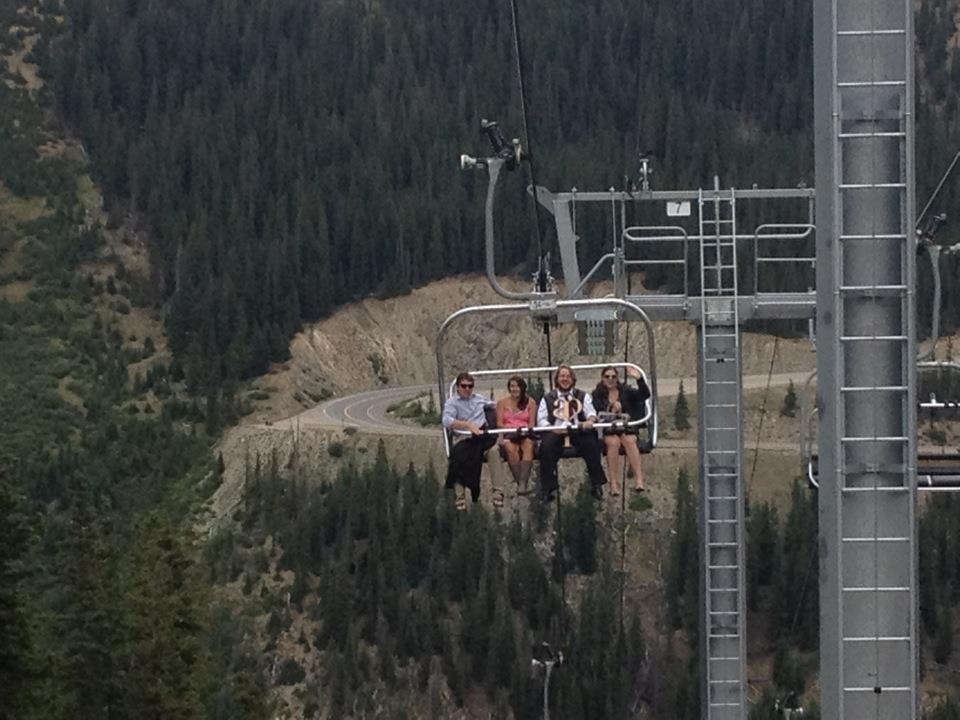
So my major blunder of this project was that I didn’t take any photos of the finished product. After rounding over, I sanded like crazy and applied a single coat of polyurethane to the top, stuffed it in my suitcase, and flew to Colorado. The photo below was taken by our friend Jeanne during the ski lift ride to the wedding. You can see me holding the finished insignia in my lap with a death grip. It was my first ever ride on a ski lift and there wasn’t any soft snow below us to cushion the fall I was sure I’d have if I breathed in too heavily. Heights aren’t my favorite.
If you’ve got any questions about this post or suggestions for the blog, contact us at oldhousecrazy@gmail.com or leave a comment below. Subscribe to the blog via email in the upper right corner of the page. Thanks for reading. -Robby
Posted in Better than store bought, DIY, Home made, Milestones, Tools and Techniques, Woodworking | Tagged , , , , , , , , | 1 Comment

Scraping Paint From Decorative Moulding – DIY – Video

Is it molding or moulding? This is one of those words that has different spellings in American English and British English, much like colour/color and soccer/football. For this particular word, I prefer the British version because the American version makes me think of that black stuff around the edge of a dirty shower. I don’t like that stuff.

As I’ve scraped the way around my house, I’ve pretty much neglected the moulding around the window boxes because of the decorative profile of the wood. I’ve done this mainly because my scraper blade is flat, not decorative. Scraping a round object with a flat blade presents problems that can be hard to remedy/repair. However, now that I’m on the front of the house, I want to remove the paint from every surface so that when people see it up close, it looks brand new and fresh.

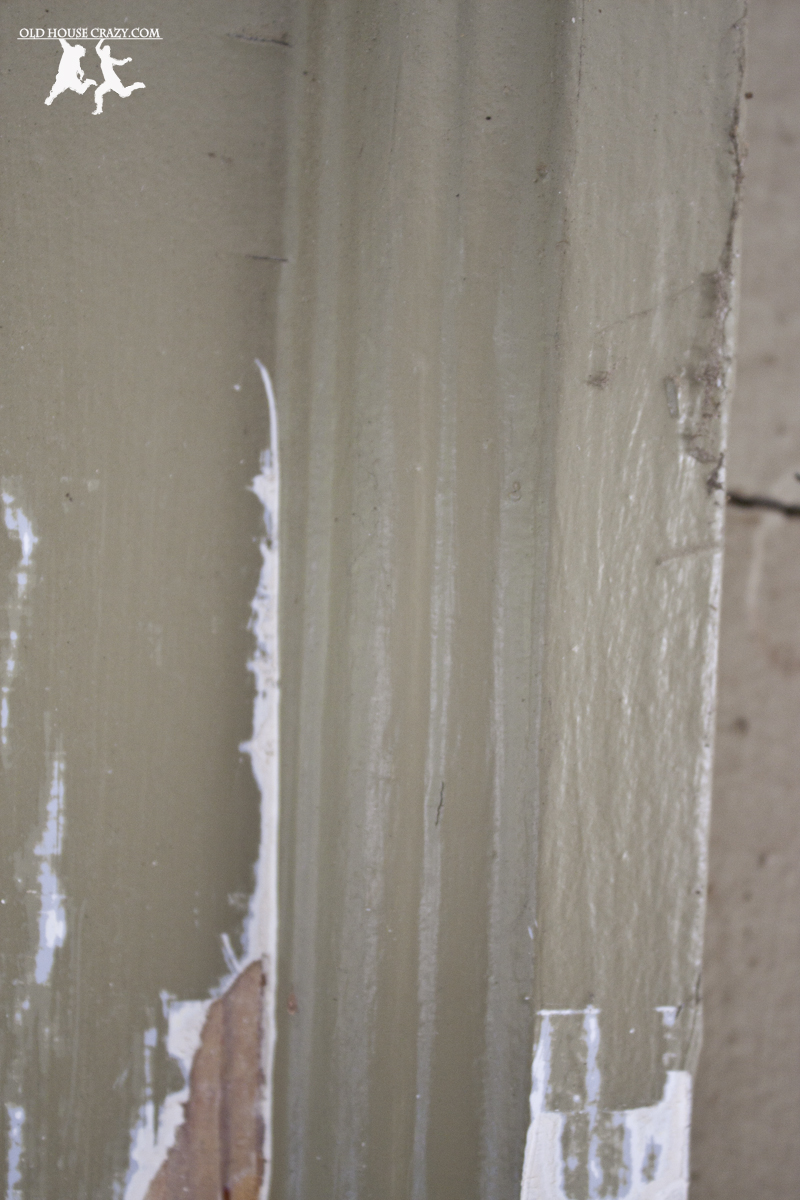
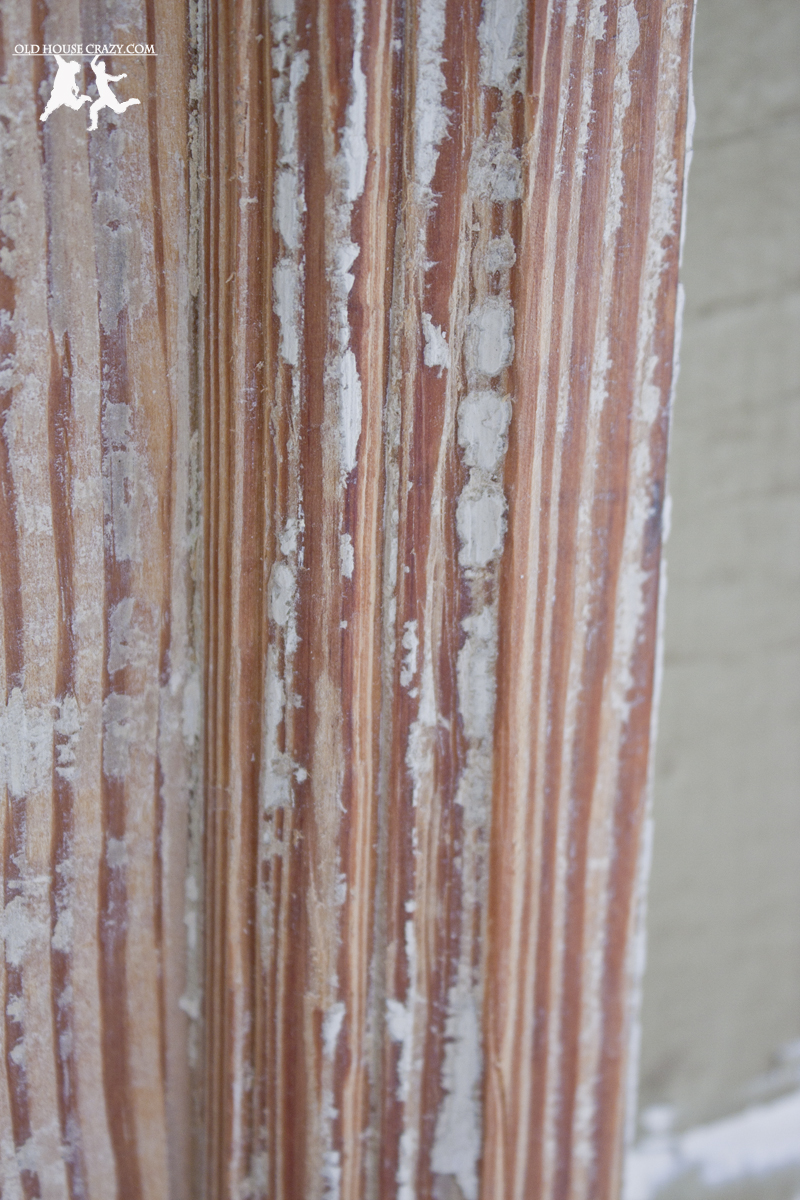
The many layers of paint have made this multi-layered moulding look very simple. Scraping the paint off of this piece presents some problems.

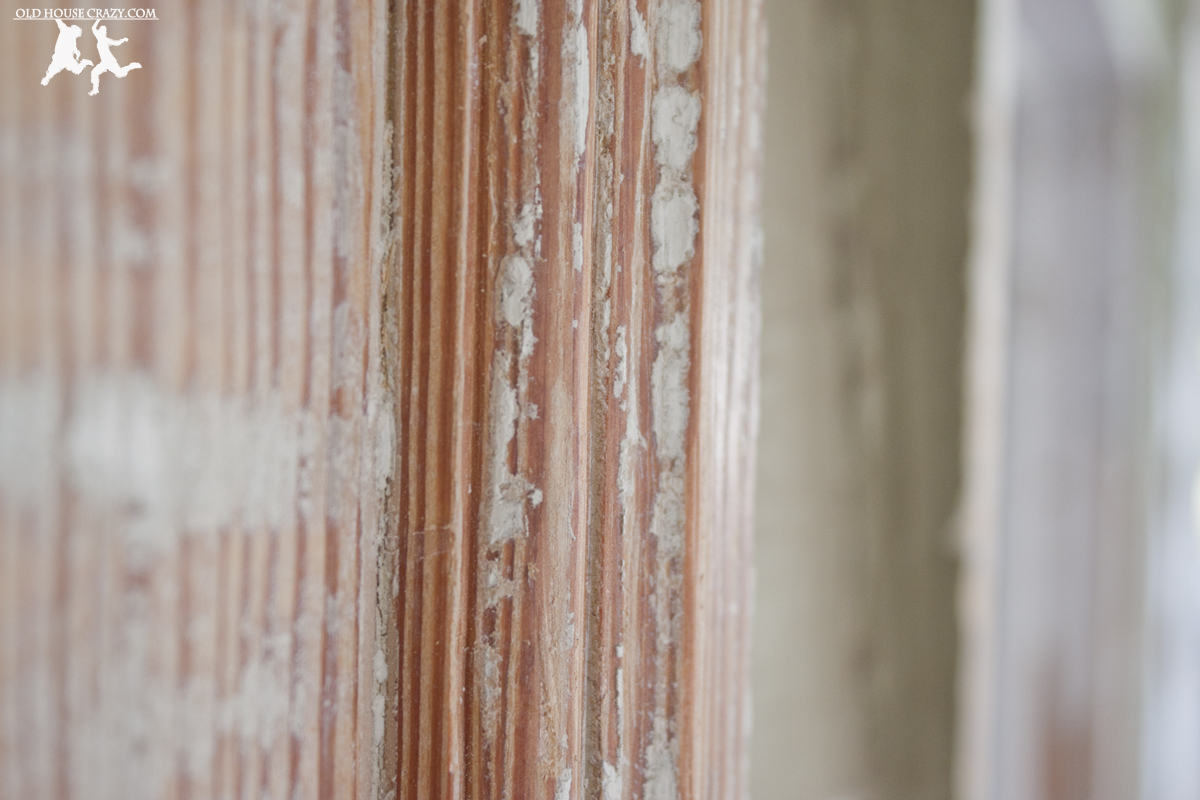
My primary concern when scraping this moulding is to preserve its shape without gouging the wood with my scraper blade. The blade is very sharp and can easily do more harm than good. To properly scrape these details, I had to remove some of the paint from the convex section of the moulding until I could get the edge of the blade into a 90 degree corner in the design. Once I had access to this corner, I was able to remove the paint pretty quickly.

If you’re thinking of doing something similar to what I’ve done here, I suggest you practice your scraping skills for a while before you attack the moulding. The scraper can get out of control really easily when you’re applying enough force to remove many layers of old paint. The other option, which I haven’t tried yet, is to purchase a set of decorative edge scrapers from a hardware store. I don’t think the big box stores carry them, but you can purchase them online or at a local woodworking store. Here’s a link to some from Highland Woodworking in Atlanta.

A third option is to just remove the old moulding and replace it with some new stuff. I don’t want to do this because the moulding, like the siding on our home, is made of heart pine that’s almost a hundred years old. I feel like replacing boards that aren’t rotten would really take away from the character of our old home.

If you’ve got questions about this post or suggestions for the site, email us at oldhousecrazy@gmail.com or leave a comment below. Subscribe to our blog in the top right corner of the page. Thanks for reading. – Robby

Posted in DIY, Don't Hire a Professional, Exterior Maintenance, Heart Pine, House Repairs, Painting, Tools and Techniques | Tagged , , , , , , , | 2 Comments

Scraping Paint – DIY – Video

In a few of our posts, we’ve mentioned our multi-year battle with painting our crazy old house. When we drop the fact that we’ve been painting the exterior of our house for two years into light conversation, people usually give us a look of mixed pitty and something that resembles the way you look at a kid who’s trying too hard to be an adult (like aww, isn’t he special, he sucks so bad at what he’s doing, but he really seems like he’s trying).

There are actually many reasons to explain why it’s taken us so incredibly long, but the major factor is simple: scraping paint is awful. It’s the hardest job I’ve ever taken on. It takes a lot of muscle, but also required finesse or you’ll damage your siding. The scraper blade has to touch every inch of your house. It is unforgiving. It’s hot outside. Netflix has unlimited streaming. Beer tastes good. I could continue, but I think you get the point.

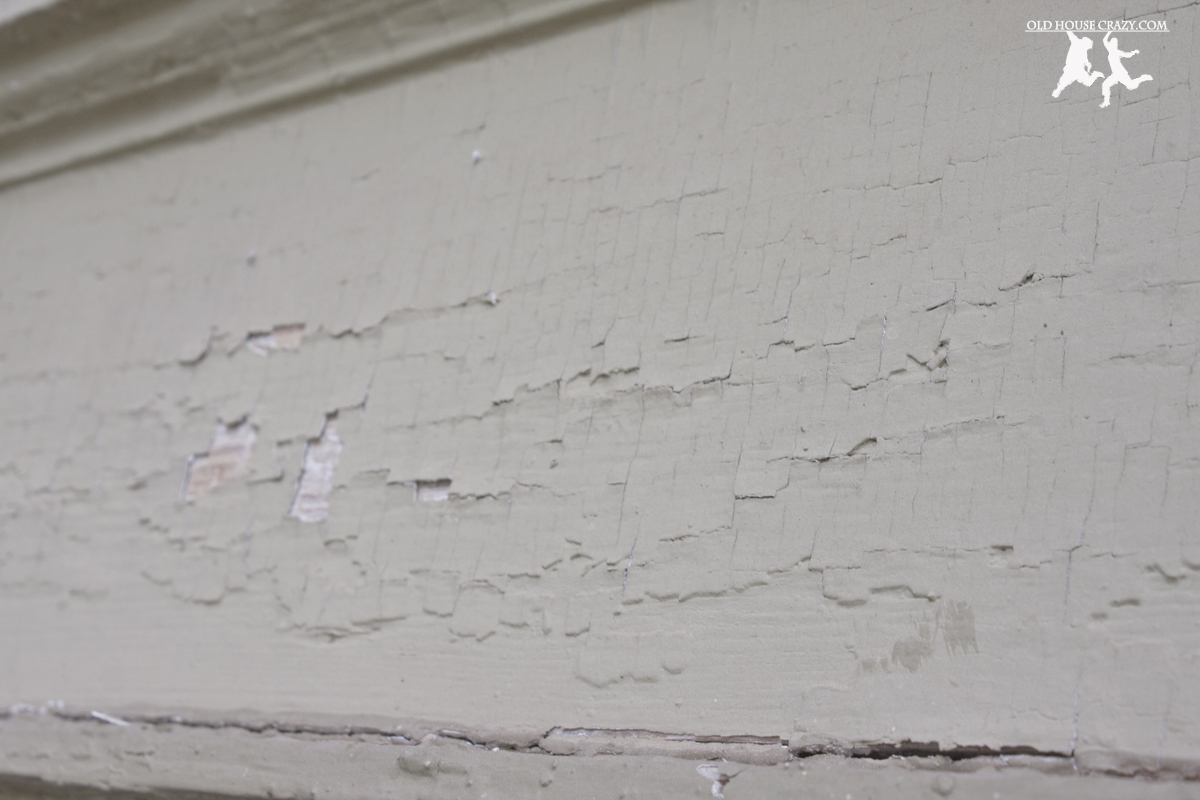
Much of the paint on our house was chipping badly. You can’t paint over this without cleaning it up first. If you do paint directly over this, the new paint will also chip quickly and you’ll void your paint’s warranty.

If you’re thinking of painting your house, there are a few things you need to consider before you take on the job of scraping. First, the big question: does the paint need to be scraped? If it doesn’t, just paint following the directions on the can and you’re good. If your paint looks like the two photos above and below this paragraph, you need to scrape. In the photograph above, the paint is chipping and you can see some bare wood. Every single chip must be removed or the new paint will not hold for very long. Unless there is an absolutely seamless bond between your paint and the siding, air and moisture will get under the paint and it’ll bubble, chip, and break. All of those are bad. Properly prepping the wood is by far the most important step in painting. Everybody likes moving the paint brush, but that’s not all that’s included in a painting job. It’s actually the smallest part.

This paint isn’t chipping, but still looks terrible. It must be scraped.

In the photo above, you can see a board that isn’t chipping, but still looks completely awful. This leads me to the second question you need to ask yourself before you take on a scraping job: Do I want to scrape it all off? If you only remove the paint that is chipping, you’ll leave behind quite a bit of paint that is still intact and firmly bonded to the wood. If you paint over these partially scraped surfaces, the new paint will hold just fine, but it’ll look like the photo above. You can see where some of the old paint was removed by a lazy painter. Every surface of our house that wasn’t chipping looked like this. It makes my eyes hurt. I’m not kidding. Physical pain to my eyeballs.

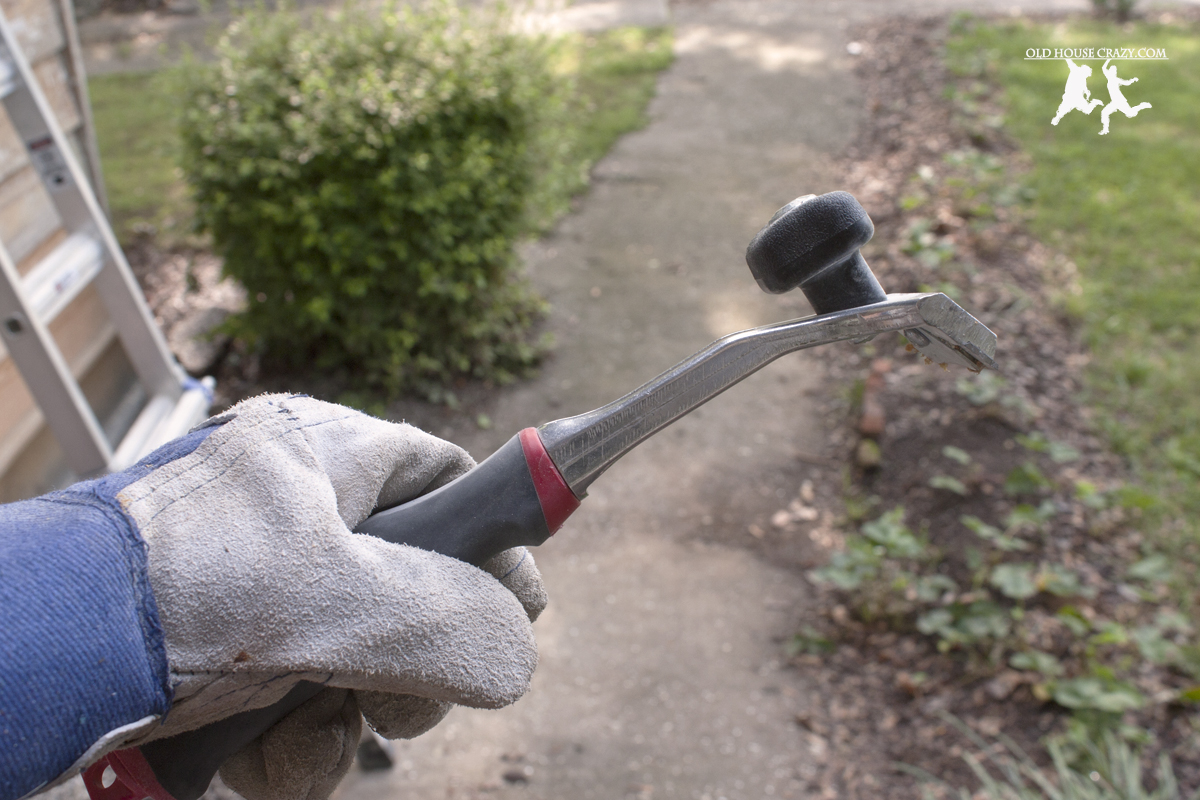
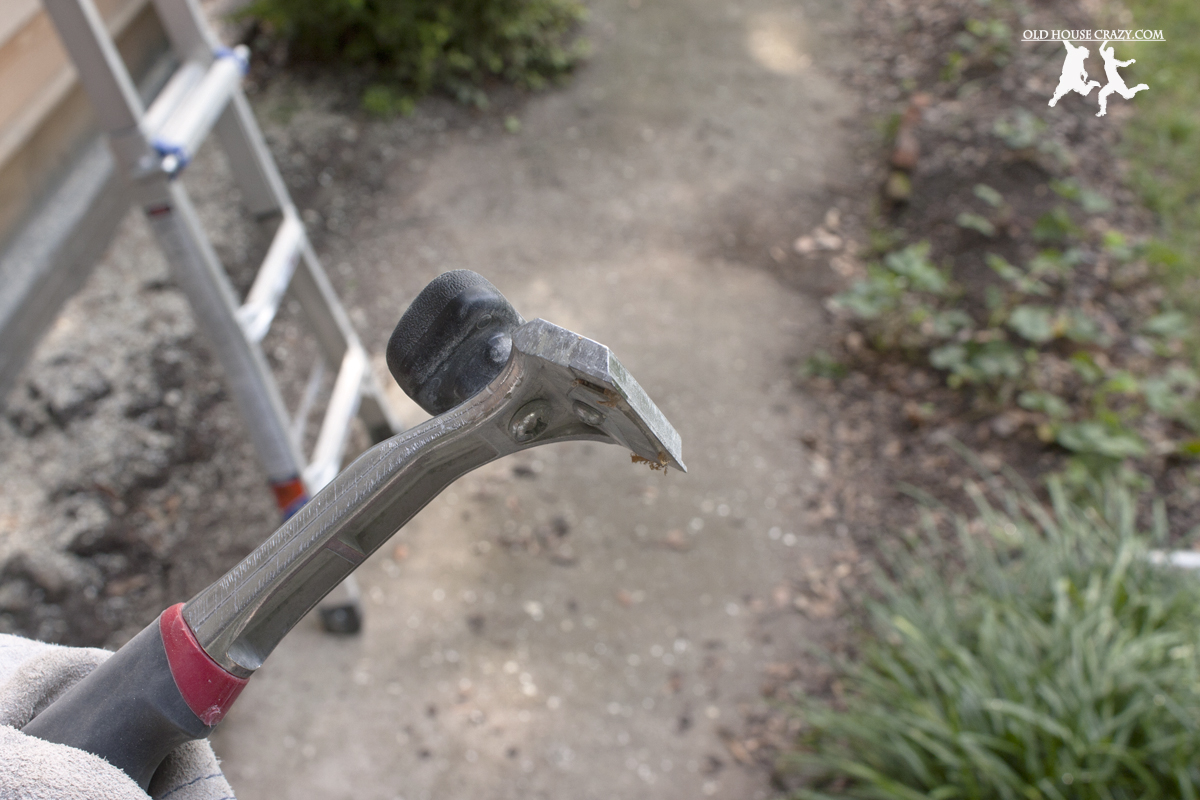
If you’ve decided that you do indeed want to scrape, there are several tools you can use. I’ve tried almost all of the tools of the scraping variety and I’ve found the one in the next two photos to be the best, by far. It has a carbide blade that holds its edge pretty well. The blade is also double-sided so you get two uses out of it before you’ve got to replace it. The major downside to this tool is that it’s kind of expensive to use. Its original cost at Lowe’s is around 14 bucks, but the blades are 9 bucks per blade (two cutting edges). Home Depot doesn’t carry this tool. I’ve only found it at Lowe’s. The time between replacing blades depends on how you use it and how many nails you clip while scraping. Nails damage the blade pretty easily, so be careful.

It’s actually an incredibly simple device. It works exactly the same way shaving works. You take an incredibly sharp blade and move it across a surface, cutting away anything that isn’t flush with the surface. It’s a bit different than shaving in practice. Chin hairs release a whole lot more easily than does old paint. There are a few major things to keep in mind when scraping: It’ll take practice before you can do this with any skill (ask my friend David). Keep the blade parallel with the wood surface or you’ll gouge the wood – Remember, it’s very sharp. Move the scraper only with a pulling motion – pushing will dull the blade. When you get tired, take a break. It’s really hard work. WEAR A RESPIRATOR! If your house is old, that paint is most likely lead-based. Don’t breath the dust. Purchase a nice respirator, not those cheap paper masks.

After you’ve decided that scraping needs to happen, there is still another thing to consider: costs. If you’re hiring a professional painter, they will usually only scrape off chipping paint. If you want it scraped to the wood, it’ll cost much much more. For our small house, combined with the four color paint scheme, it would have cost us around ten grand to hire out the work. The three years of work has been worth that cost to us. It might not be worth it to you. Get some estimates and consider your time before you tackle this job – it sucks.

I’m including our first DIY video with this post. We bought a camera that straps to your head for skiing and biking and stuff, but I figured it would work nicely as a tutorial camera for a first person perspective on work around the house. I’m hoping to include videos with many of our future posts if it’s appropriate. I didn’t get the angle just right in this video, so I’m looking to adjust that in the future.

If you’ve got any questions or suggestions, contact us at oldhousecrazy@gmail.com or leave a comment below. Thanks for reading. -Robby

Posted in DIY, Don't Hire a Professional, Painting, Tools and Techniques | Tagged , , , , , , , | 1 Comment