Protecting the Strawberries from birds – DIY

Gardening is a hobby that Christy and I really enjoy. It’s one of those activities that allow you to work out frustration, feel a connection to the Earth, get your hands dirty, and eat cheap, delicious food. Last March, we decided that we wanted to put something interesting along our front walkway and strawberries were a perfect choice. I mean, who has strawberries in their front yard? Old house crazies, that’s who.
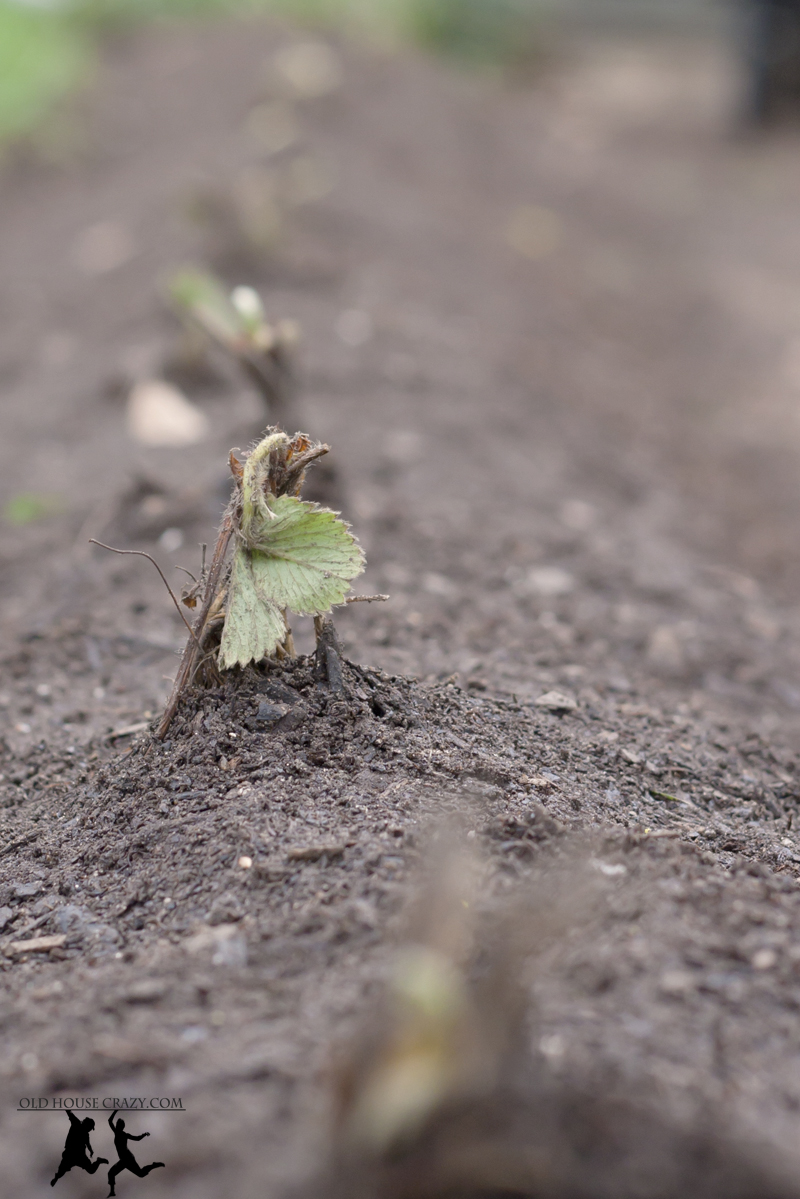
We planted the strawberries on March 27th, 2011

Christy ordered the strawberry plants online and they came as bare root plants. We mounded up the dirt along our walkway, mixed in some organic fertilizer, and planted the plants following the directions they came with. Then we watered. A lot. They grew well all last summer and sent off daughter plants late in the season. That’s one way they reproduce, by cloning. Very interesting Biology there.
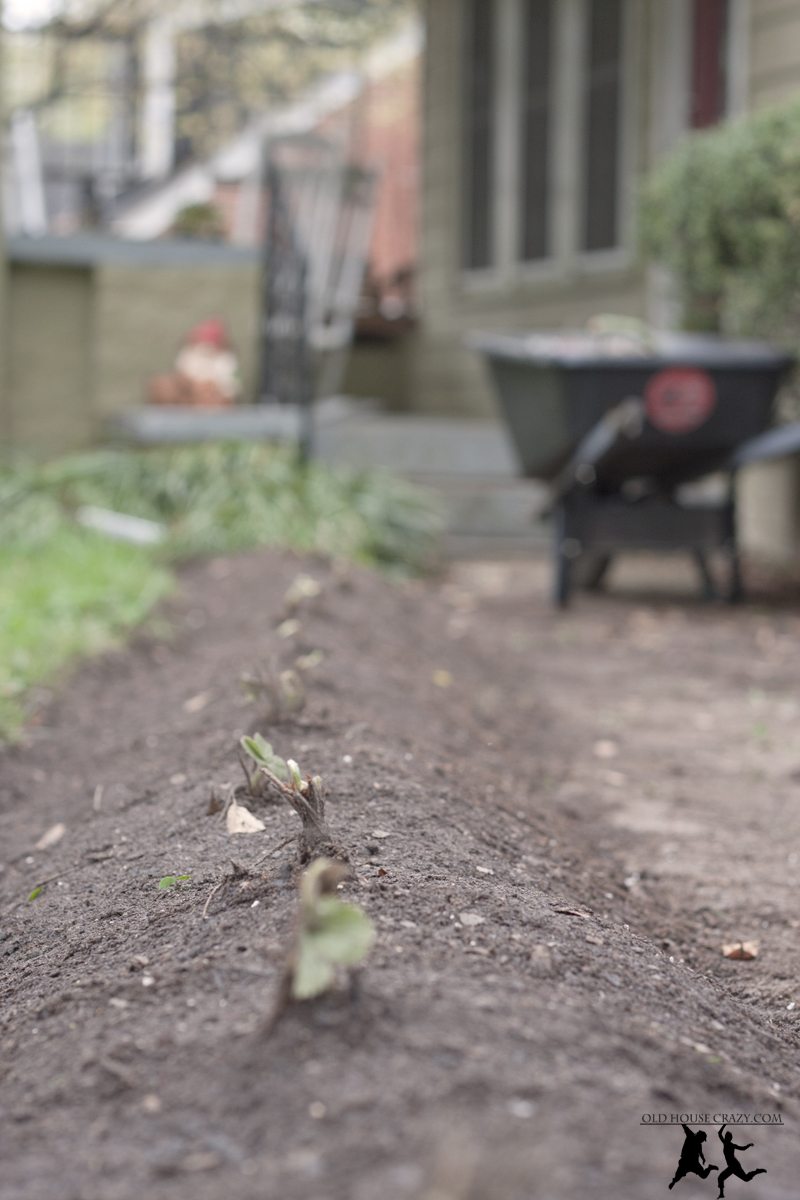
Notice the old porch paint colors from last year.

The hardest part of growing your own strawberries by far is plucking off the flowers during their first season. As with all of the berry plants, it takes a huge amount of energy for the plant to produce fruit. If you pluck off the flowers, the plants don’t waste energy reproducing and, instead, grow deep roots and establish themselves.
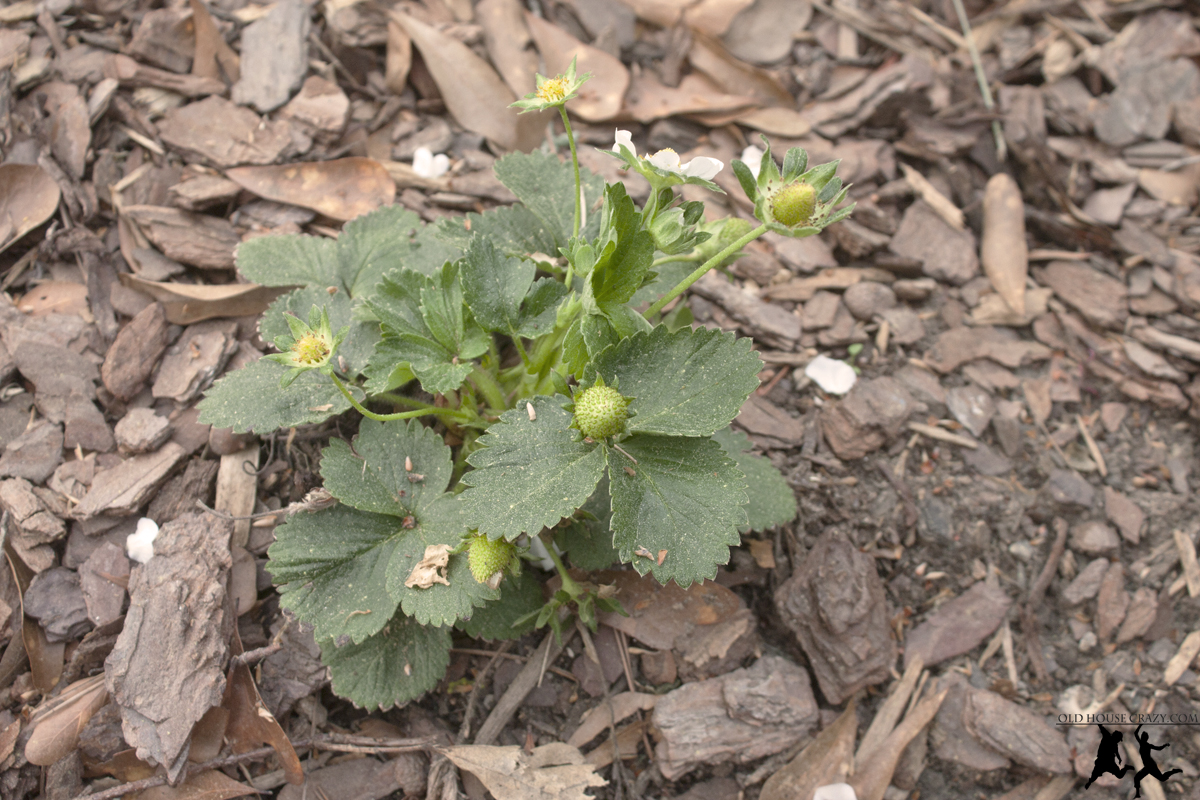
This spring, the plants started producing flowers in early march because of the incredibly warm weather we’ve been having. No complaints here.
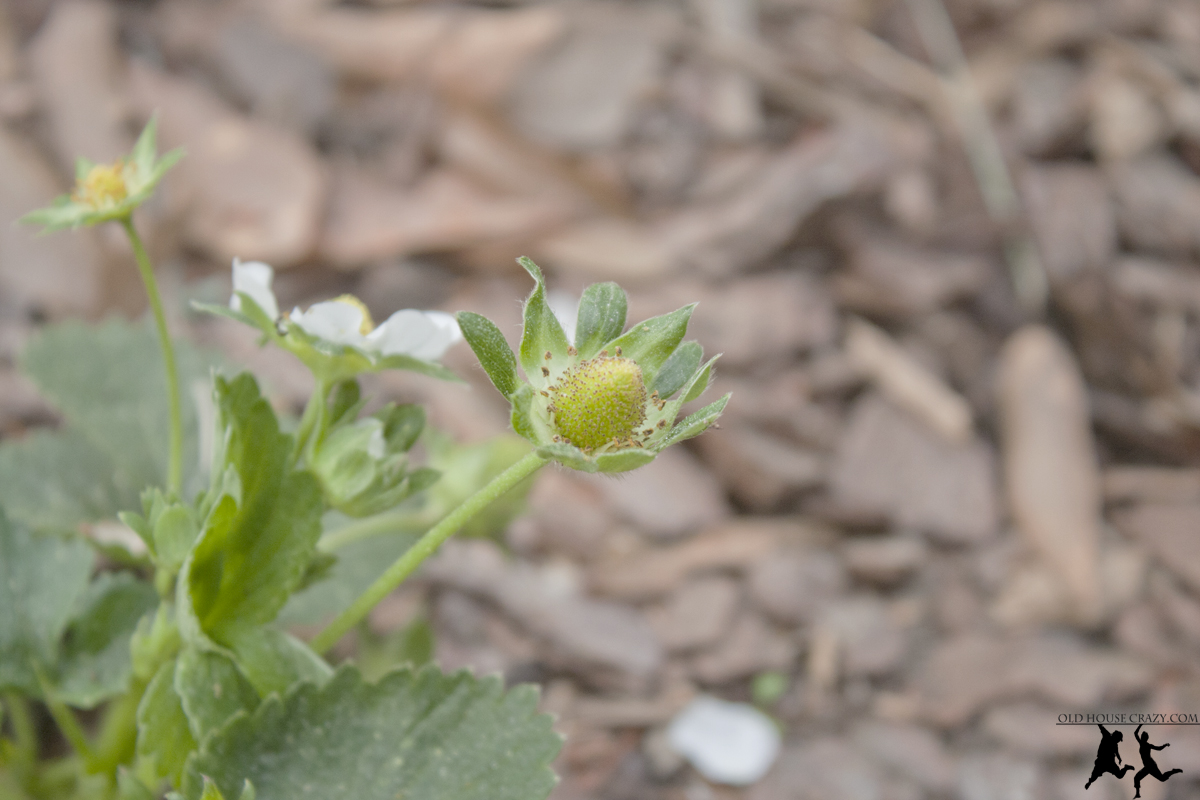
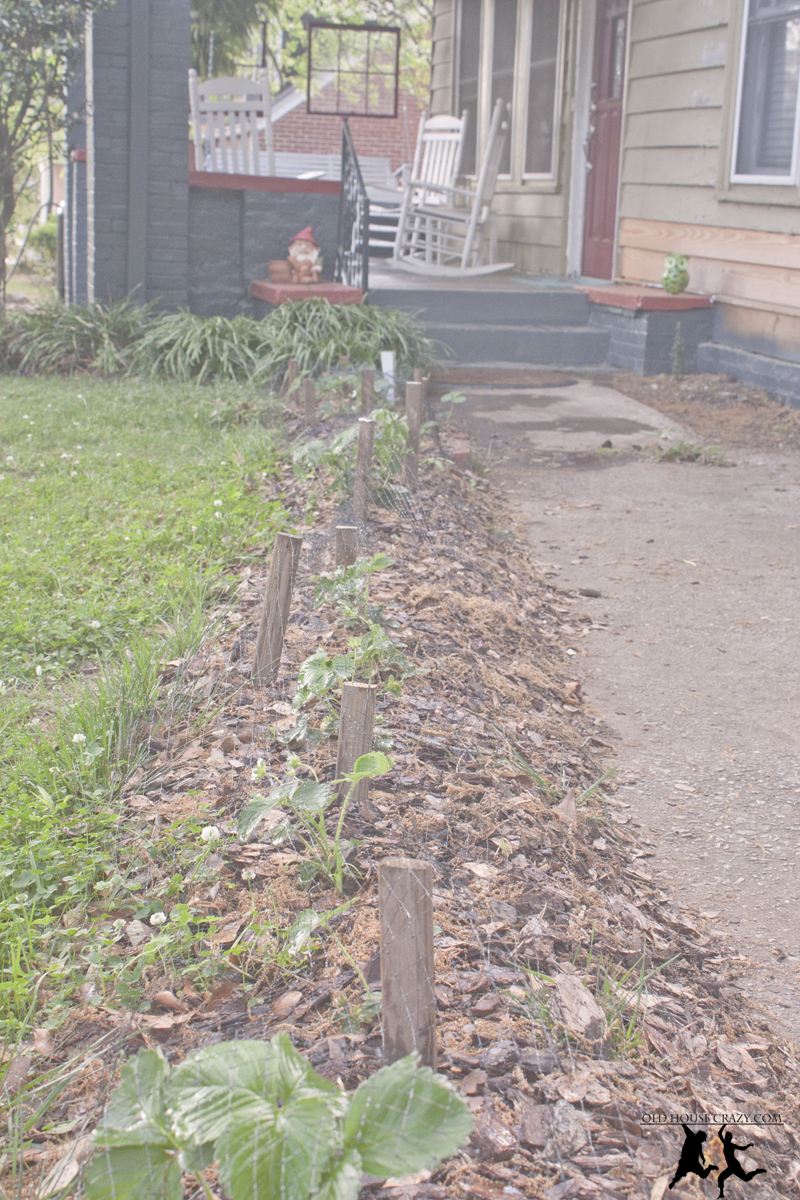
You can see the growth that has occured in one year. I love comparing photos from year to year and across the seasons as plants grow and develop.
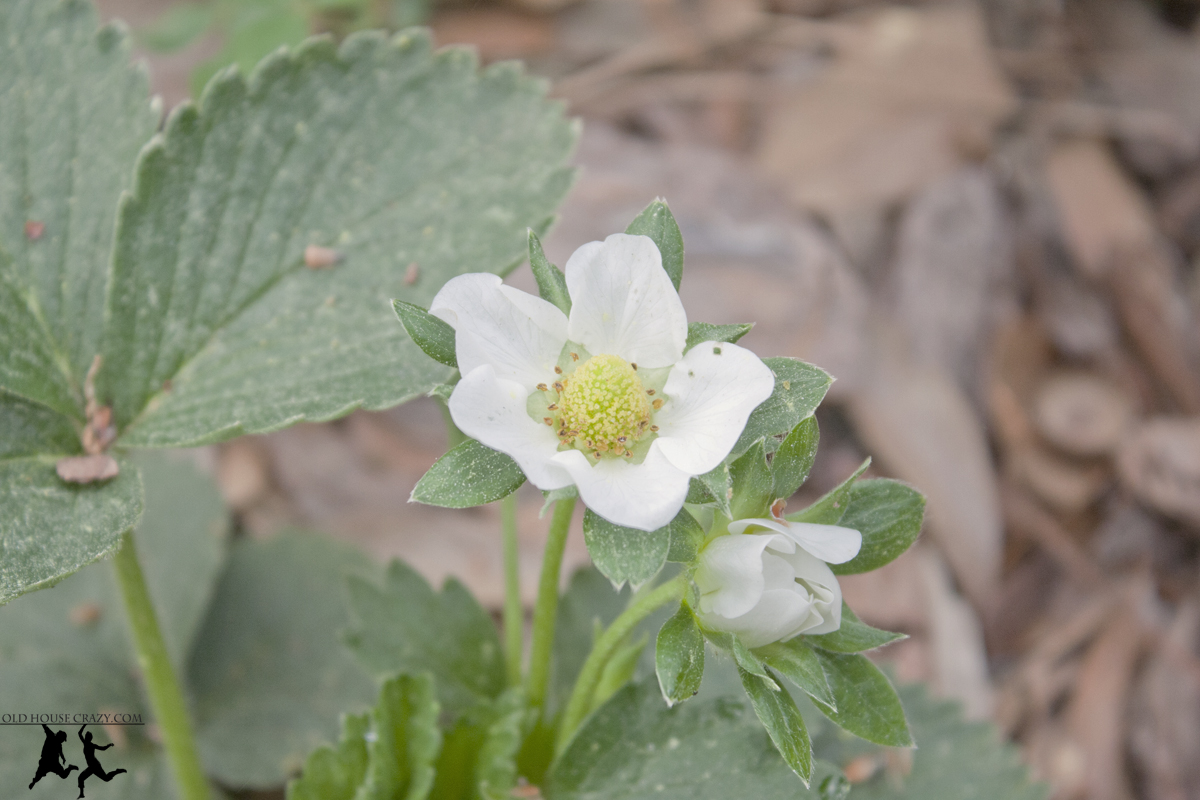
Strawberries produce really pretty, tiny, white flowers. You can see in the photo above that there are tons of little yellow flower parts within the center of the flower. Each of those stamen is connected to a single ovum and will produce a single seed. That mound in the center will become the red berry and all the little black spots on the berry are the tiny individual seeds. So when you eat a strawberry, you’re eating thousands of individual baby strawberry plant offspring. Biology for the win!
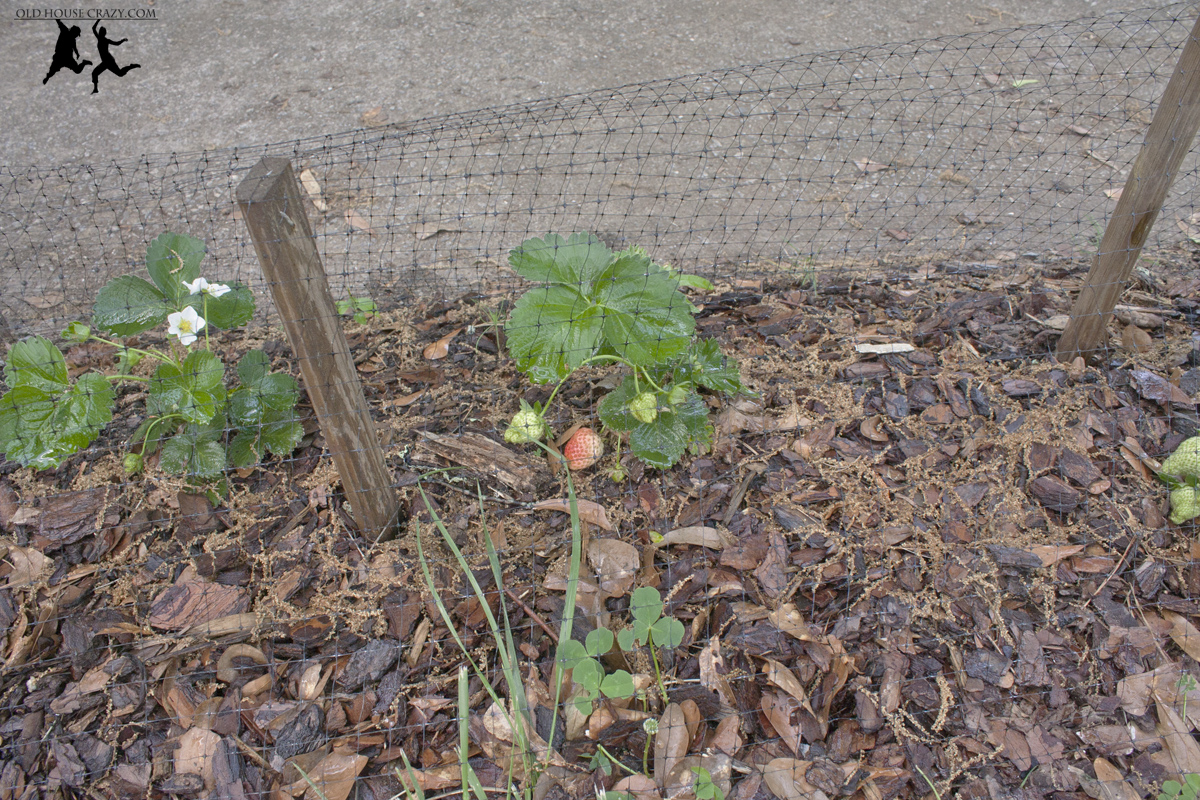
Our first fully developed berry of the year was eaten by some nasty jerk-faced bird or neighborhood cat. We were not pleased. I hate those guys.
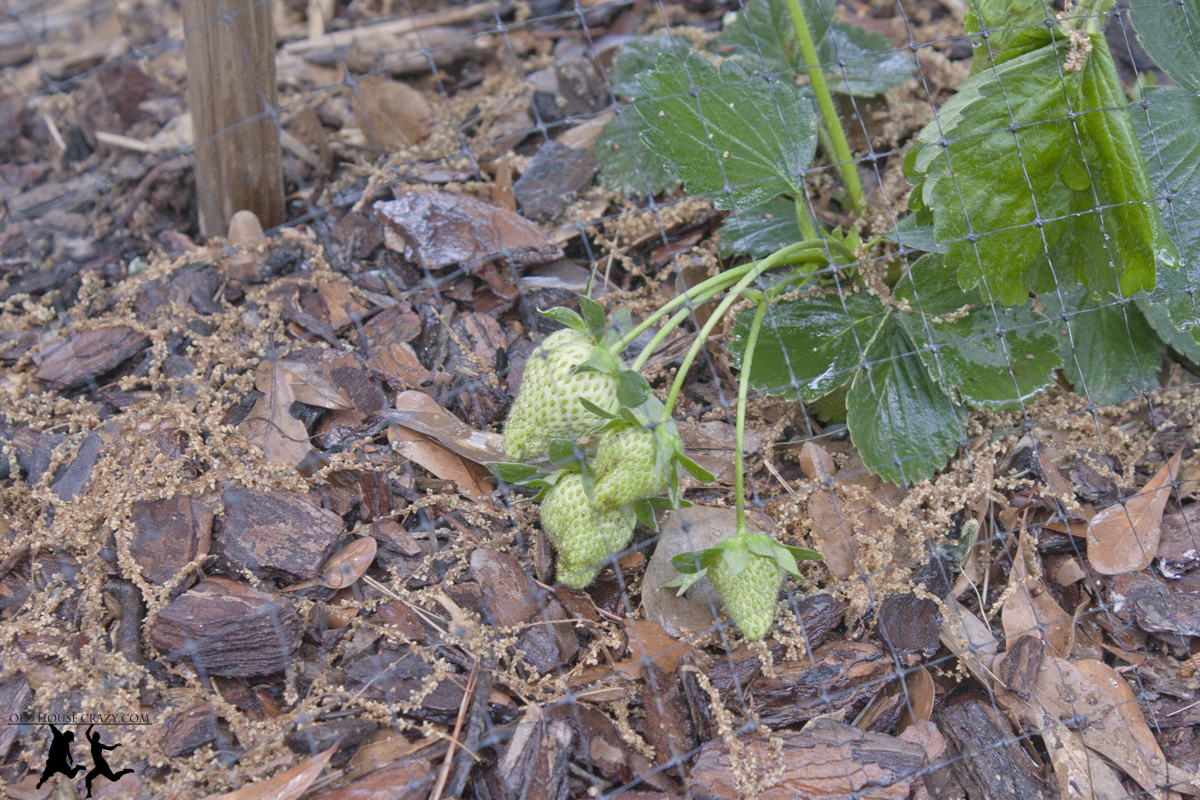
So up went the bird netting. I bought a 14′ by 14′ square of net for a few dollars at the hardware store, drove a few DIY stakes into the ground, and stapled the netting in place with a staple gun. Take that jerk birds. I have thumbs!
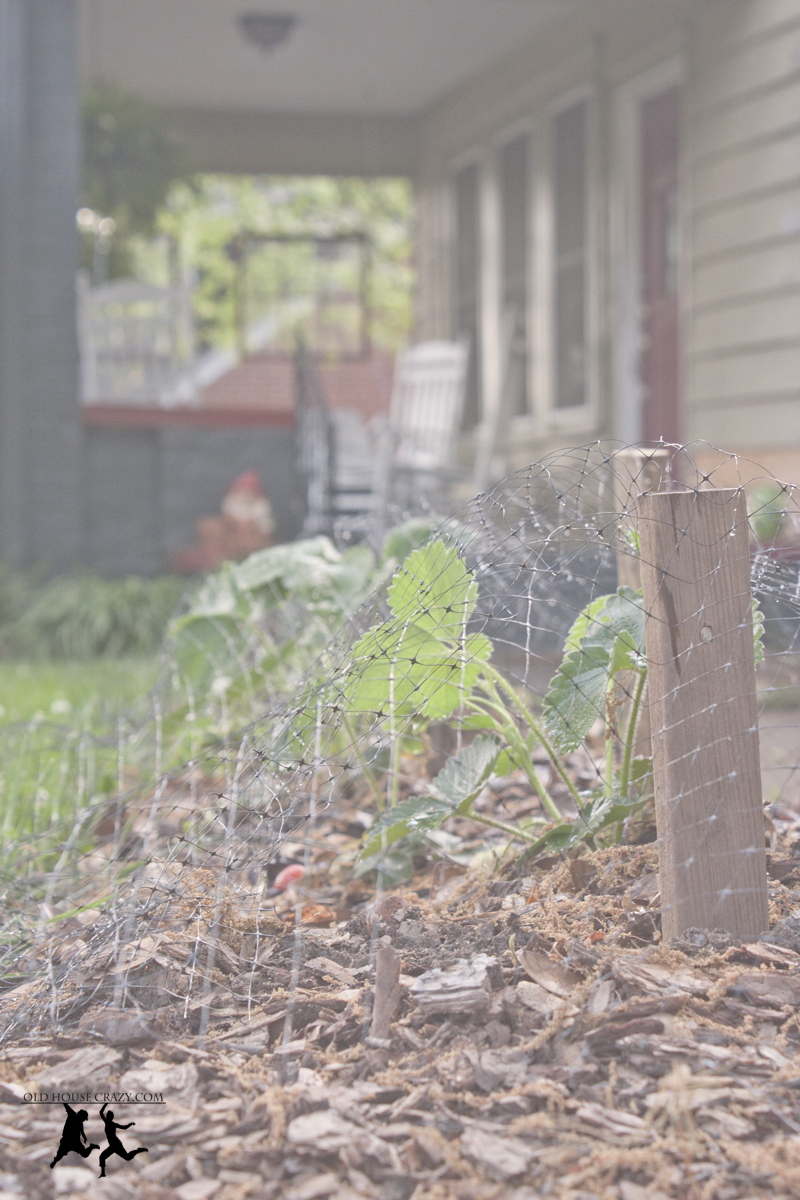
We’ve got quite the crop coming in now and are really looking forward to pound cake with home-made whipped cream and fresh strawberries. Thanks for reading. -Robby
Posted in DIY, Garden, Tools and Techniques | Tagged , , , , , , , | Leave a comment

Painting the Porch and Foundation – DIY

If you’re unlucky enough to live somewhere other than Atlanta, you missed the amazing weather we had this weekend. It was absolutely incredible outside both days. With that in mind, Christy and I decided to spend the days working towards completing our exterior paint job, something we’ve been laboring on since the summer of 2010.

I know that sounds like a rediculously long time to have been painting. Well, have you ever painted a house? Oh, you have? Well, did you first remove 90 years of lead-based paint from pine siding using a hand scraper? If you’ve done that, you have my respect. Like most of our DIY jobs, this one was originally motivated by money, or a lack of it. A paint job like the one we’re doing would have cost us upwards of ten thousand bucks.

Our house was painted the pea soup green color you seen in the pictures, with the foundation a single shade darker, but still pea soup green. We don’t really like these colors, and haven’t liked them since we bought the place. In the years since it was built, our house has spent most of its time white. I know this because of the many layers of white paint I’ve removed. If all that white paint had been in good shape, we would have simply painted over it in the colors we wanted. But that’s the problem: the paint had chipped over the years, and many generations of painters had painted over the missing spots without sanding or removing the paint that was still intact.

This left us with a paint job that was really uneven and ugly. If we pressure washed the house, as recommended by numerous folks, and painted over, we’d have been left with another rough and poorly done paint job. That wasn’t good enough, so we decided to remove ALL of the old paint, recaulk the siding boards, re-glaze the windows, restore the pulleys and weights that operate the window sashes, and paint the place the way it was supposed to be painted.

I ignorantly believed this could be done during my spring break in 2010. I set out that week to paint my whole freaking house. HA. I ended up scraping about 50 square feet of the back wall. It’s been a two year job so far, but the only money we’ve spent is on paint and supplies. I’ll blog about the scraping, caulking, glazing, and painting the walls later. For now, the porch.

We decided in the fall to go ahead and paint the foundation and the porch so that we’d have that done (the back and one side are completely finished). So we set out and pressure washed the whole place. Then it got cold and we never finished. This weekend, it was warm again, so we finished up the foundation.

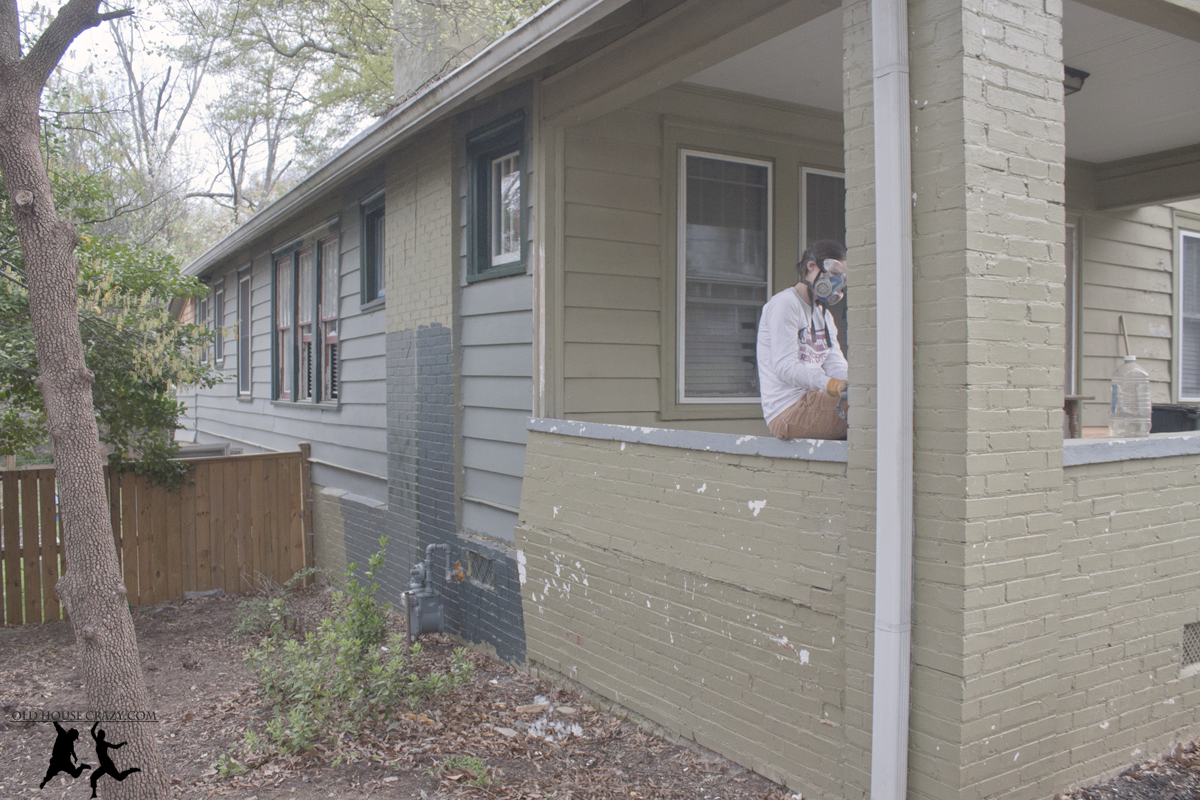
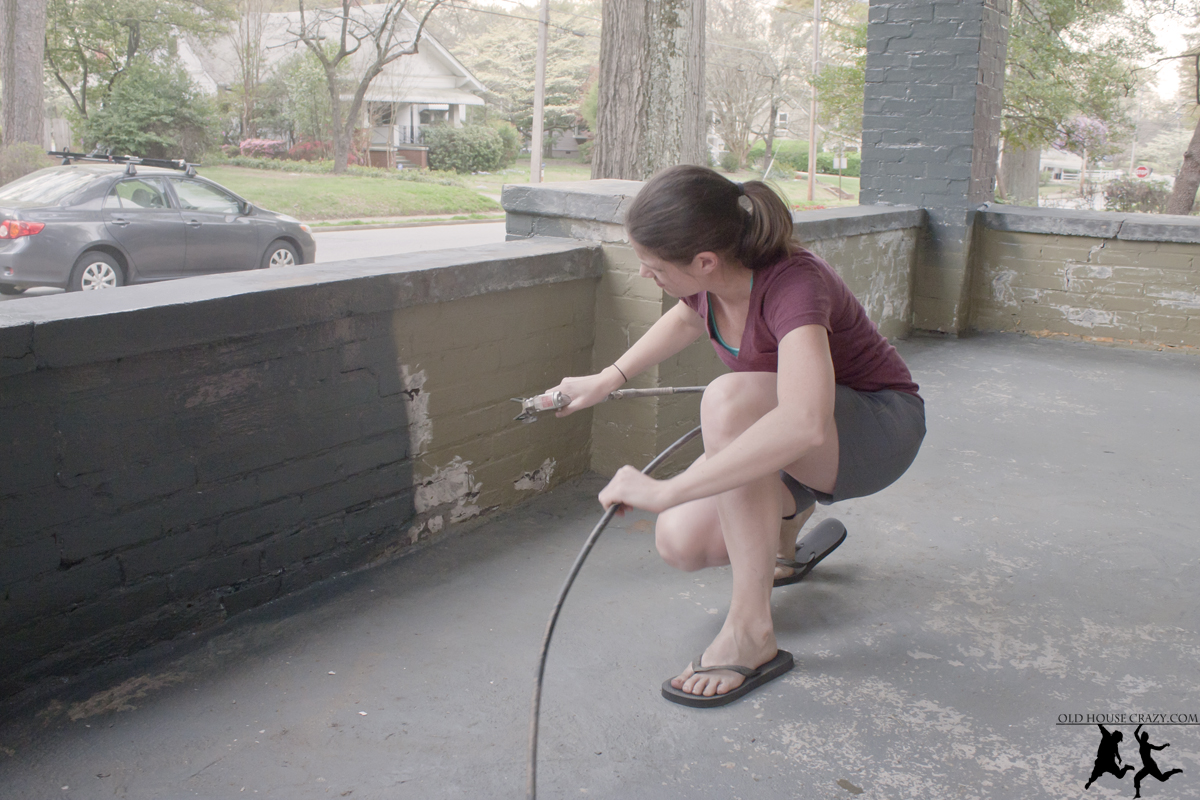
We began be using the angle grinder and a cup brush to remove the chipping paint from the bricks and smooth the rest. You can see Christy using this machine (with an approved respirator – lead paint – gotta be careful) in the first picture of this post.

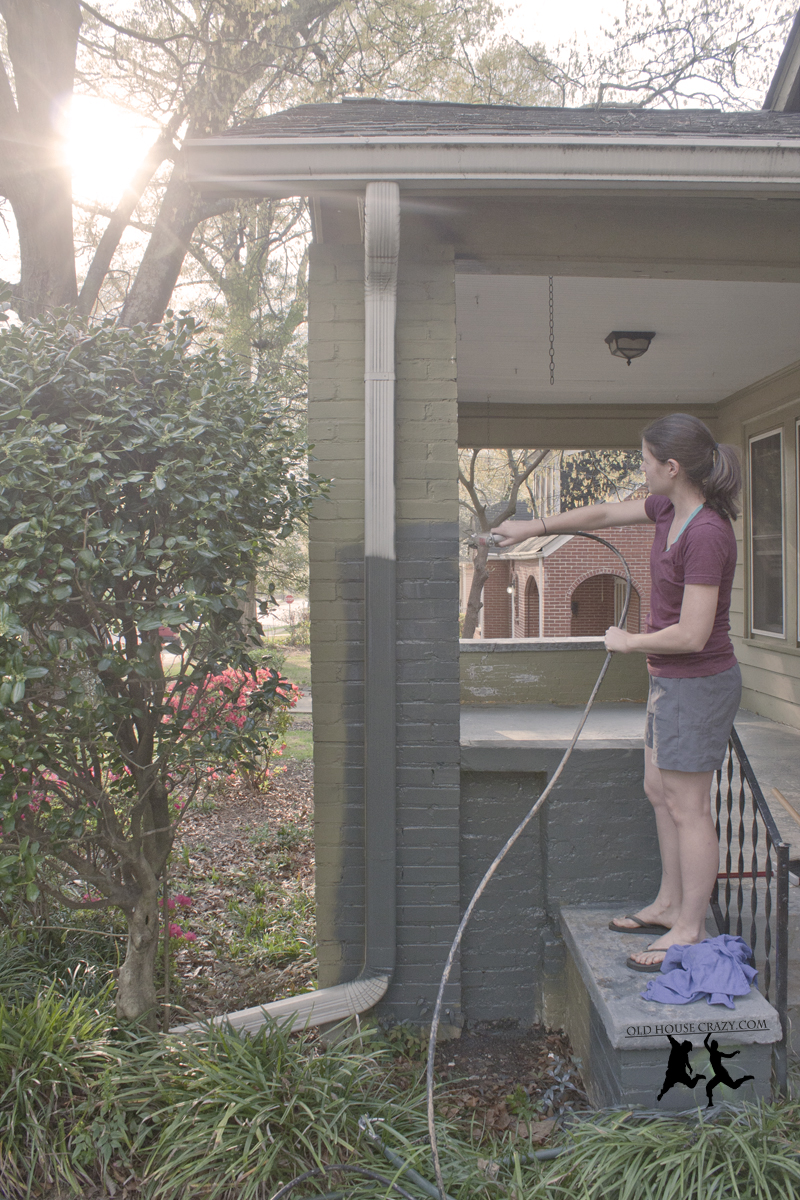
Next, we used a broom to sweep away as much of the dust, dirt, and pollen as we could. Then we used the electric blower to complete the job. After it was dust free, we hosed it down to be sure. The walls still looked pretty nice from when we pressure washed it a couple months ago, so we didn’t feel that we needed to repeat that process.

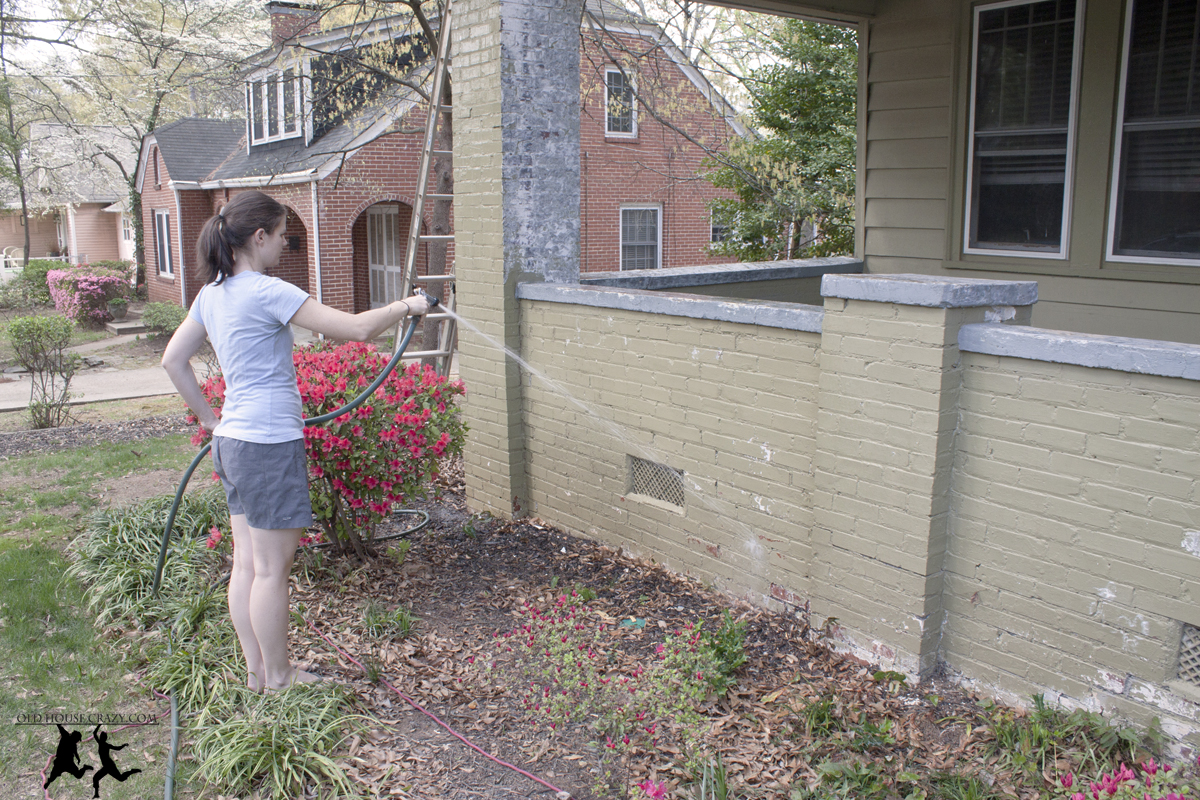
Once everything was dry again, we hooked up Christy’s Dad’s paint sprayer and got busy. I sprayed around the foundation and Christy did most of the spraying on the porch, as you see in the pictures. It really is nice to have a wife that’s not scared to get her hands dirty, use power tools, and drink beer.

Yeah she’s awesome.

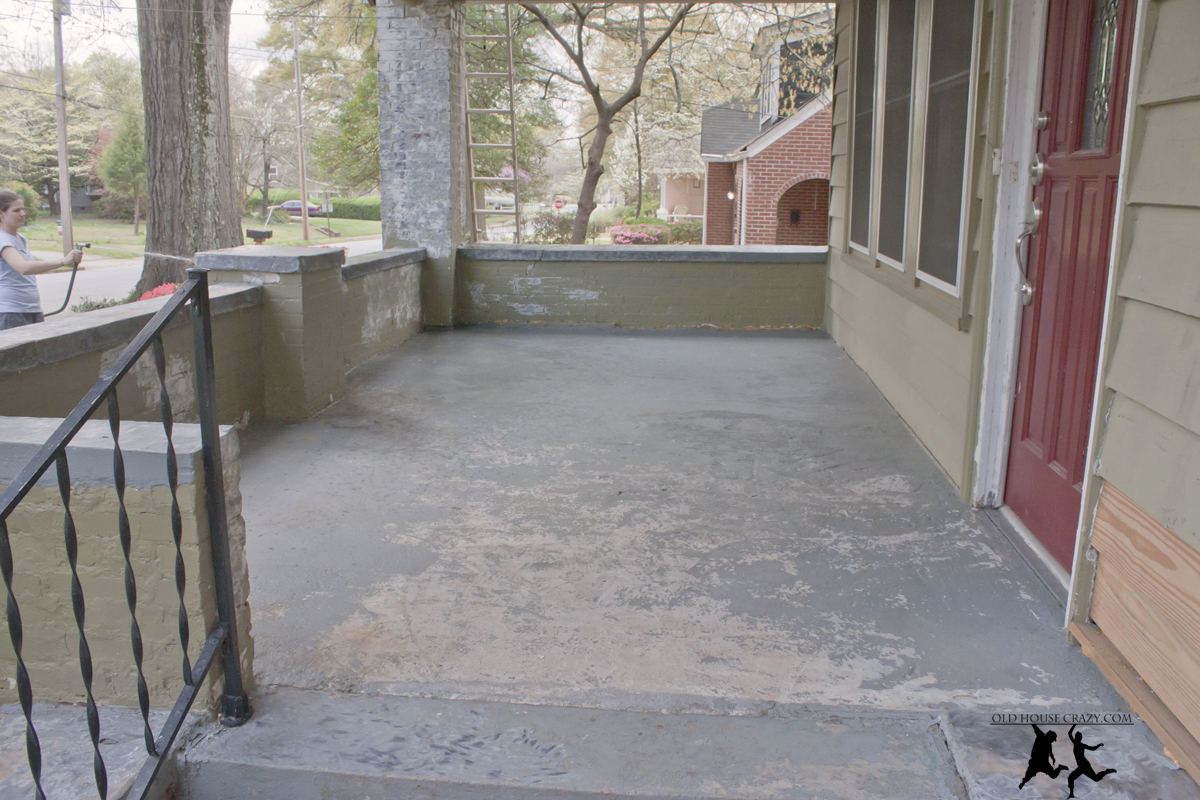
We didn’t use any primer on the bricks because most of the surfaces were still covered by a little paint or primer in good condition after our grinding and washing. On the floor of the porch and on the caps, we removed much more of the old finish, so we primed with a masonry / block primer.

The next morning, after the primer had set up, I painted the caps red using our accent color. It looks a little funny now, but once the place is done, hold on to your hats. If you don’t have one, go buy a hat so that you can hold the heck on to it.

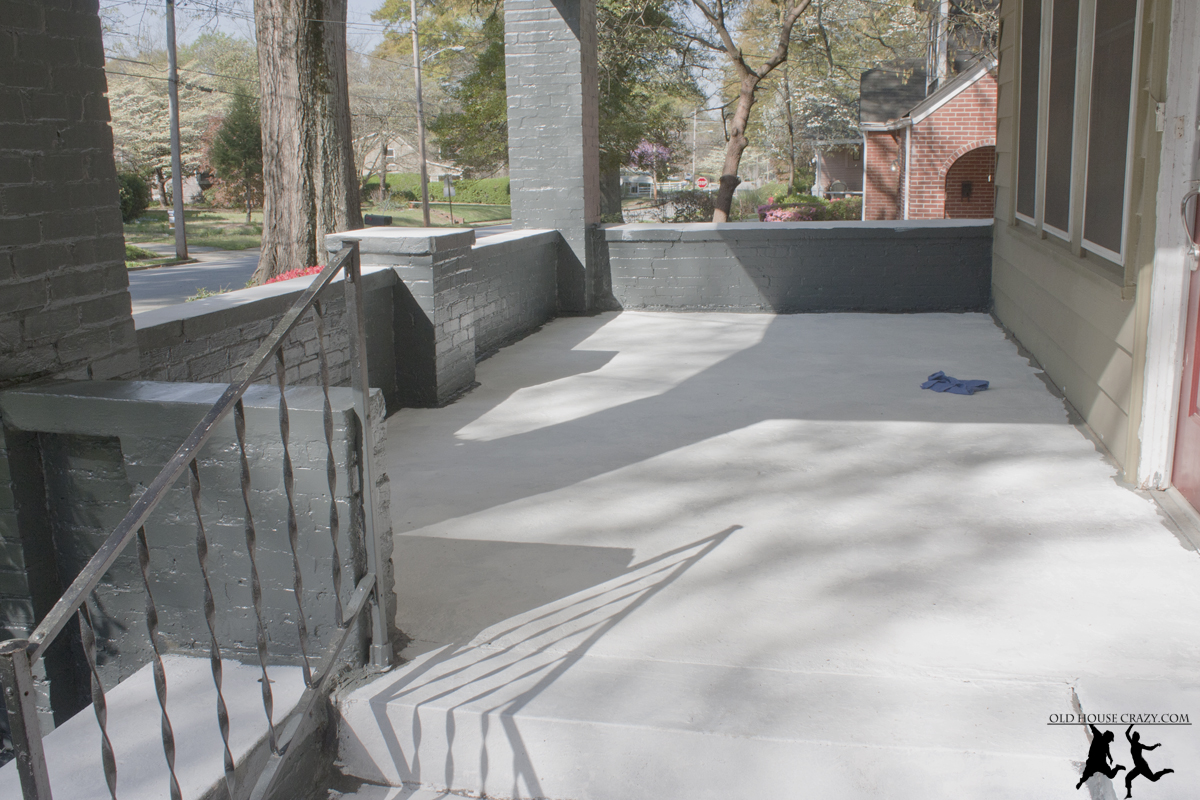
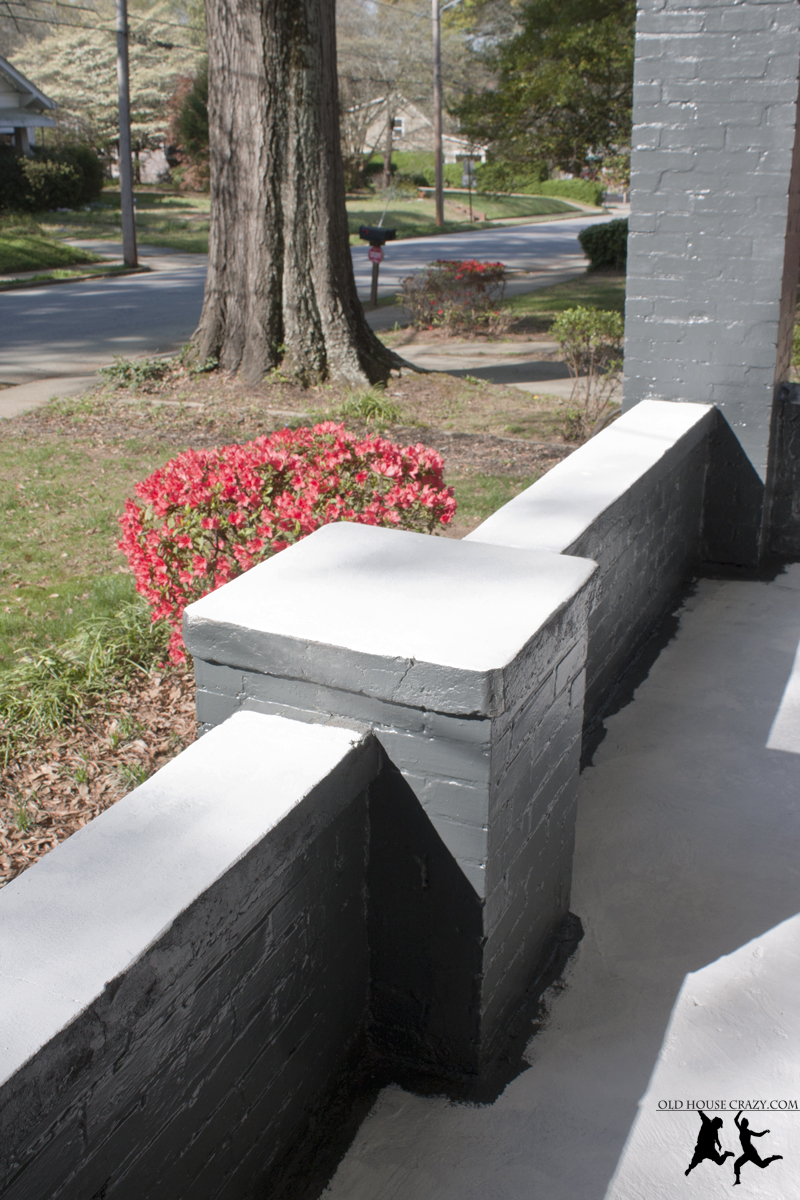
The last photo shows the floor after its first coat of floor paint. It’s super hardy paint that’ll stand up to all the use we’re planning to give it. It takes 24 hours between coats, so we’ll get in one each over the next two days. Then it’s 72 hours wait time. After that, come have a beer with us on the porch. Thanks for reading – Robby

Posted in Don't Hire a Professional, Front Porch, Painting, Tools and Techniques | Tagged , , , , | 3 Comments

Reclaimed Heart Pine Farmhouse Table – DIY – Part 3 – Butterfly Joinery and Prepping the Legs

Part 1 – Milling Old Lumber

Part 2 – Glue Up – Bread Board Ends

Part 3 – Butterfly Joinery – Prepping the Legs

Part 4 – Mortise and Tenon Joints – Understructure

Part 5 – Final Assembly

After I mostly finished the table top (more on that later), I needed to start thinking about the under structure for our heart pine farmhouse table. The legs and aprons would have to be super sturdy in order to support the top, which is easily a hundred pounds of lumber. For this purpose, I selected the heaviest beam from the lumber that Uncle Bob and Aunt Gail gave to us in December. This 12-foot-long 4×6 beam was a monster, and was quite awkward to carry into the crawl space for cutting.

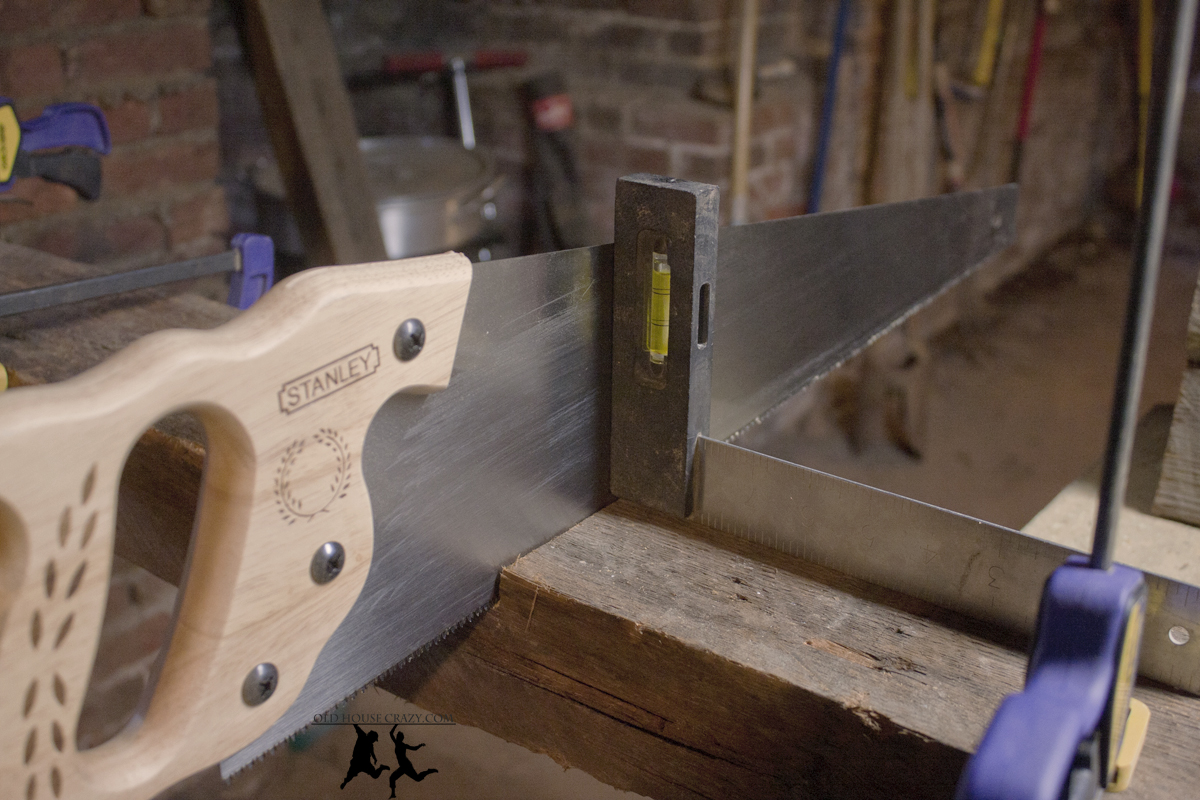
I used a hand saw to cut the beam into four 29-inch-long legs. Combined with the width of the table top, this will set our eating surface 30.25 inches off of the ground, which is a pretty standard height. The tables I looked at online ranged from 29-31 inches tall, so I shot for somewhere in the middle. As you can see in the photo above, I used a corner edge to keep the saw cutting at a 90 degree angle so that the cuts were straight. Even so, the legs were ever so slightly wonky, so I had to go back over the tops and bottoms with a belt sander to level them out. Using hand tools opens the door to greater inaccuracies for an amateur like me, but I really enjoy using them.

After I had cut the legs, I sanded them down using a combination of belt sander and random orbit sander with grits ranging from 32 to 220. This is the same technique I used when sanding the legs to our 7-foot-tall shelf.

During the sanding process, a long crack in one of the legs became more pronounced and noticeable. Since this beam was cut from almost the very center of the tree, one corner of the beam shows a quarter circle of rings that are very small. This center section of tree had started to separate from the rest of the beam, and the crack ran almost halfway down this particular leg. In order to repair this crack and stop it from spreading, I used two techniques: wood glue and butterfly joinery.

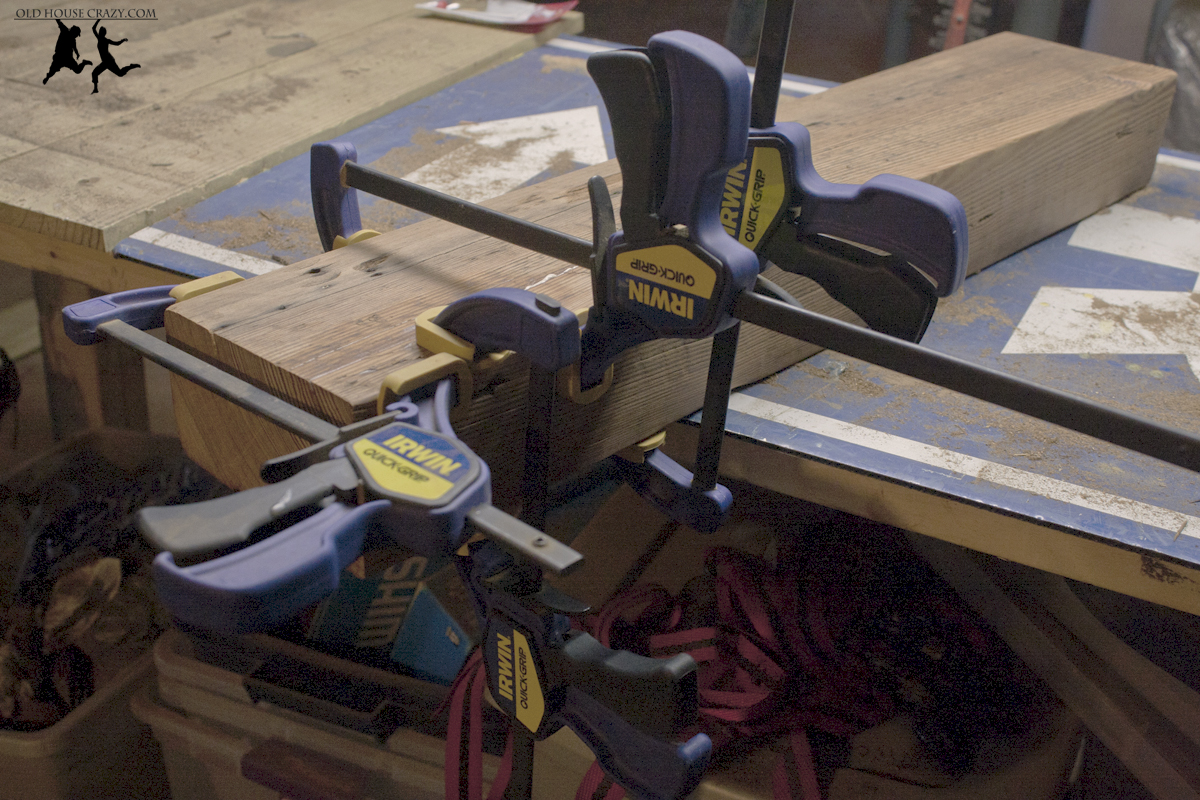
The wood glueing is pretty self-explanatory I think. Squeeze some glue into the crack and clamp the crap out of it with as many clamps as you’ve got. Check. The butterfly joinery part is a little more fun and intricate. It involves cutting a butterfly shaped piece of hardwood and inserting into a butterfly shaped hole across the crack you’re repairing. In order to cut the butterflies, I used a template I picked up from Highland Woodworking supply in the Virginia Highlands (that’s a neighborhood in Atlanta). As you can see in the photo above, I’ve got everything clamped down firmly so that the router’s inlay bit won’t move things around as it cuts.

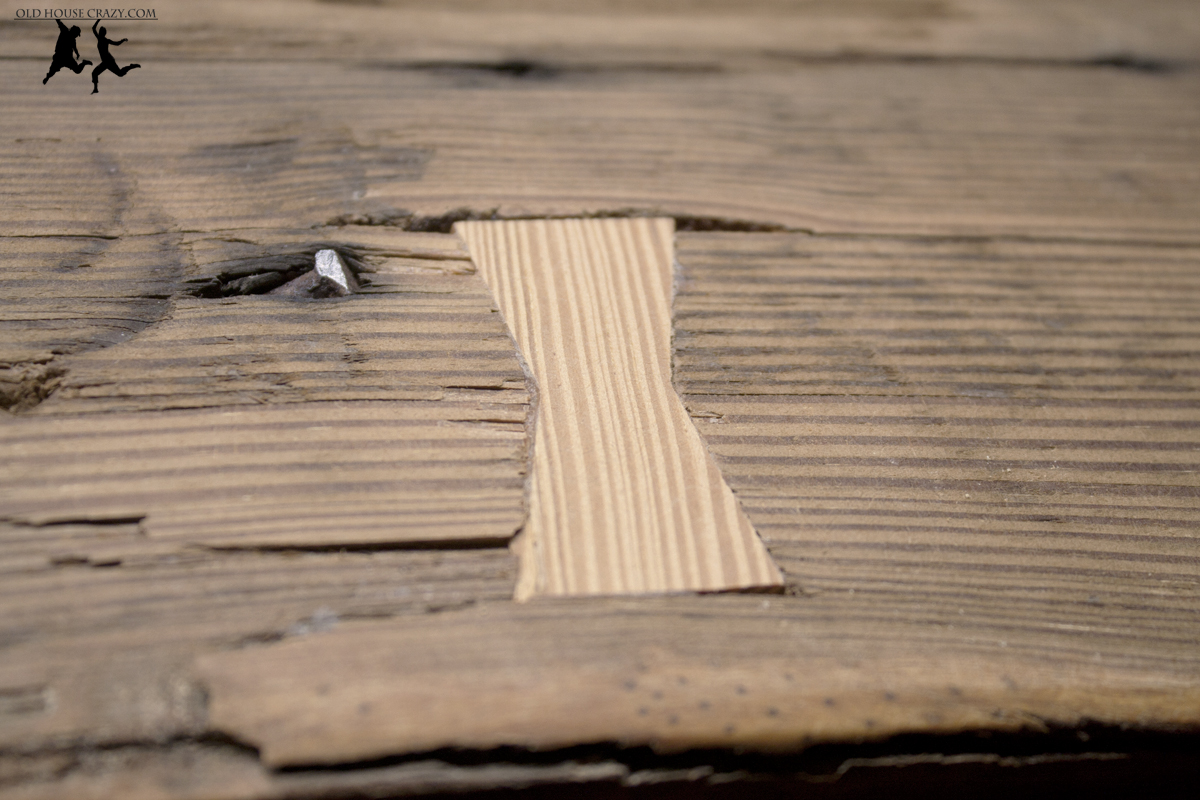
The inlay bit does a great job of cutting out perfect little butterflies from the 1/4″ heart pine I had Don Shomaker cut for me in his shop. Note the direction of the wood grain in the butterfly. It’s important that the grain runs across the crack you’re repairing. If the wood grain runs in the same direction as the crack, the forces pulling the crack apart can easily break your butterfly apart.

The inlay bit I used to cut the butterflies is also perfectly capable of cutting out the butterfly shaped holes in the legs, but I wanted to do this by hand. My final product wasn’t perfect, but I’m doing this woodworking stuff as much for relaxation and skill building as I am for the finished product. Hand tools give a certain level of pure satisfaction. You can see in the photo above that I cut a light groove in the leg’s surface around the pre-cut butterfly. I then used a very sharp chisel to remove the waste wood.

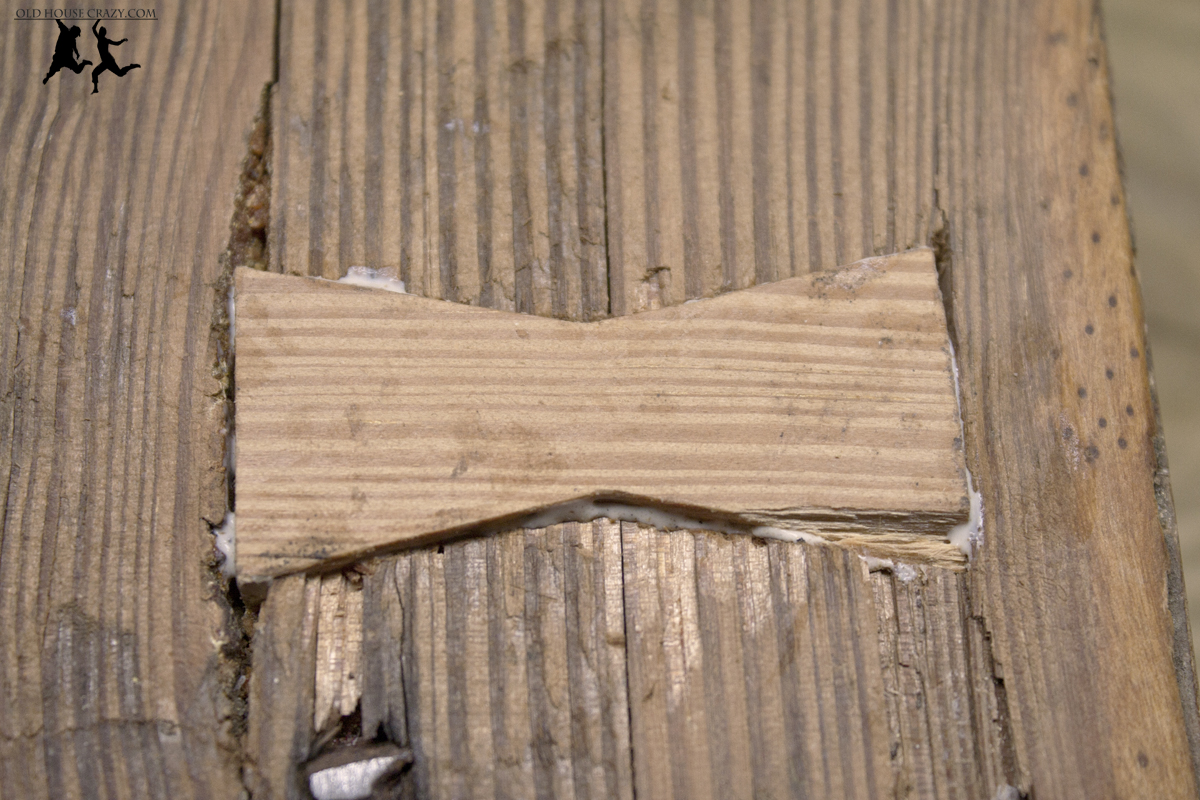
You can see the crack running straight through the center of the butterfly shaped hole in the leg. The idea is that the crack won’t be able to spread outwards because of the shape of the butterfly. It’s really a very simple, yet ingenious concept.

After the hole was cut, I added some glue to all sides of the butterfly and a little into the hole and hammered it in with a rubber mallet. It’s not a perfect fit, but it’s not too bad for my first one cut by hand. I actually cut two more for the same leg and each one was a little better than the last.

Above, you can see the butterfly after sanding. Below, you can see all three of the butterflies in the leg. Thanks for reading. -Robby
Posted in Better than store bought, Dining Room, DIY, Furniture, Heart Pine, Home Built, Old Hardware, Repurposed, Tools and Techniques, Woodworking | Tagged , , , , , , , , , , | 9 Comments