Lifting Up a Sagging Floor – DIY

Cost, Time, and Skills:

This job took two people one afternoon. We got muddy because we were in a dirt crawlspace doing just that, crawling. We used 18,000-pound screw jacks, 4×4 lumber, a circular saw, power drill/driver, and cement blocks. Total cost was less than $200, while a pro would charge $500-$1000.

The Story:

This past Saturday, my brother had me over to help move some of his furniture during the annual rearranging of the tv room. The photo below shows what we saw when we moved the couch away from the wall.
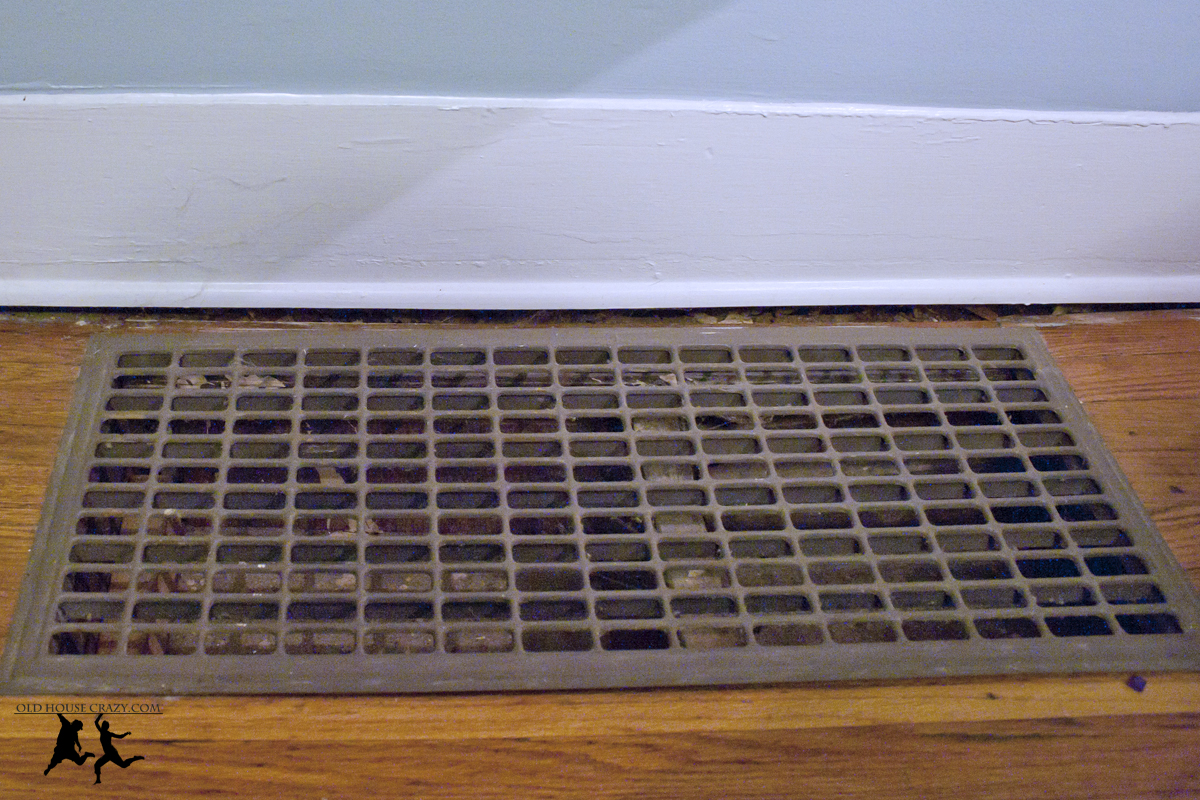
Look for the 1 inch gap between the floor and the base board

Apparently, it’s been that way since they bought their 90-year-old bungalow and it’s been nagging at my brother ever since. You may have similar areas in your home. You probably feel the same way my brother did: “it’s not THAT big a deal and it’ll cost at least $1000 to repair, so let’s buy diapers and food and gas with our money instead.” Well, it isn’t THAT big a deal now, but it could develop into a whole host of problems down the line, especially if the sagging is caused by a larger issue.

Three 18000 lb screw jacks and solid concrete blocks for support

The truth is, it will cost you upwards of a thousand dollars to hire professionals to do anything to your foundation or the under-structure of your home. Just plan on that. Plus, it’s hard to find the right people to do this work, because it requires on-site problem solving and a certain amount of risk assessment (don’t hire anyone that seems kind of stupid). I know this. We paid to have some work done on our sill plate last summer and it hurt the wallet. A lot. However, watching the crew work on my house let me know that I could certainly do that work myself the next time the need arose.
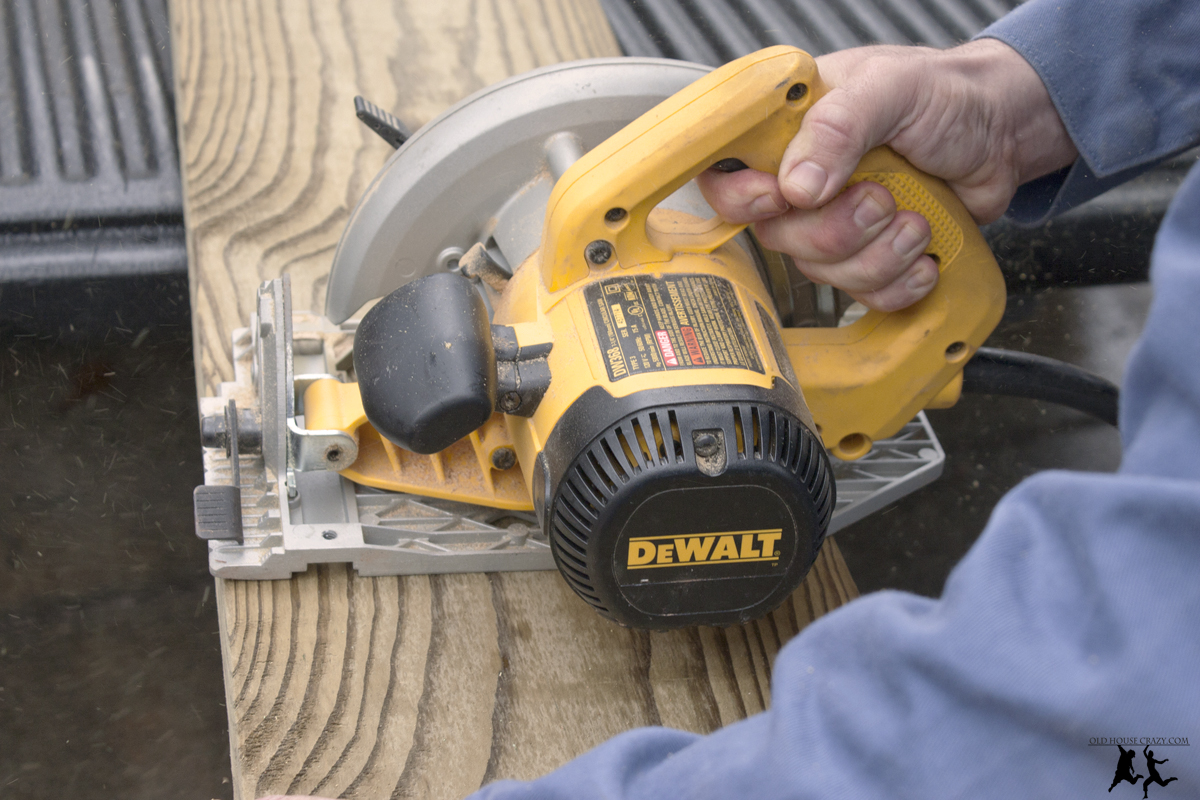
We ripped the 2×10’s in half to make four 4 ft joists

As a homeowner with an eye for and interest in how things work, I’ve learned an extremely important thing: my house is actually really simply built and nothing in here is all that complex. The trouble is knowing what to do and what tools to buy. If you aren’t good at figuring stuff out on your own, hire someone. . . once. While they’re working, ask them questions about the process and about what they’re doing. Assess whether you think you can do it yourself. I learned most of my skills out of necessity (it’s a cash flow thing) and by watching professionals.

As with many old houses, my brother’s has a tiny crawl space door. I’m large so that makes me unhappy.

For this job, as with any job, we first needed to figure out what the root problem was. The sagging floor was the symptom, and somewhere under the house there had to be a cause. Well, after doing the navy SEAL crawl up under the house, we found that the joists that were supporting that floor were not actually attached to the sill plate any longer, as seen in the photograph below. This is an obvious problem, considering the fact that the sill plate is the first line of support above the foundation wall. You can see that the joist had dropped about an inch below the sill, explaining the inch the floors had sunk.
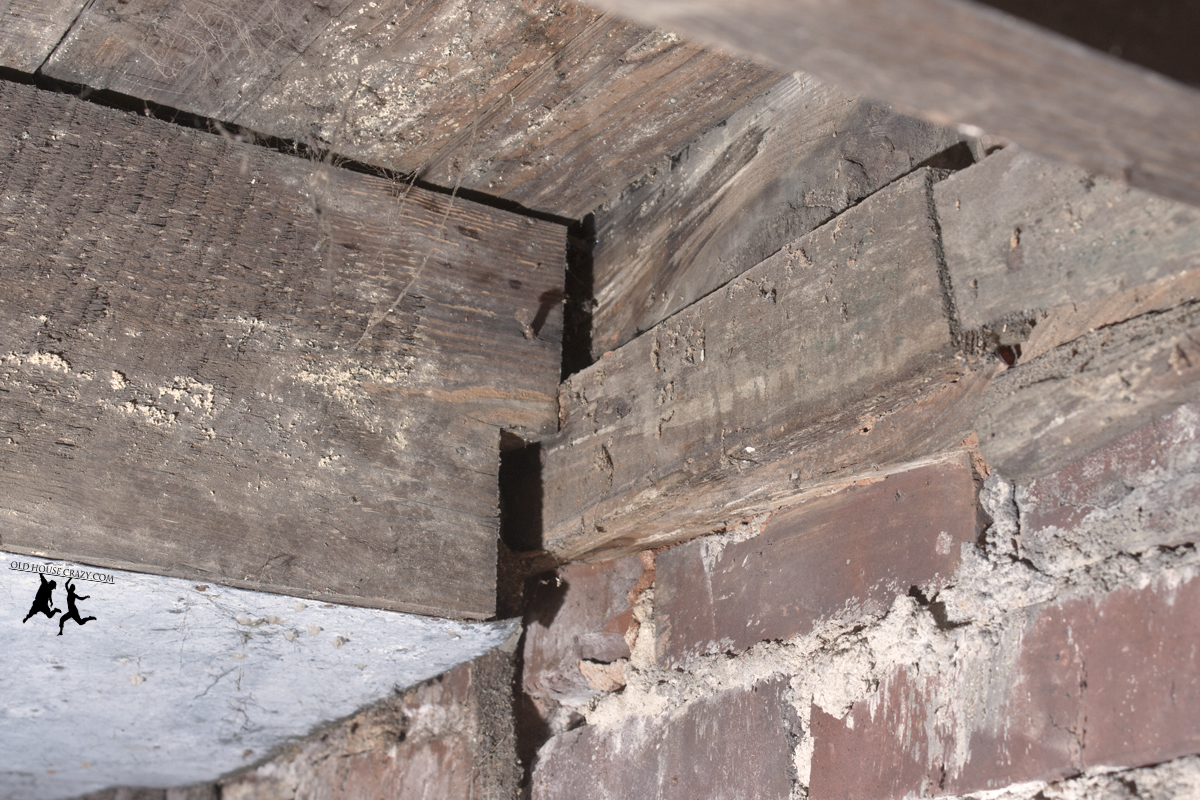
The joist had slipped about an inch from the sill

In order to lift this section of flooring back up an inch, we needed to purchase a few screw jacks, which can be purchased at your local big box hardware store for about $30 per jack. The ones in the photos above are actually not the ones we ended up using. We had to buy shorter ones. But hey, what’s a home improvement project without at least two trips to the store?
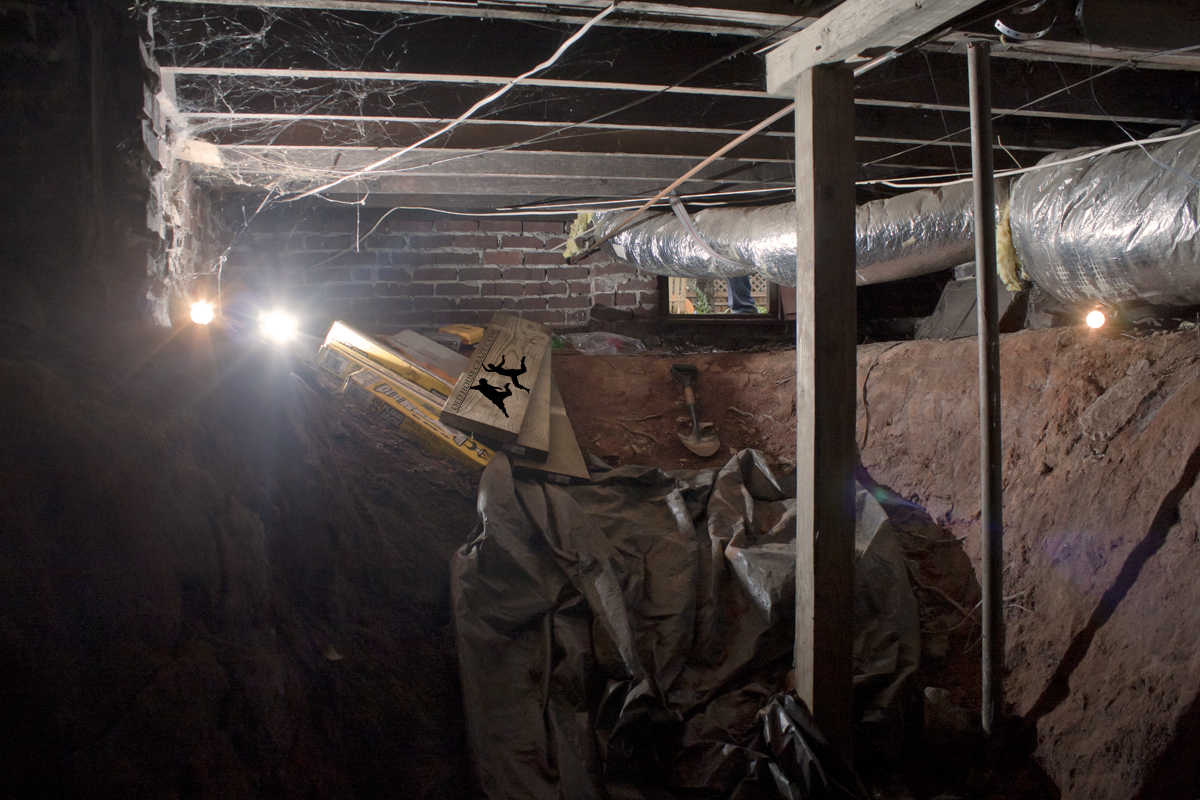
Moving around under old houses can be tricky. My brother’s crawlspace opens up quite a bit once you’re inside. It used to be a dry cellar for storing produce during the summer, with a trap door in the kitchen.

As you can see in that last photo, my brother’s crawl space is rather spacious in spots. Unluckily for us, the spot we were working wasn’t one of the spacious ones. Here he is squeezing through the little trap door. Note the coveralls. I’d recommend covering yourself when working under the house. It’s nasty and there are spiders and junk.
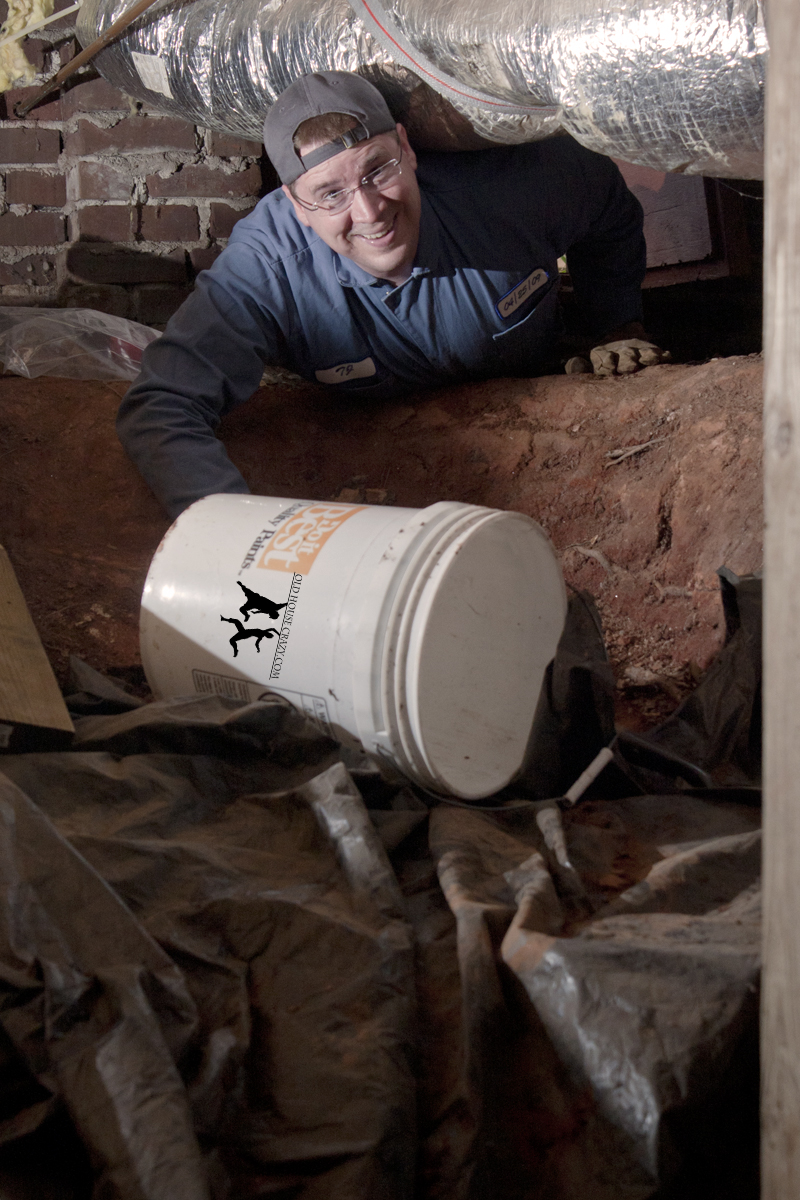
A gift my brother and I both possess: flashing a goofy smile at a moment’s notice.

Here’s where we were working. The 2″x8″ joists you see in the photo (the boards running from left to right above my brother for the lay men) are the ones we would be supporting. We decided that we wanted to sister a new 2″x10″ board up against the existing joists and support the new joists. We chose this method because of the small amount of old termite damage we saw in some of the old joists. What we did was lay the new board flush with the floor boards and with the old joist. We then fastened the two boards together with 3 inch wood screws.
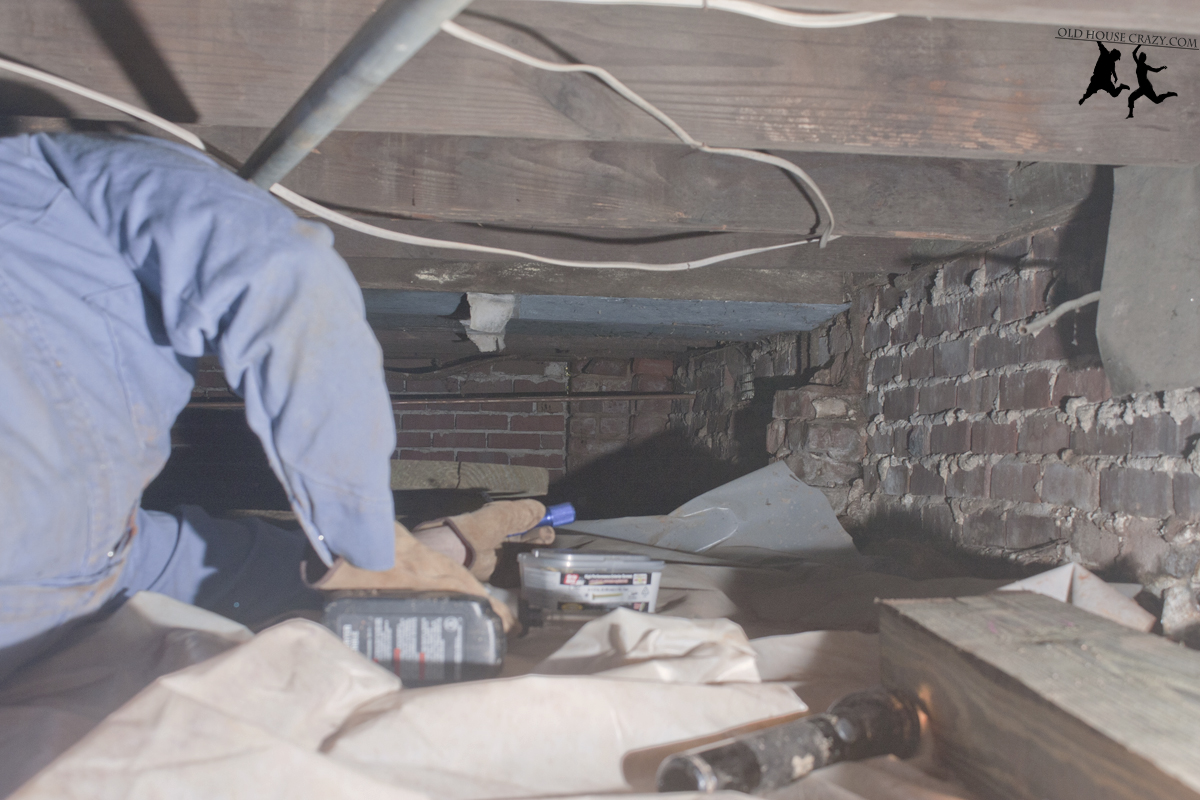
The crawlspace was really tight in the area we were working. Luckily, it was pretty dry. The vapor barrier and outside drainage had done their job well.

Below, you can see my brother prepping one of the new joists by partially driving the screws into the wood. This is surprisingly difficult to do when holding a twenty pound joist and a drill above your head while lying on your back.
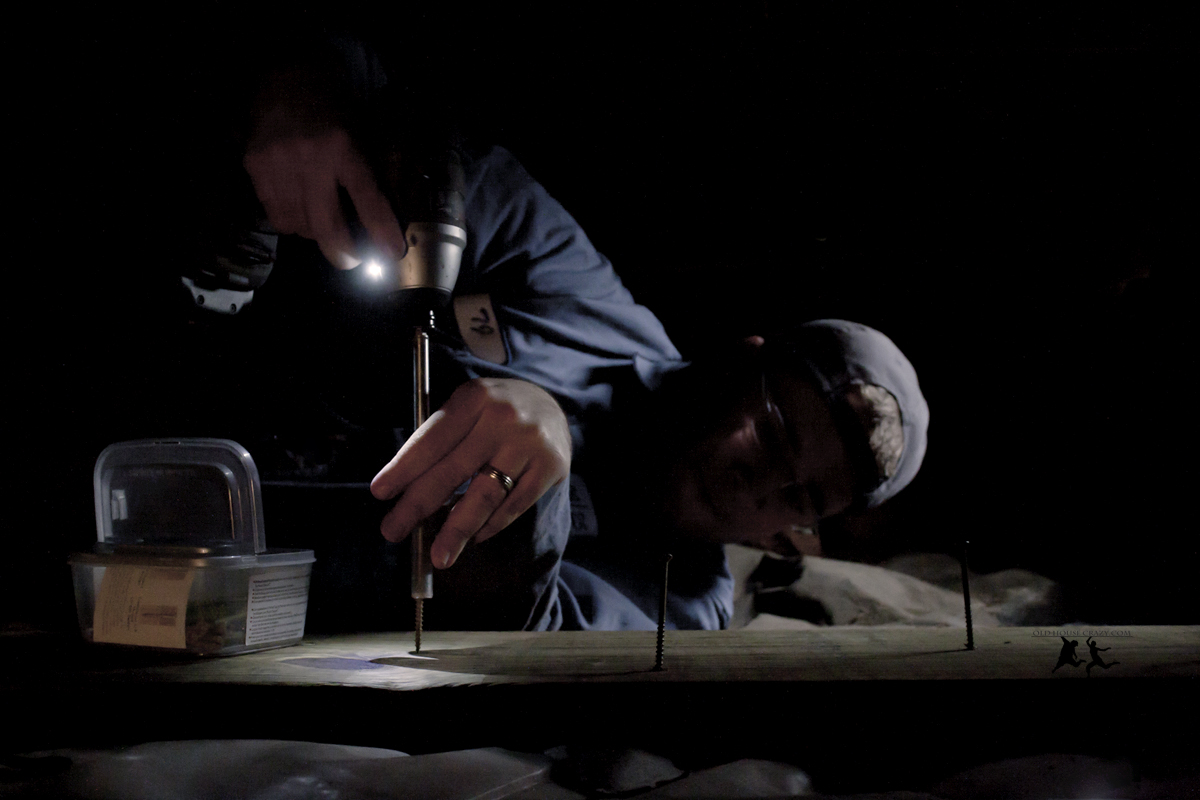
I used to balk at the drills and power tools that come with a light. Not any more. That little light came in very handy.

With the mud and the muck, I didn’t get any photos of the next step or two. In the photo below, you see the final product. You can see how the new joists are attached and, if you look towards the background, how they overhang the old joists so the support beam is only pushing on the new joists.

Here’s the completed job. The new joists are attached to the old joists and are supported by the 4×4’s and screw jacks.

Once the new joists were up, we found locations where the concrete blocks could sit flat on the ground so the pressure wouldn’t cause them to crack. After they were in place, we hoisted up the 4″x6″x8′ beam so that it crossed all four of the new joists, sliding the screw jacks underneath. With the beam resting nicely on the jacks, we slowly turned the red handles until the beam was in contact with two of the joists. Then we kept turning until it was in contact with all four of the joists (the lower two lifted up to be in line with the higher two). By yelling through the floor to my brother’s wife, we were able to coordinate our slow turning of the screw jacks until the crack between the floor and the base board was gone.

Here’s the final product. Total, this  job cost my brother $150-$200, where a pro would easily have charged $800-$1000. I’ll admit, this is probably not the job for a first time do-it-yourselfer, but folks with a little experience and confidence can easily repair the sagging floors in their homes.
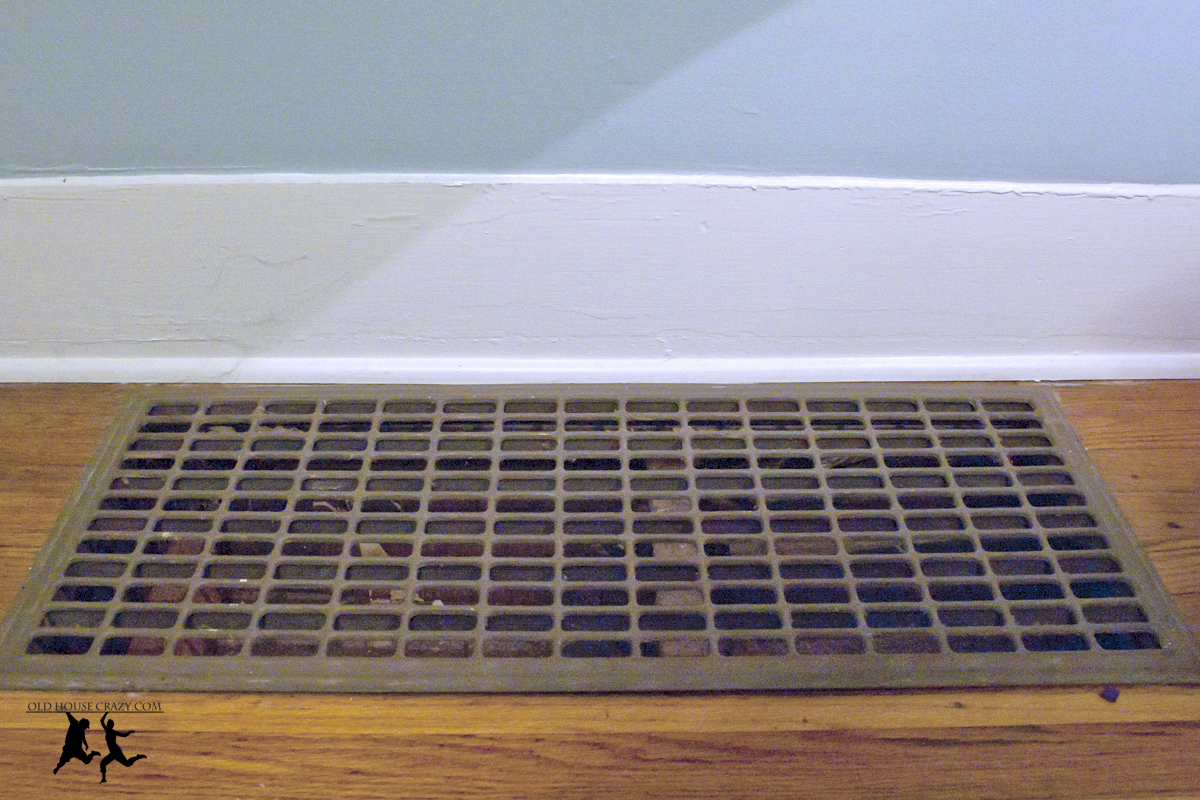
Look for the 1-inch gap between the floor and baseboard. It’s not there any more.

The before and after is below. If you’ve got questions or comments, leave them below or contact us at oldhousecrazy@gmail.com. Also, feel free to leave us a comment on our facebook page www.facebook.com/oldhousecrazy. Thanks for reading. -Robby
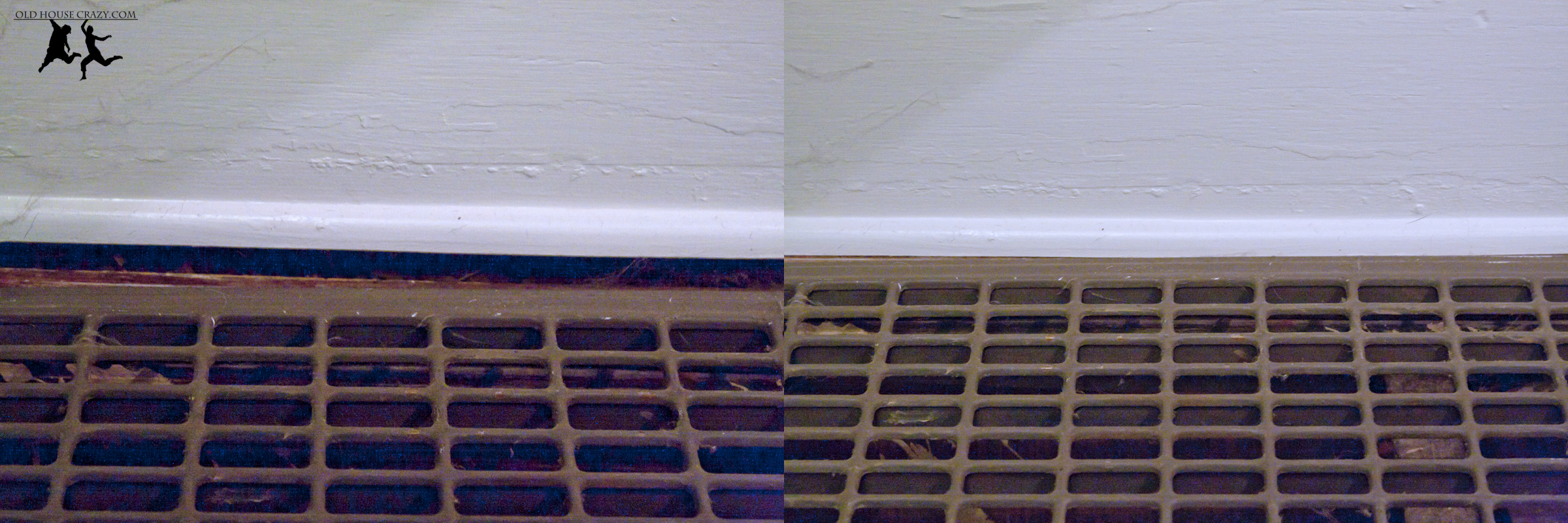
Before and After

Posted in Crawlspace, DIY, Don't Hire a Professional, Floors, House Repairs, Tools and Techniques, Uncategorized | Tagged , , , , , , , | 87 Comments

Antique Ladder Book Shelf – DIY

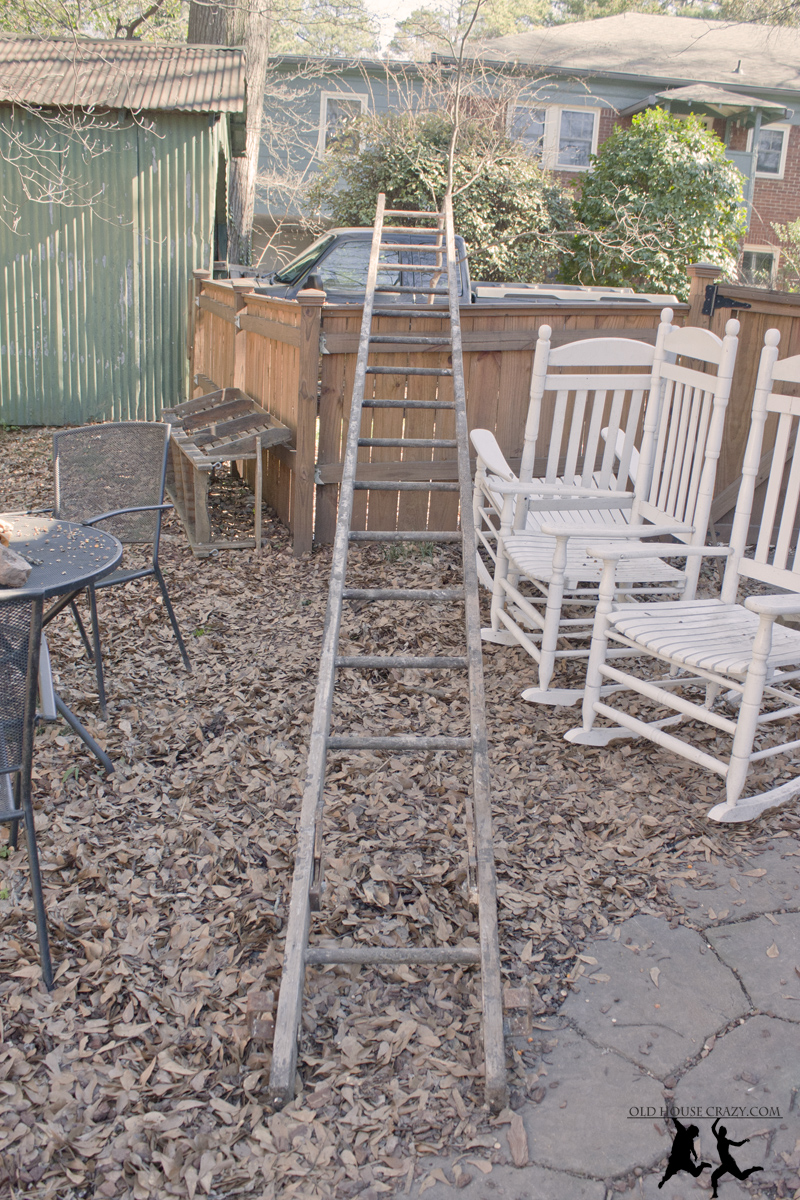
A few weeks ago, our friend Ben posted a picture to Pinterest of a book shelf made from an old wooden ladder. We reposted it, thinking about building one from the old wooden ladder our neighbor, Penny, gave us last year. I knew there was a reason I took it and kept it. The ladder had been in Penny’s basement for many years and she was looking to clean house. It spent the last few months in our garden as a guide for pole beans.

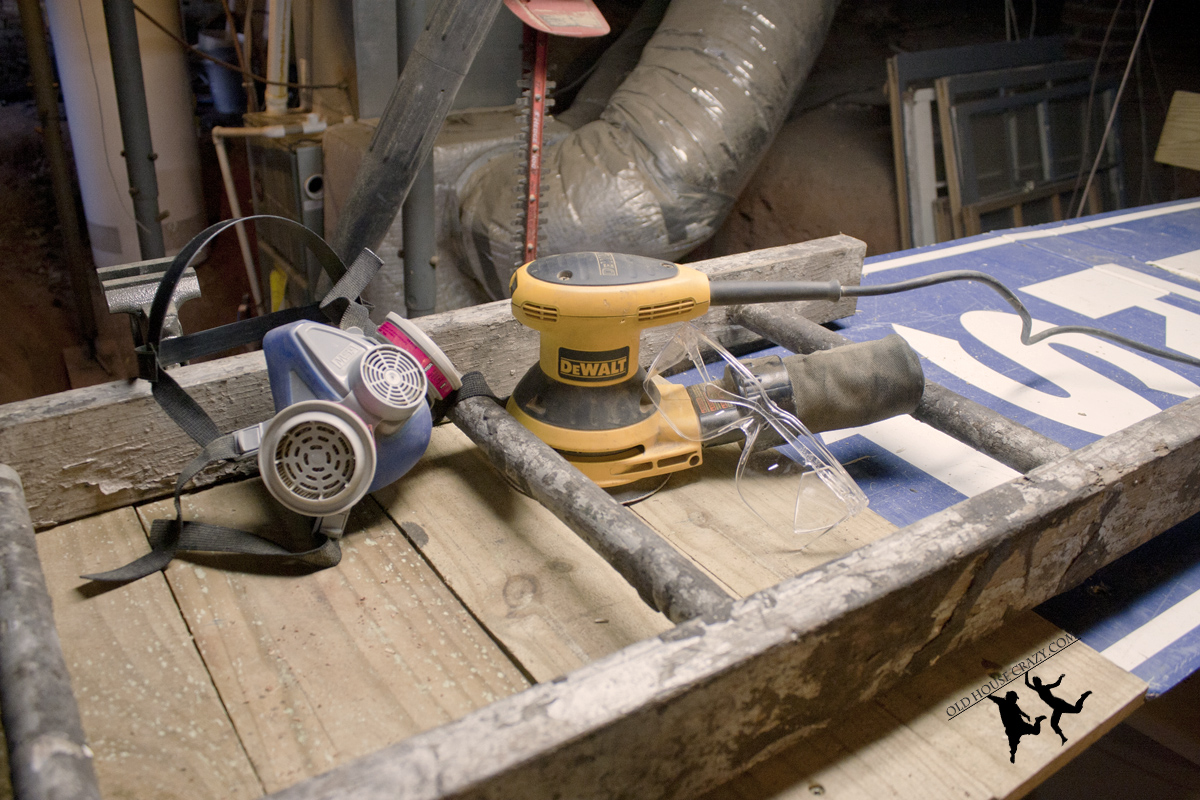
I measured the wall where Christy and I wanted the ladder to hang and figured that I’d need a four-foot section and a three-foot section to fill the space. I cut those sections from the ladder and took them into my basement lab/workshop. Having been used for years, then forgotten for some more years, then stuck in a garden for another year, this ladder was a mess. I began cleaning it up by using a hand scraper, the same tool I use to remove paint from the exterior of our home. After scraping, I used an electric sander to get more of the old finish off. I didn’t want to completely remove the old finish and patina, just most of the gunk and nasty (note the goggles and full face mask. I recommend them).

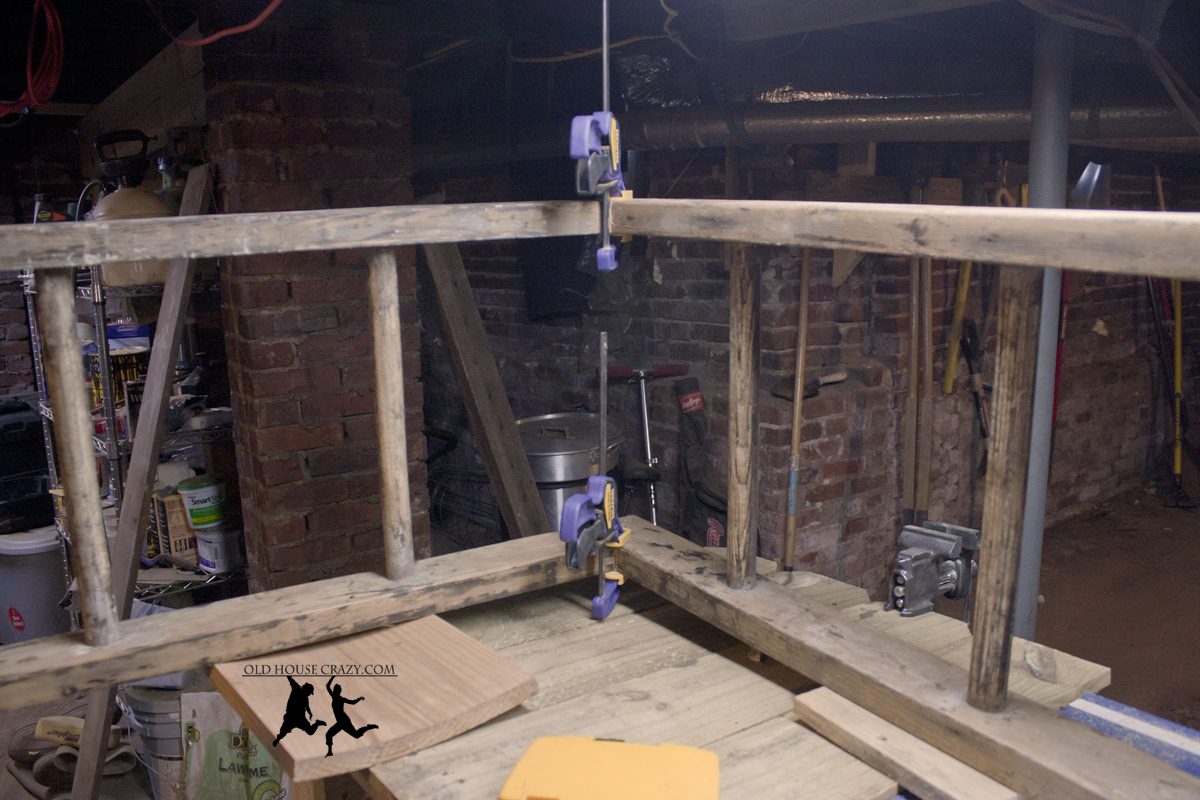
After sanding, I mitered the ends of the ladder sections so that they would fit together in an L orientation and fit into the corner of our walls.

The clamps in the photo above are holding the pieces in place so that I could pre drill holes and insert two 3-inch screws per piece to hold the L together.

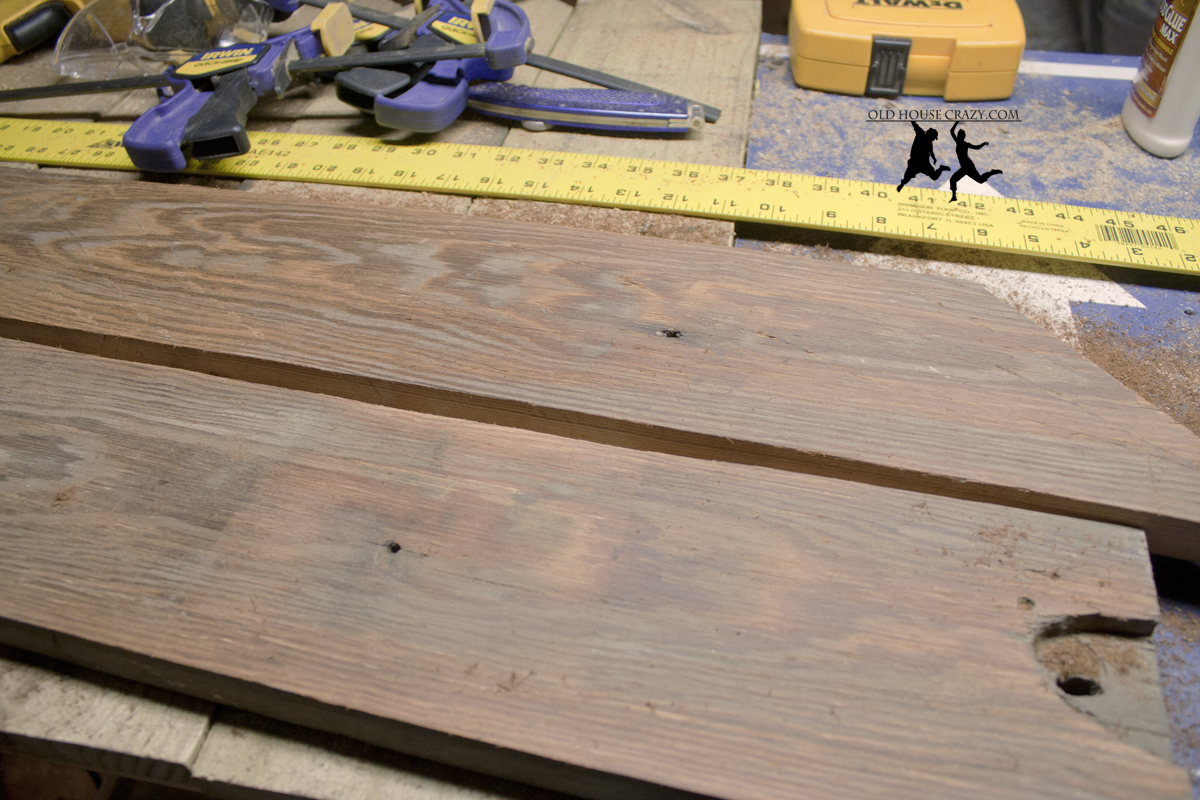
To improve upon the design I saw on Pinterest and to make this my own, I cut an old heartpine shutter into a five-inch wide strip and cut it to length to be a shelf behind the ladder sections. After it was sanded, I attached it to the ladder using biscuits. You can get more information on biscuit joinery here.

The biscuits and glue needed a couple of hours to firm up, so I went to the store and picked up some clear coat in a satin finish. Christy and I put on a couple of coats with those cheapo foam brushes you see in the paint aisle and wonder what they’re for.

Next, I had to figure out how to attach this monster to the walls in our crazy old house. If you don’t have plaster in your home, be thankful. Don’t get me wrong, we love the character and history our plaster walls give to the house. But. . . they’re a huge pain in the butt to hang stuff on. See, you can’t use a stud finder to locate the studs behind plaster because of the way it’s applied. They put up a bunch of thin strips of wood with tiny gaps between them and coat the whole structure with plaster (the same stuff you used in art class – plaster of paris). The thin strips of wood confuse the stud finder.

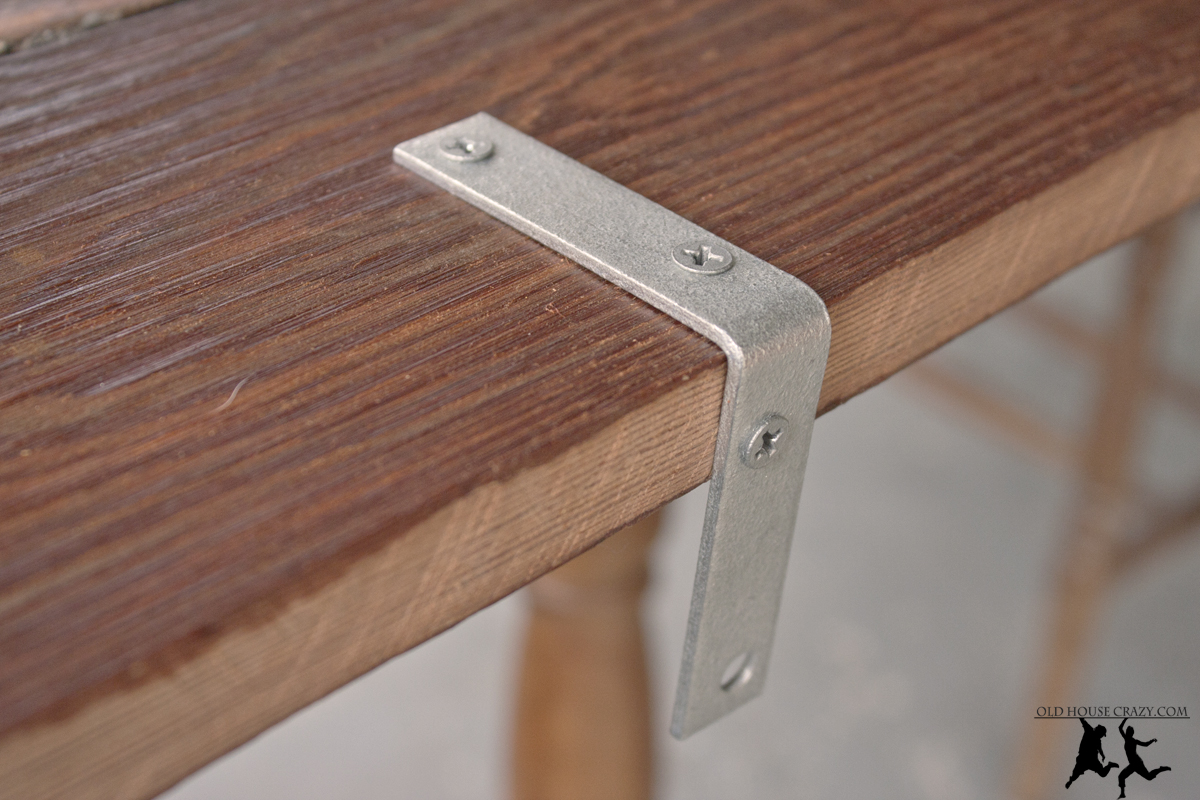
Luckily for me, one of the walls this shelf was to be attached to had, at some point, been torn apart and replaced with drywall. Hooray, I found the studs in that wall and used the corner brackets you see in the photos above and below.

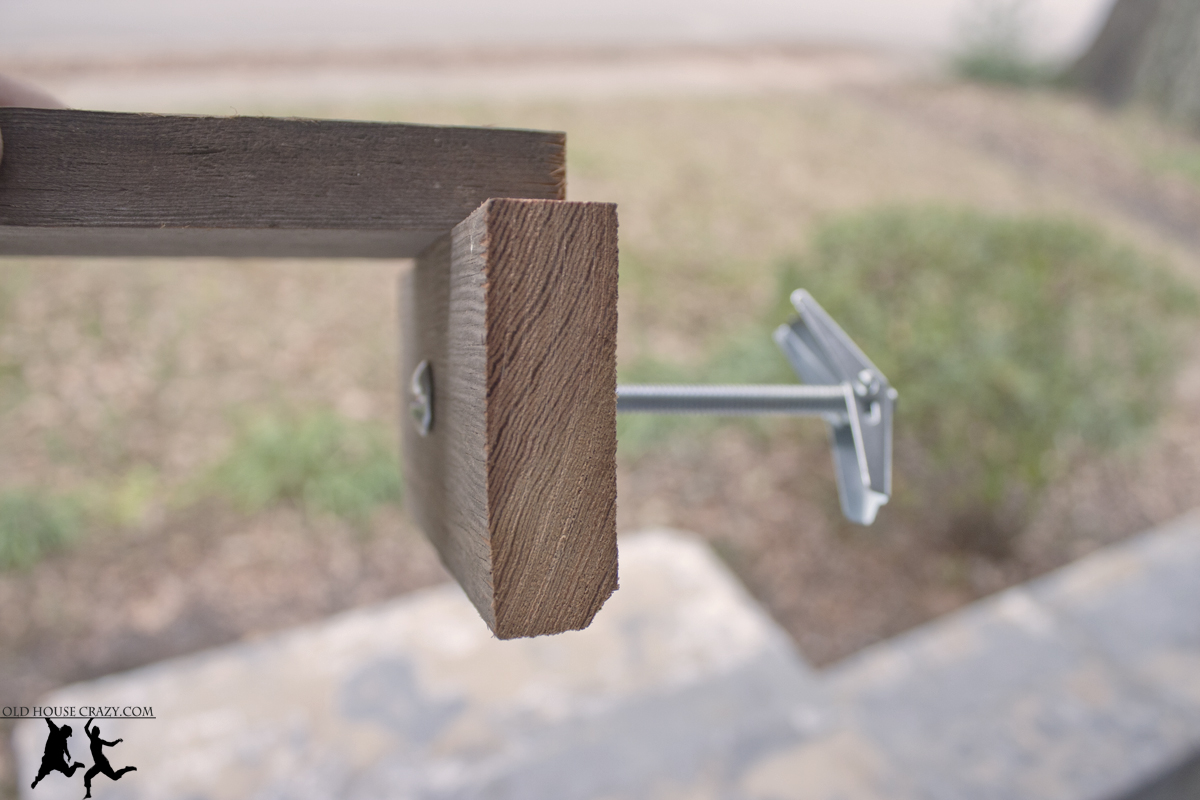
I figured that the four three-inch screws I drove into the studs of wall number one would be enough to hold the shelf up while I attached it to wall number two. I was right. For that wall, I needed to use toggle bolts, which are a whole lot more messy than screws into studs. The photo below shows the giant toggle bolt I used for the shelf on this wall.

I had to drill a 3/4 inch hole in the wall so the toggle could pass through. That gigantic hole is the reason for the large piece of wood you see the screw passing through. It’ll cover the giant hole once it’s attached. I explain toggle bolts in a little more detail in this post. Once the toggle was firmly attached to the wall, I used wood screws to attach the wood blocks to the ladder, as you see in the left side of the photo below. Thanks for reading – Robby.

Posted in Better than store bought, DIY, Furniture, Home Built, Repurposed, Tools and Techniques, Woodworking | Tagged , , , , , | 11 Comments

Fancy Bread Pudding – MIY (Make it Yourself)

In the dead of winter when it’s semi-miserable outside, we like to make ourselves a little happier through the avenue of comfort food. Part of our obsession with old houses and doing things ourselves spiderwebs out into cooking. If you’re going to work on your house and build beautiful things yourself, you might as well cook delicious food for yourself, too, right? Right.

Hi folks, Christy here, making my debut on the blog today! When I was a kid and I overheard my adult family talking about bread pudding, I was pretty grossed-out. Pudding is pudding, and bread has nothing to do with pudding, so I couldn’t imagine why someone would ever cook the two together. Bleehh, thought my ignorant child brain. Now, as an adult I know why people cook the two together. Because it’s delicious, that’s why. It turns out that it’s actually pretty inexpensive, too, which is part of why I selected it for my Saturday afternoon kitchen adventure.

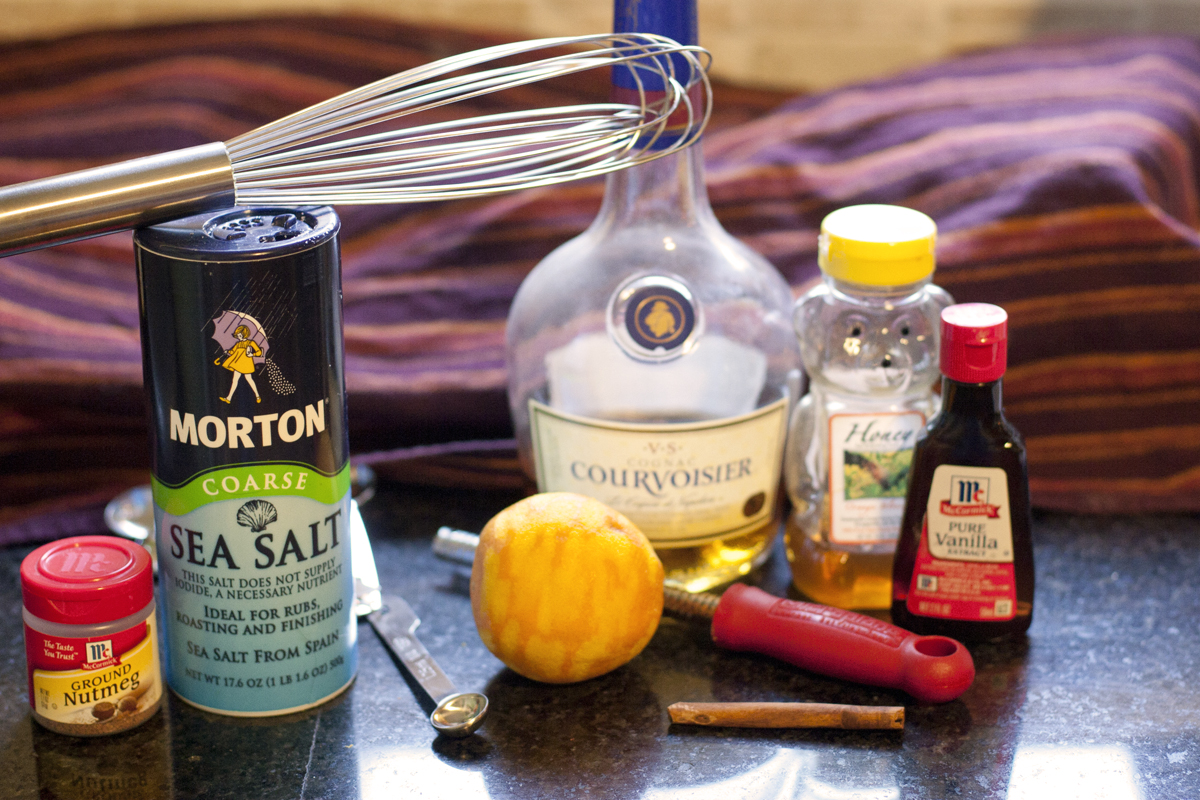
We already had everything we needed in-house, minus the half & half and the Krispy Kreme doughnuts. So I spent about $5 getting what we didn’t already have; not too shabby. Here’s what I used to make fancy bread pudding:

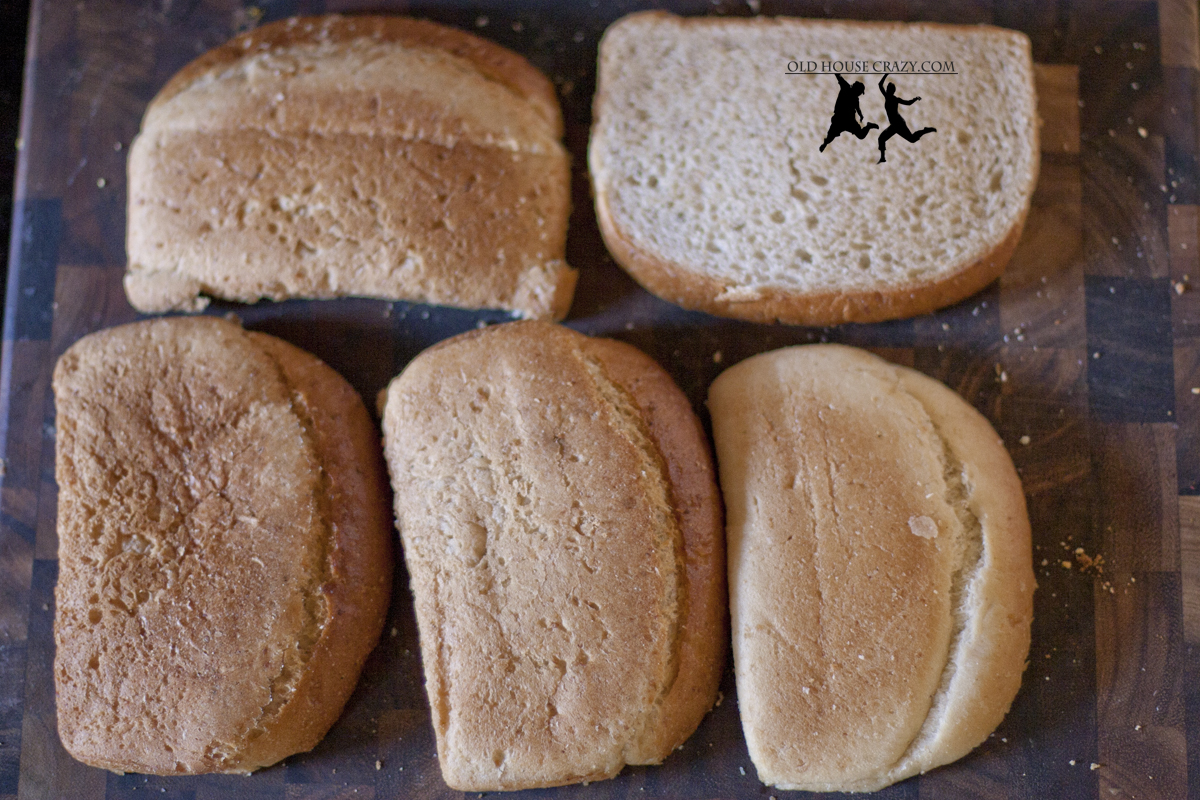
-the end pieces from a few loaves of bread (leftover from the last 2 weeks of making sandwiches for sack lunches)

-four Krispy Kreme original glazed doughnuts (okay, I bought six, but Robby and I each ate one… can you blame us?)

-8 extra large eggs

-5 cups half & hlaf

-honey (about 3 tablespoons)

-the zest of 1 small orange

-1 teaspoon vanilla extract

-1/4 teaspoon sea salt

-1/2 cup cognac

-1/4 teaspoon grated cinnamon stick

-1/4 teaspoon nutmeg

I call this “fancy” bread pudding because I adapted the recipe from a Barefoot Contessa recipe out of her book, how easy is that? Barefoot Contessa is fancy, but I stepped it up a little more with extra ingredients. To her recipe I added the Krispy Kremes, cinnamon, nutmeg, and cognac. I would also suggest enjoying your fancy bread pudding with a cordial of sherry, port, or cognac (you know, since it’s winter and all…) or a cup of coffee.

Additionally, Barefoot Contessa uses a challah loaf for her bread component, while I opted for the old regular loaf ends and Krispy Kremes.

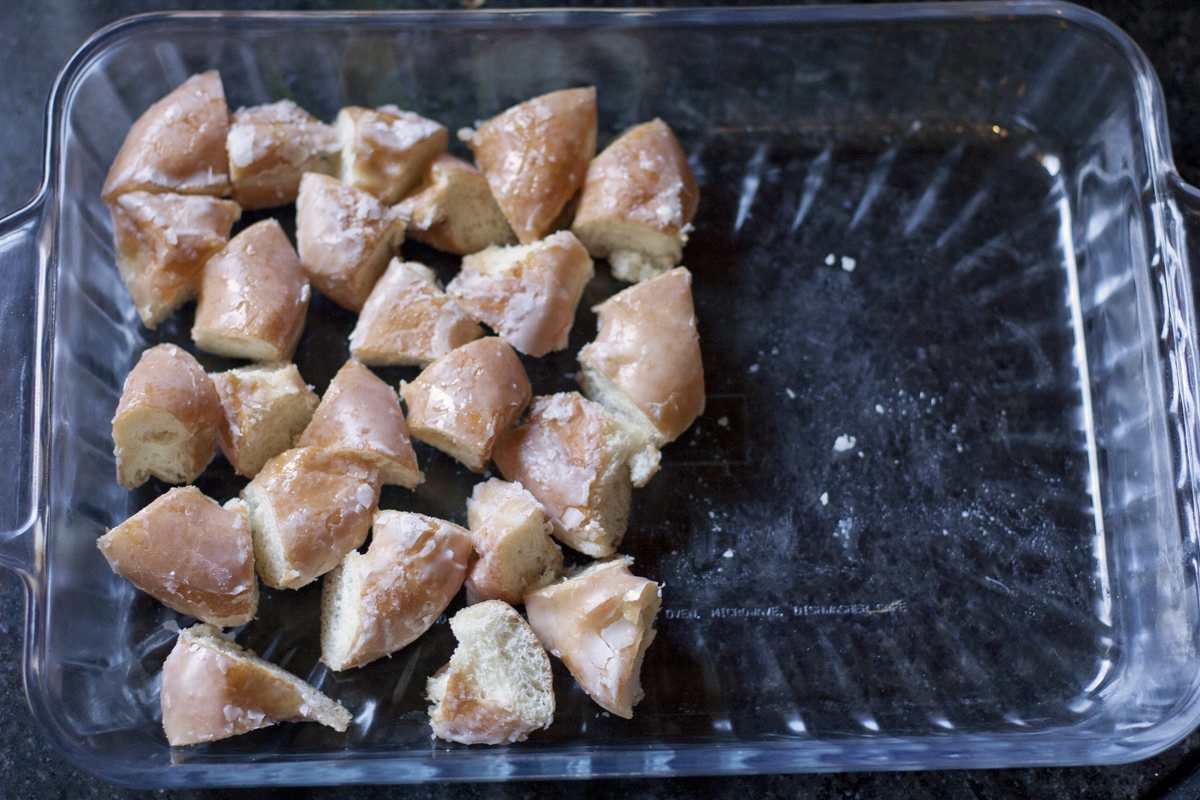
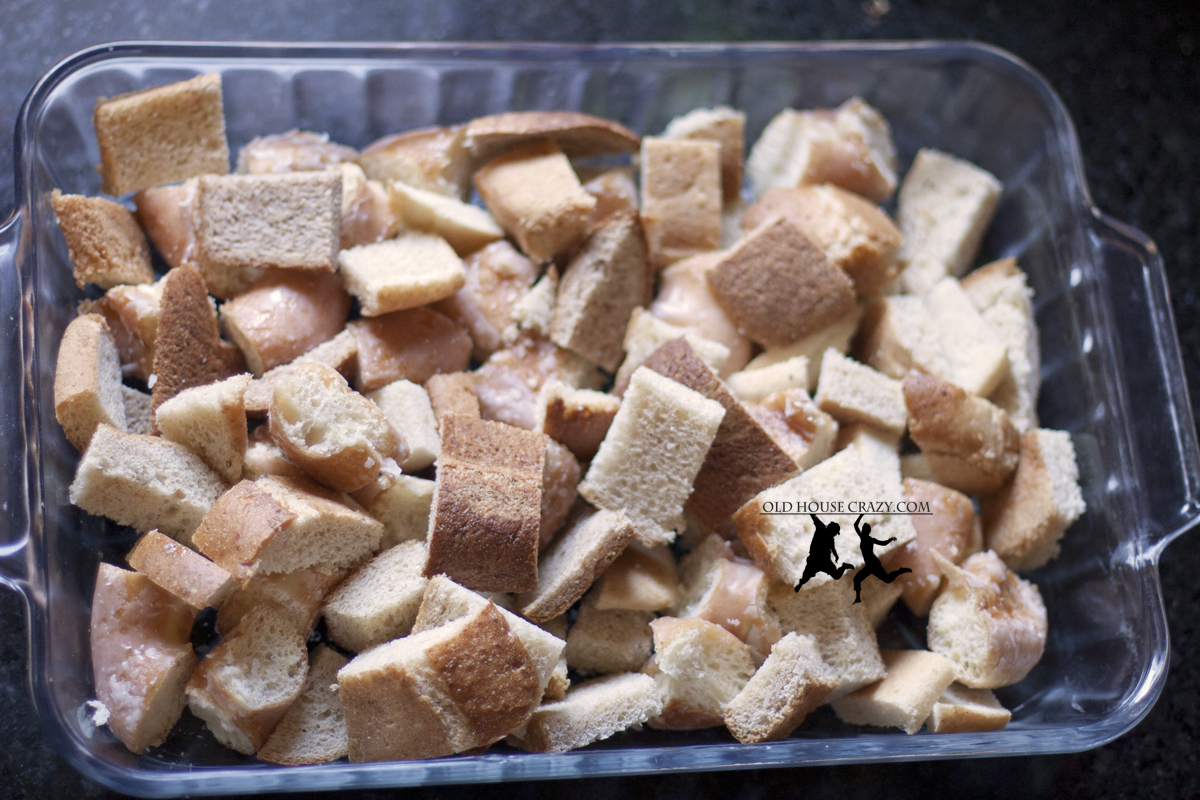
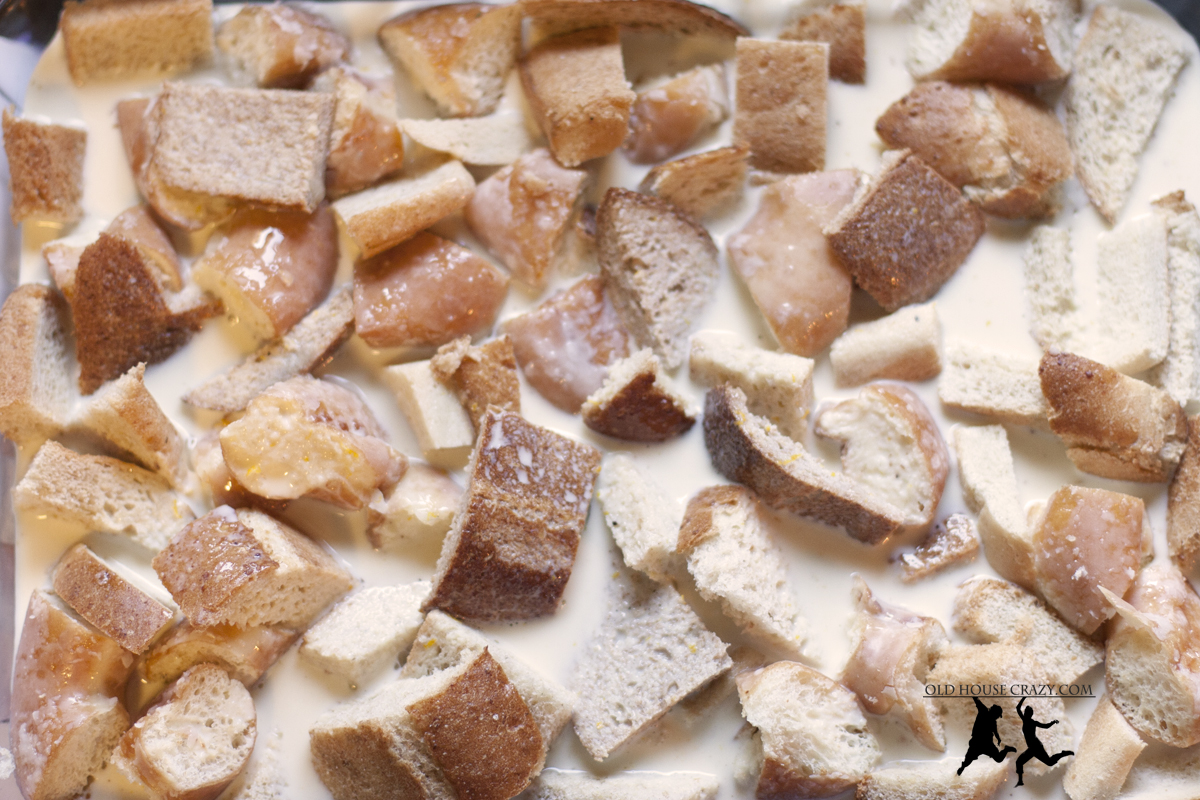
To make the fancy bread pudding, slice the bread and Krispy Kremes into chunks roughly 1.5″ x 1.5″ x 1.5″, and lay them in a 13 x 9 baking dish. Just throw them all in together and mix the different types of bread around evenly. No need to grease the baking dish.

In a separate bowl, whisk together the eggs, half & half, honey, orange zest, vanilla, nutmeg, cinnamon, cognac, and salt. I would recommend using a stand mixer if you have one, as this ends up being a lot of liquid and whisking by hand tires out your arm rather quickly. After whisking, pour the mixture over your bread & Krispy Kreme chunks, press them down into the liquid with your fingertips (you’ll see air bubbles escaping – this is good), and let it soak for about 10 minutes.

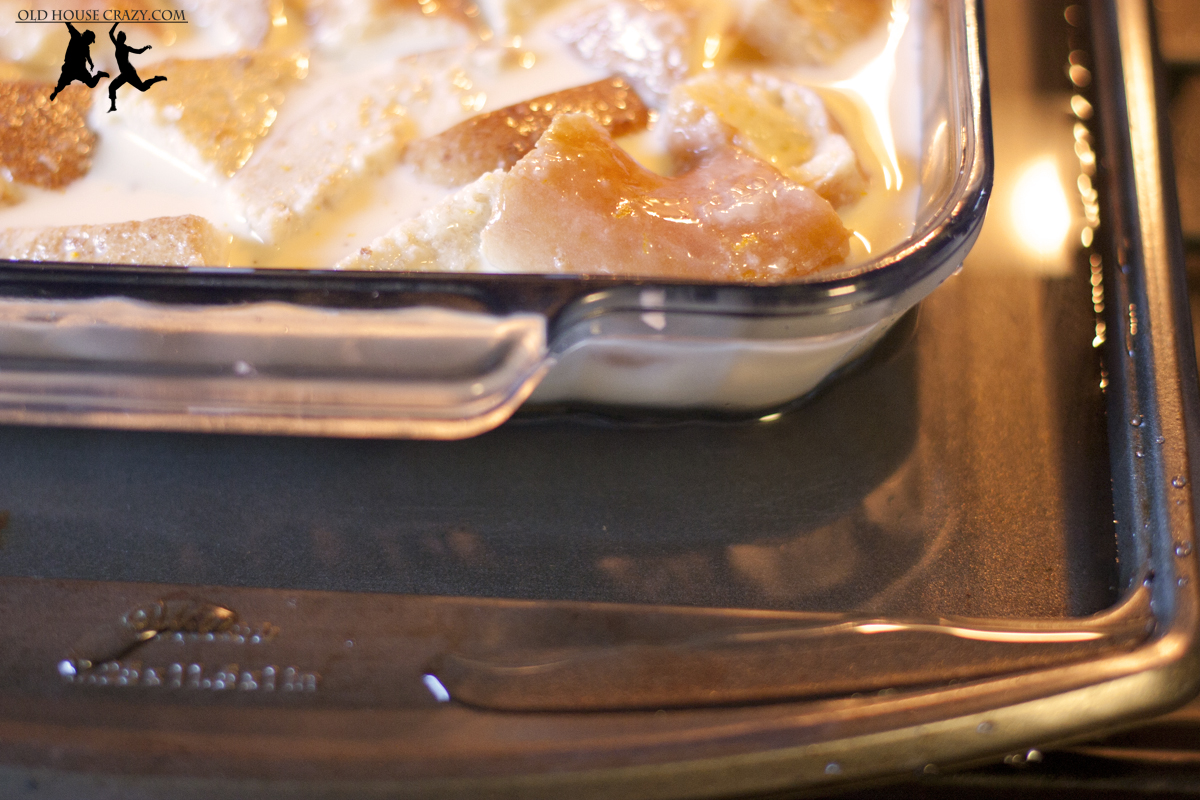
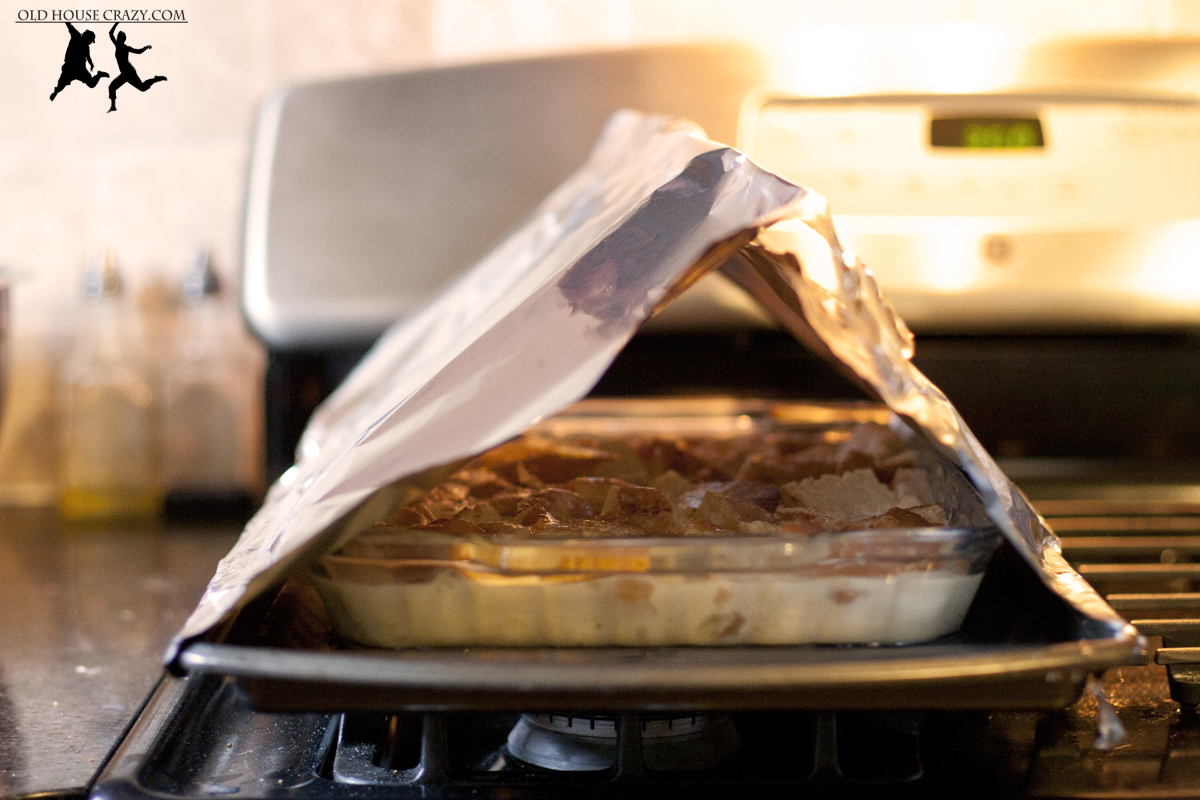
Next, place your baking dish into a larger pan. Barefoot Contessa calls for a roasting pan, but I didn’t have one, so I used a cookie sheet with tall edges. Add hot tap water to the roasting pan / cookie sheet / whatever you’ve got as high as you can, up to one inch deep. Make an aluminum foil tent with two sheets, and cut a slash on each sheet for venting. Bake at 350 degrees for 45 minutes with the aluminum foil tent in place, then remove the foil tent and bake for another 45 minutes at 350, until the pudding puffs up and the custard is set. Allow your fancy bread pudding to cool for a bit before you devour it. An extra sweet drizzle of nice maple syrup and a sprinkling of confectioners sugar is suggested.

Thanks for reading!

Posted in Better than store bought, Desserts, Home made, Mood Boosters | 2 Comments