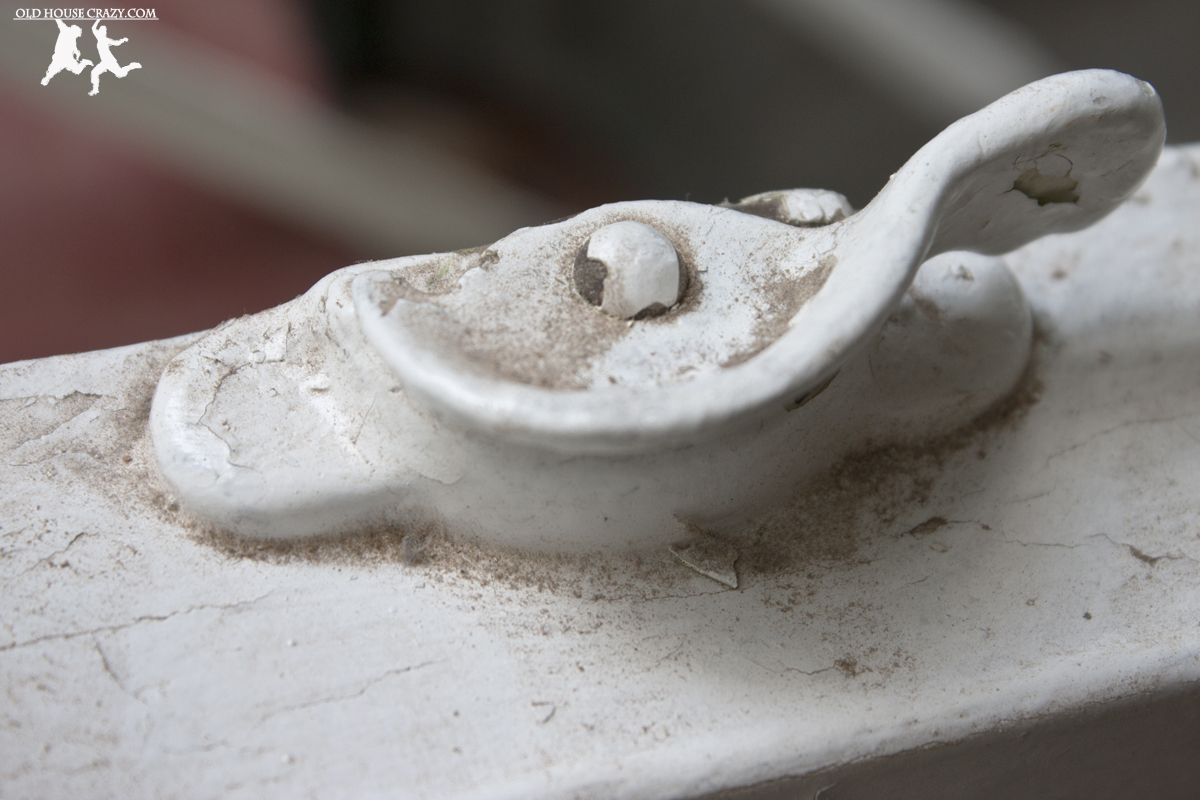
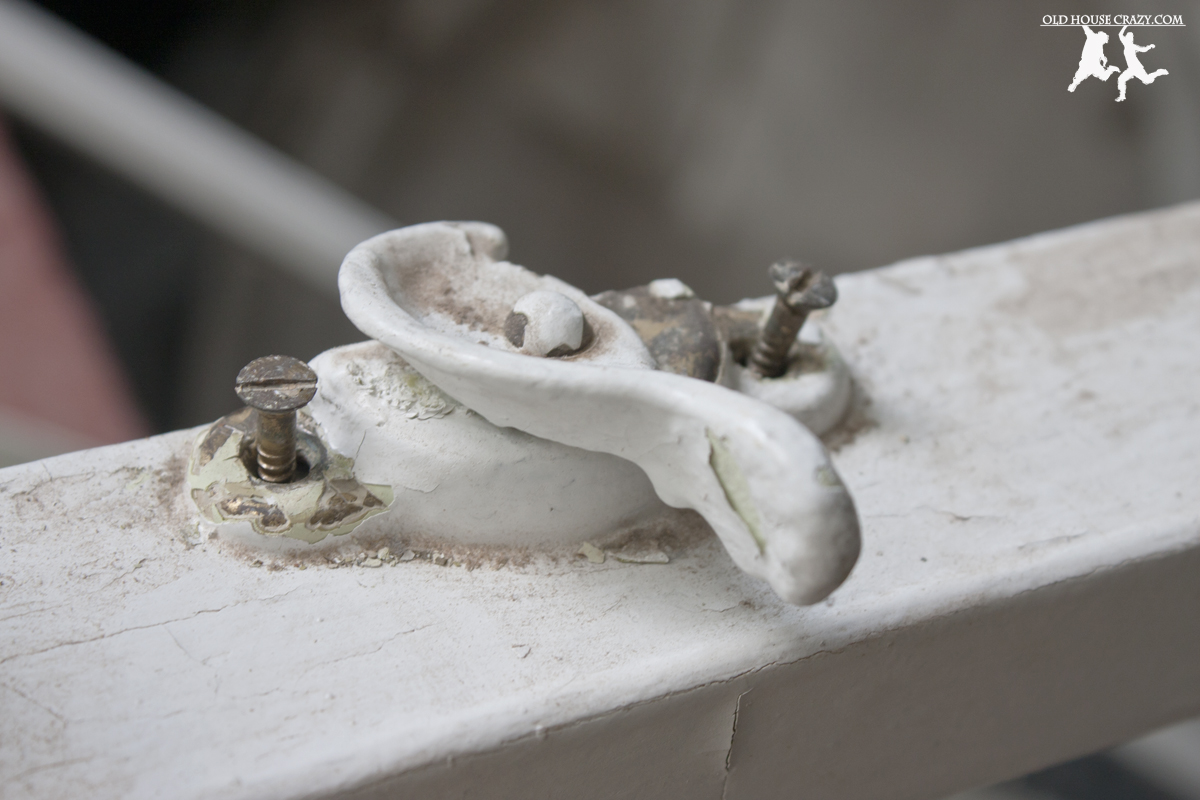
One of my least favorite things about owning an old house is the fact that, somewhere down the line, a lazy person painted over all of the hardware throughout the house. This includes doorknob escutcheons, window hardware, light switch plates, and the wall registers.
I’ve seen a bunch of products that are intended to remove paint from items like these, but was really put off by the warning label on one. It said that I should cut off the power to the room in which I’m working so that the fumes don’t ignite when they come in contact with electrical outlets on the floor. Scary stuff.
Our first summer of homeownership, I decided that I’d remove the paint from all of the doorknobs and escutcheons throughout the house. I googled and found an approach that seemed all too easy to me: boil the hardware in water and baking soda.
That summer, I removed all of the doorknobs and door hardware, boiled them, and replaced them. It was my first big success as a DIYer in my old house.
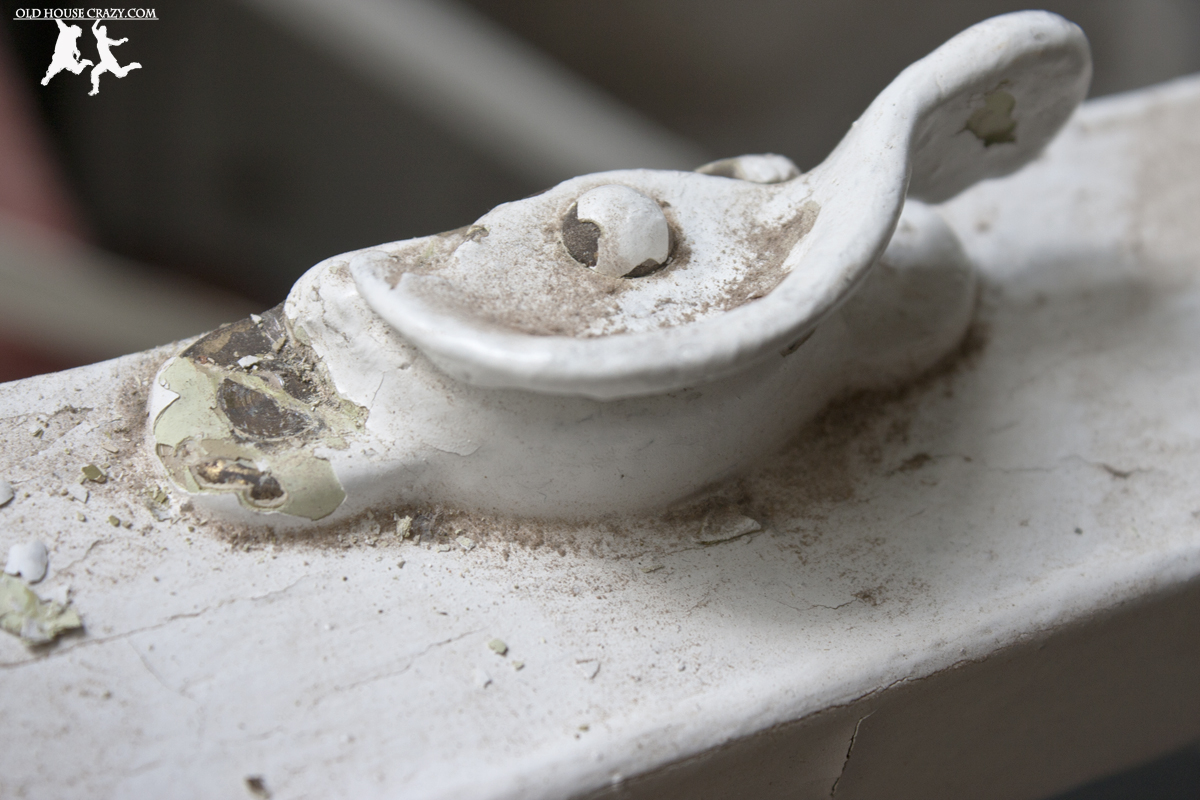
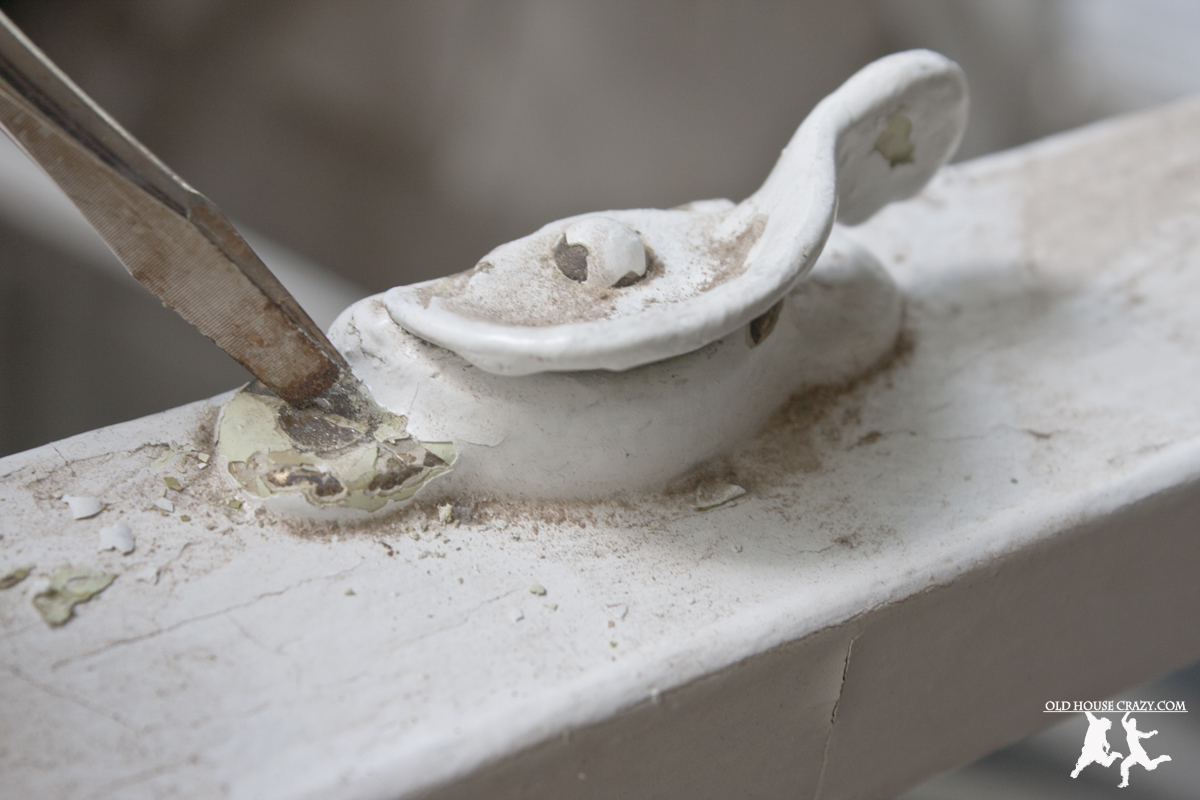
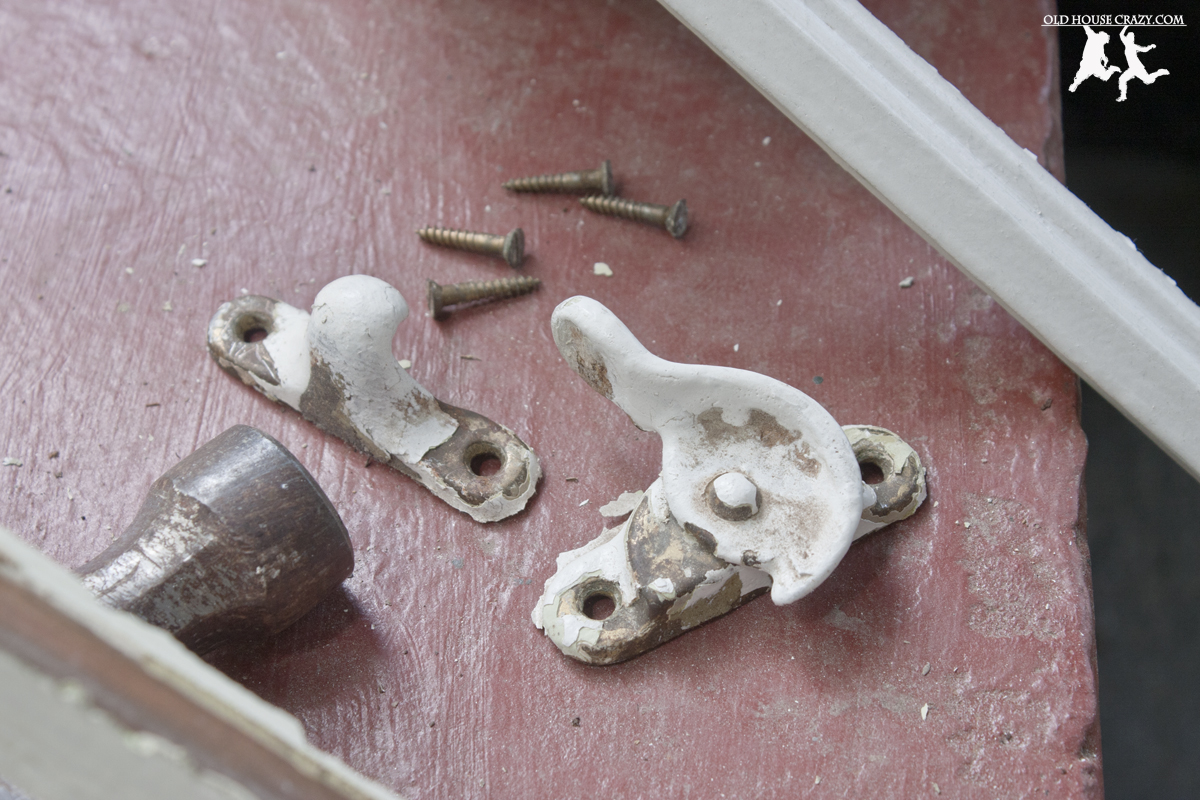
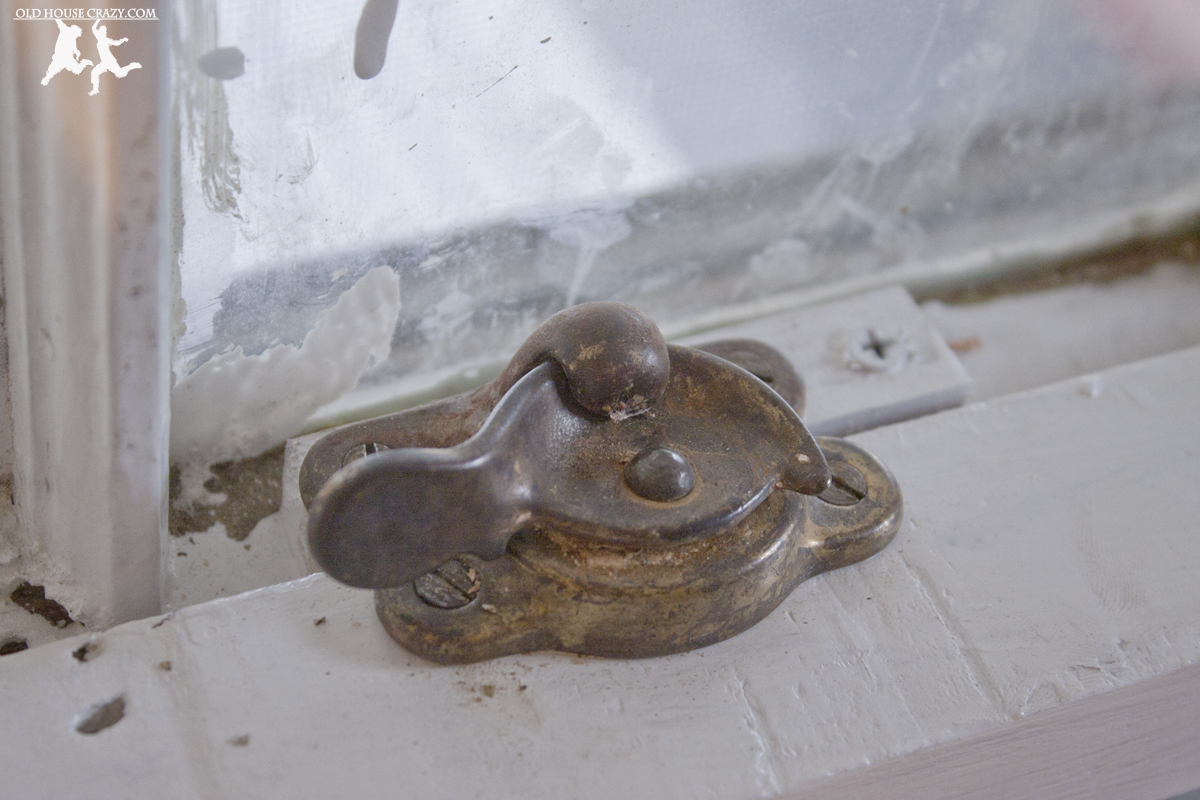
As with any old hardware, the first step to removing the paint from these window locks was to remove them from the old window sashes. Since the screw heads were completely covered with paint, I had to scrape that off with a flat-head screw driver. Use caution not to damage the lock or the screw. Yes, I worry about the screws. Most of the old screws match the hardware, so you want to replace as few as possible.
Once I uncovered the screw heads, I used the same flat-head screwdriver and a rubber mallet to clean out the groove in the head of the screw. Just tap tap taperoo until you scrape all of the paint out of the groove, or at least enough so that you can unscrew it.
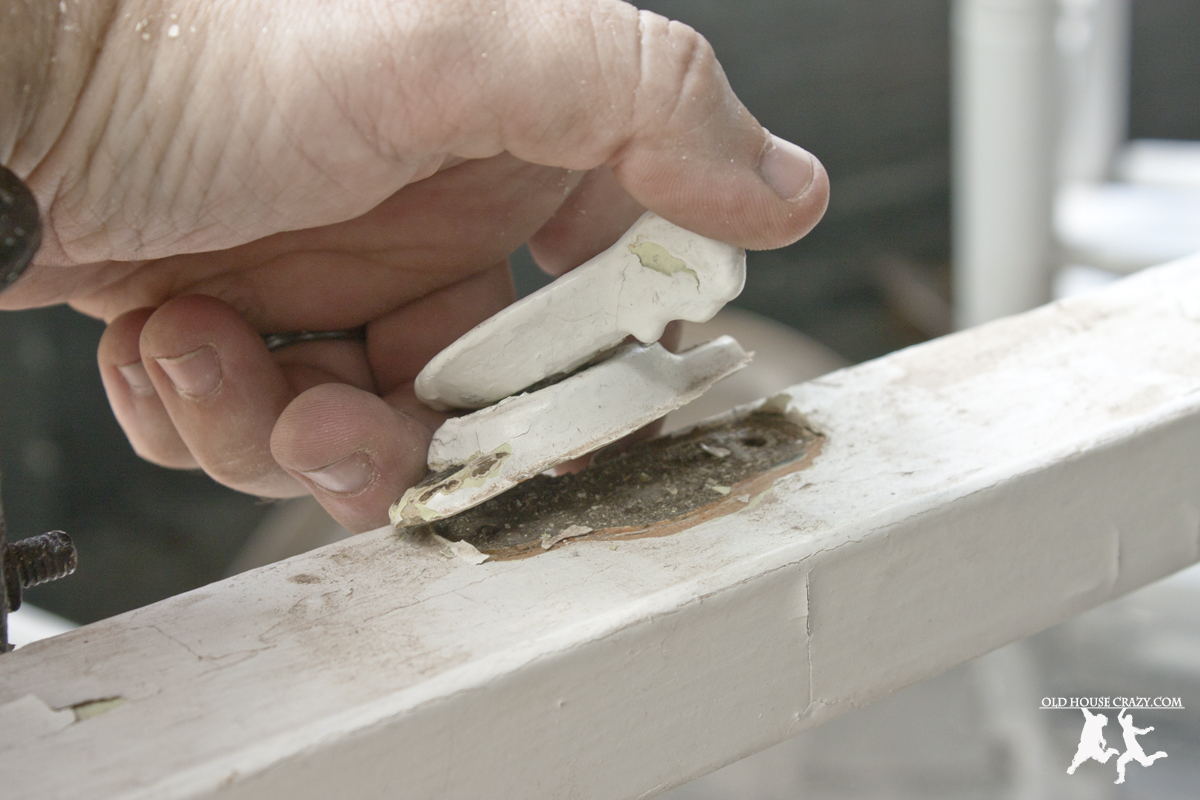
If you’re not planning to repaint the window sash or whatever your hardware is attached to, you need to trace the outside edge of the hardware with a knife so that you don’t damage the paint when you lift the piece. Since I was planning to repaint the window sashes, I didn’t take any care when ripping off the locks.
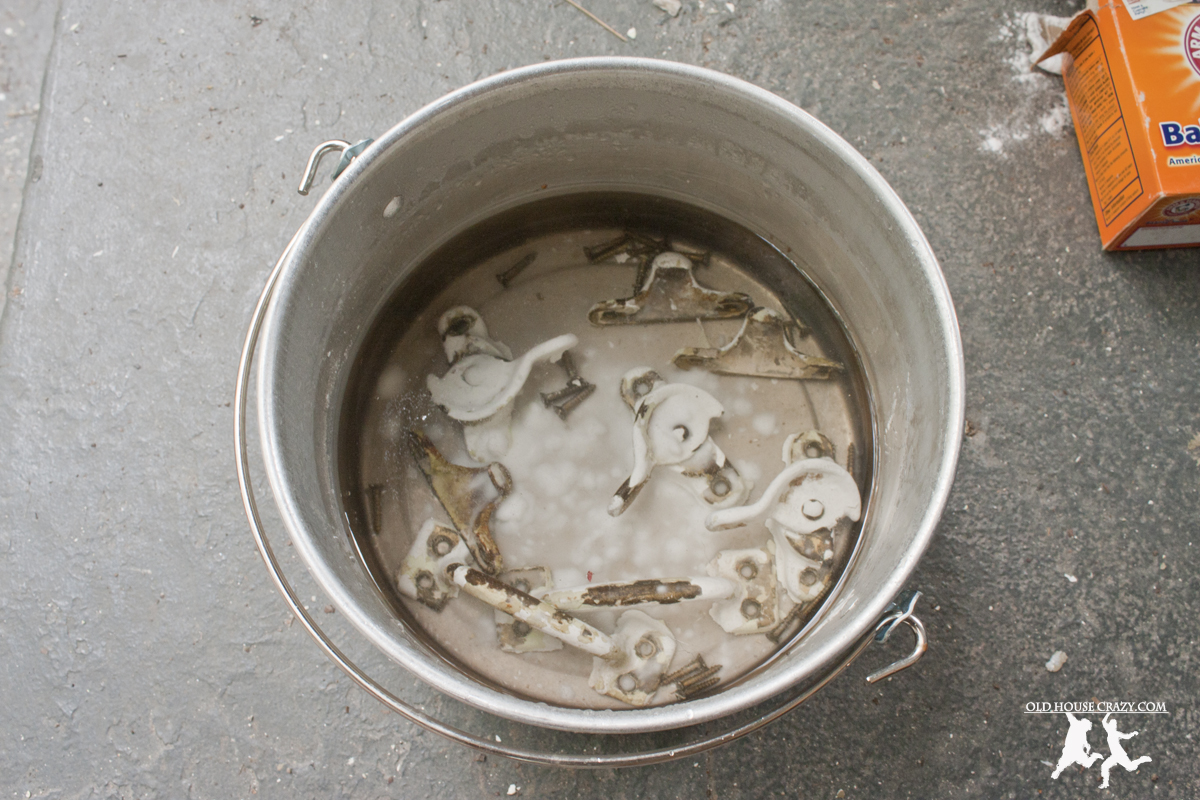
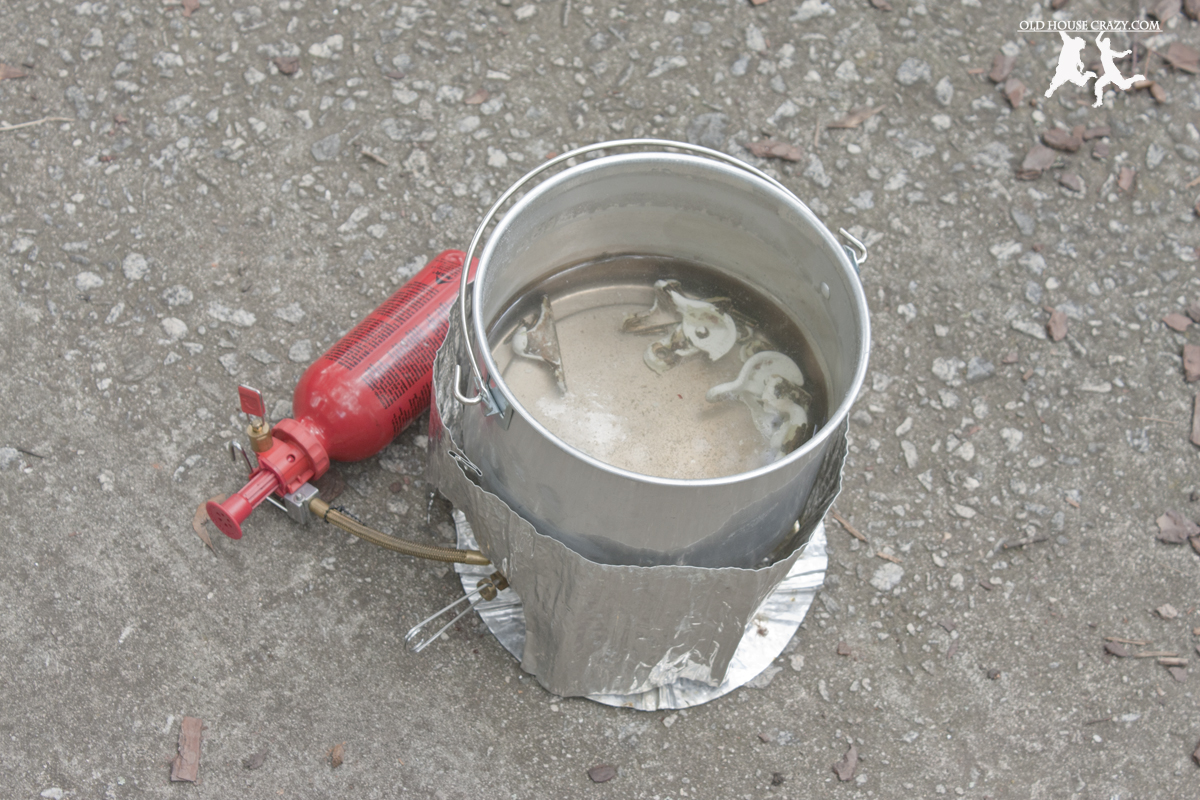
My next step was to place all of the hardware into a pot of water and mix in some baking soda. I didn’t measure. I just threw some in the pot until I was happy. It’s not an exact science.
I used a backpacking stove so that I could do this cook outside. You can do it inside, but the smell is something awful. Open a window or something.
Once they’d boiled for about thirty minutes, I set the pot aside and let it all cool off. Most of the paint peeled right off of the metal. Any that doesn’t can be removed with a wire brush.
Here’s the final product, reinstalled on the window sash with the original screws. You can see that I cut a tiny piece of wood to lift the back piece of the lock up so they would meet properly. These old windows don’t always fit properly, but that doesn’t mean they can’t still be fully functional. Thanks for reading. If you’ve got any questions about this post or the site in general, email us at oldhousecrazy@gmail.com.
If you own a home, chances are you’ll encounter a broken pane of glass at some point. If you have kids, pets, or an idiot husband (or neighbor), those chances go up quite a bit. Our dogs broke the first three panes of glass I had to replace. I broke the next three. The first I broke with an extension ladder. The last two I broke trying to reglaze them.
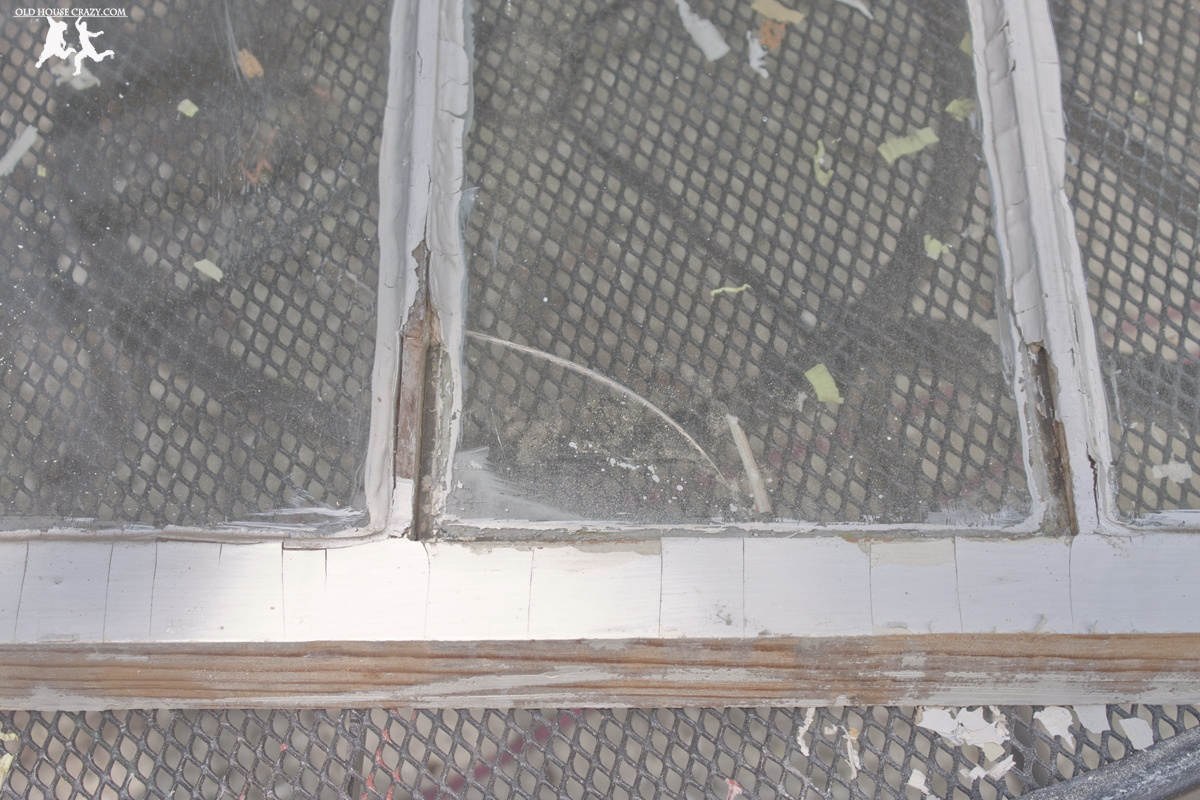
The cracked pane in the photo above was broken at some point during the last three years. It might have been cracked when we bought the house, but I can’t remember. This particular pane was in one of the upper window sashes in the window bank in our front room. Since I’m restoring those windows, I figured I’d go ahead and replace the broken pane. Hopefully I won’t need to replace any others in this bank. We’ll find out as I reglaze those. Removing the old glazing sometimes results in broken glass.
The video above shows how I removed the old glazing compound from the broken window pane. For the windows I’m restoring, I’m replacing ALL of the glazing compound. While glazing compound lasts a really long time (50 years or more), it had finally worn out on my windows and was falling apart. When that glazing cracks or chips, water can get behind it and rot the window sashes, the window frames, your floors, etc. Now if you’ve got new aluminum or vinyl windows, you shouldn’t have old-fashioned glazing compound. Since I don’t have that type of window, I can’t speak for certain, but I think you’ll have caulking or strips of sealant.
Use a stiff putty knife to remove the old glazing compound
That glazing compound starts off feeling very similar to playdoh, maybe a little softer. Once it’s applied and cures on the window pane, it hardens to a consistency similar to cement. It is very hard and does its job extremely well if you take care of it. That includes painting it carefully and regularly (each time you paint your house or windows).
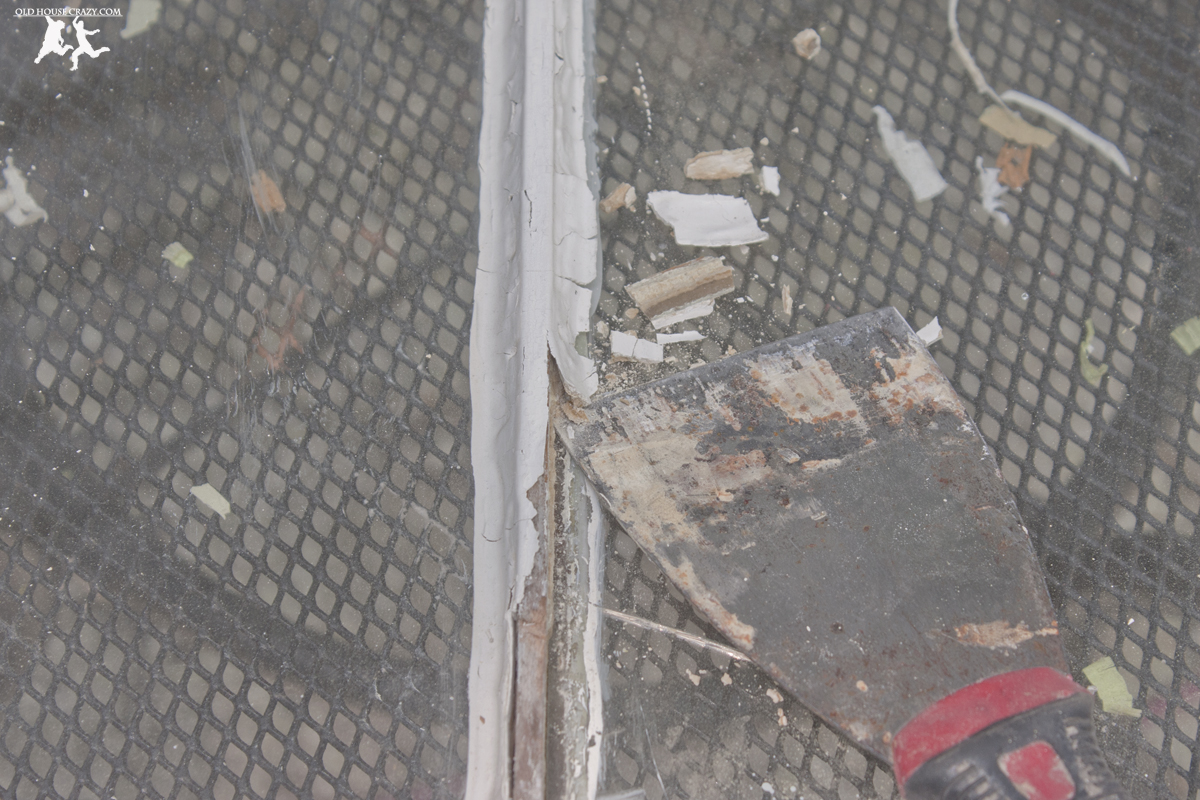
Here’s the pane after the old compound was removed
To remove the old compound, I use a stiff putty knife with a beveled edge. Place the edge of the putty knife completely flat on the glass and move it under the glazing compound. It will require a good amound to pressure, so be very careful not to lift the putty knife off of the glass. If you press a point of the knife into the glass with enough force to remove glazing compound, you can very easily break through the glass.
Remove the old glazing points with pliers
But the glass is already broken. Why don’t we just break it and pull out the pieces? You can do that. It’ll get the job done. But you’ll still have to remove the old glazing compound from the window sash with a putty knife and now you’ve got broken glass all over the place. I try to keep the shards of glass that can stick in my skin to a minimum.
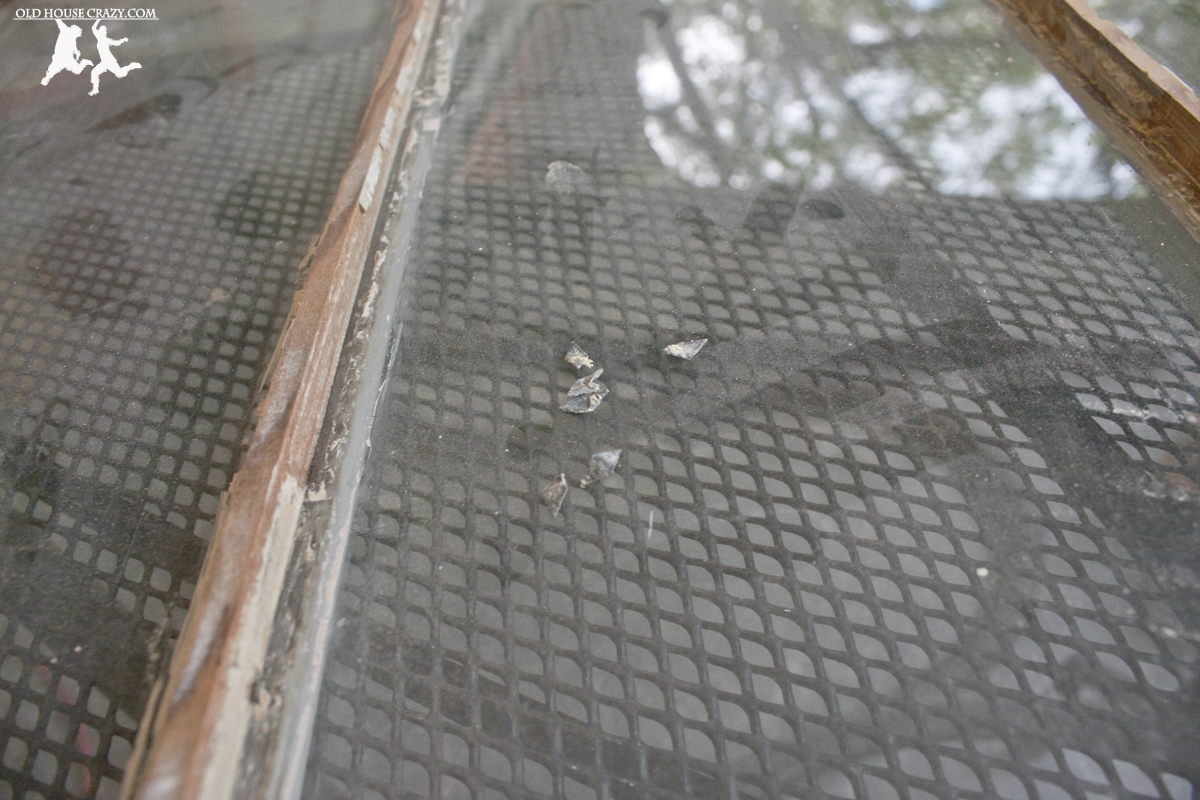
Old glazing points and bits of metal
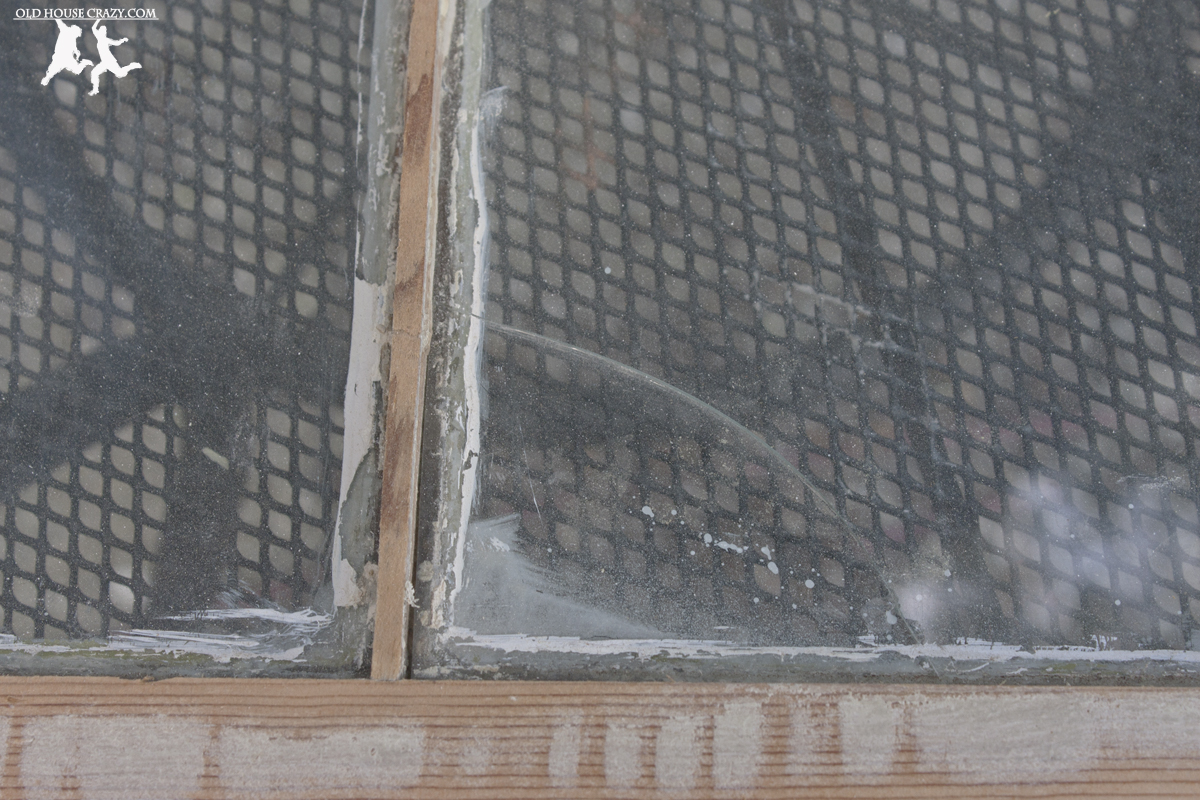
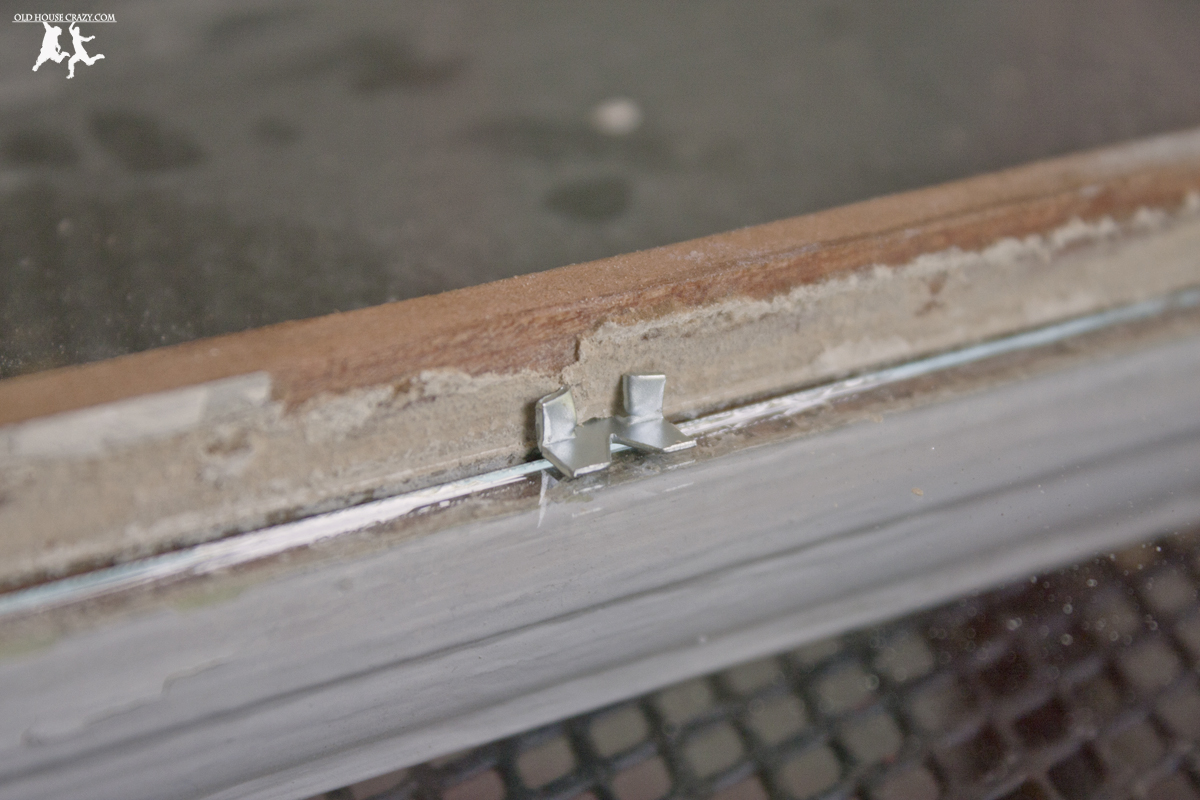
After you’ve cleaned up the old glazing compound, you’ve got to find and remove the old glazing points. They’re little diamond-shaped shards of metal that hold the glass in place in the window sash. They are put in place using a point gun very similar to a staple gun. I pull them out using needle-nosed pliers. After you’ve got the points out, you can remove the old glass. The only things holding that glass in place are little shards of metal and some hardened playdoh. Remove those things and the glass comes right out.
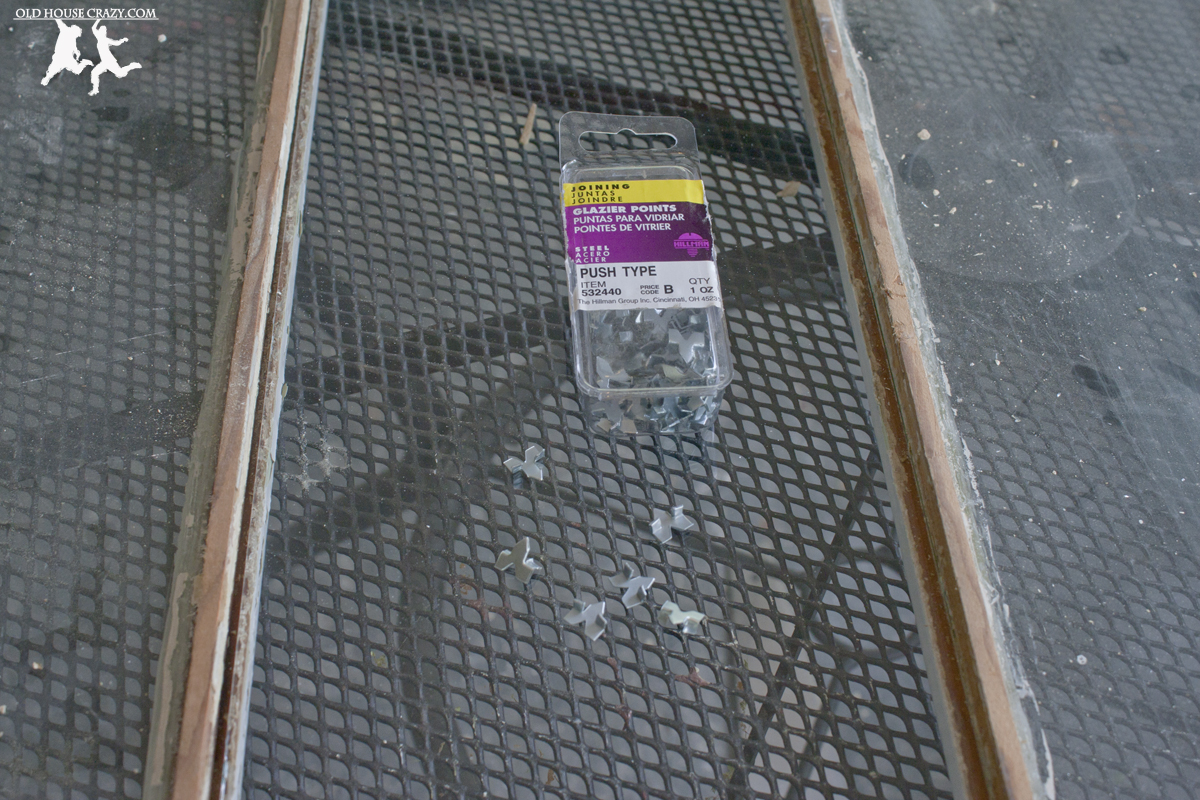
New glazing points are a little bigger. You can push these in without buying a glazing point gun.
Go to the hardware store and get some glass cut to fit the hole in your sash. You can get the glass cut an eighth to a quarter of an inch smaller than the hole. If you get it cut to the exact dimensions and the sash is a little out of square, the glass won’t fit. If it doesn’t fit, you can’t trim it down. You’ll have to get another piece cut.
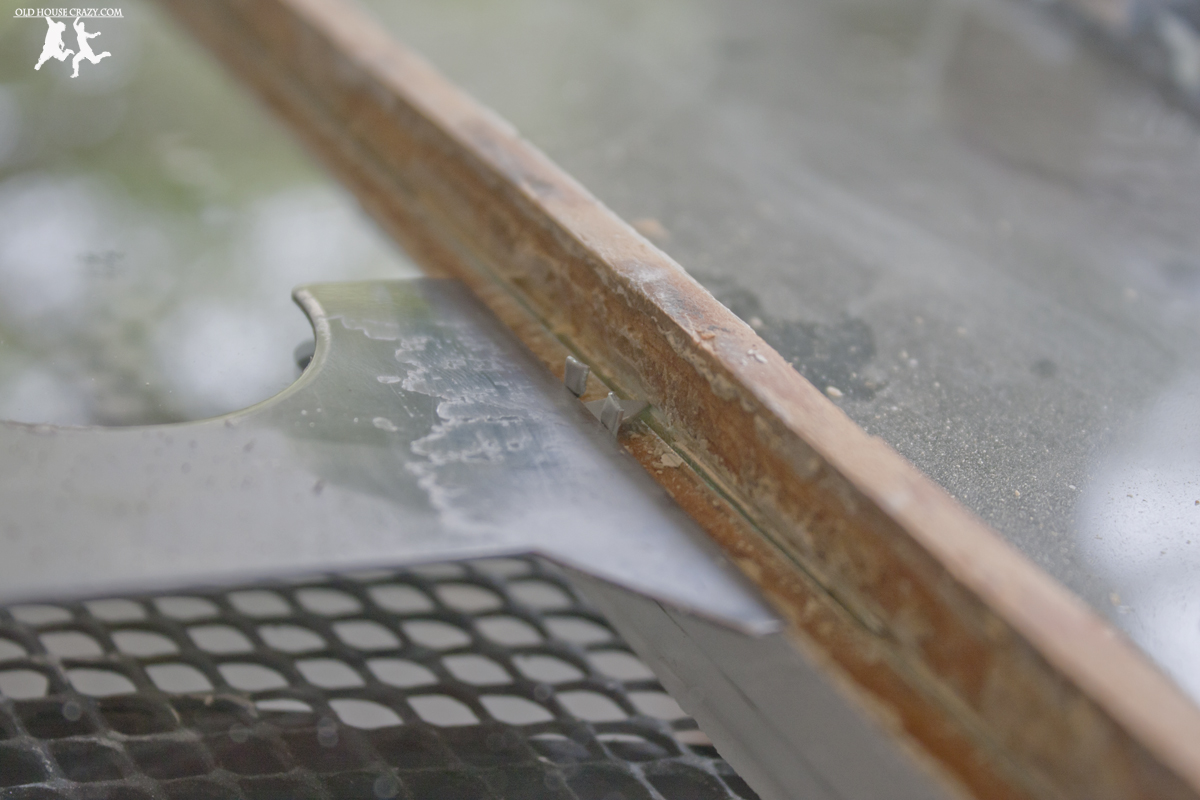
Push in the glazing points with a putty knife. This is the most likely part to break the new pane of glass.
Since I don’t have a glazing point gun, I use push type glazing points. They’re much bigger than the old points and are therefore harder to cover with glazing compound. They’ll also make it much easier to crack your new glass. You can see the technique in the photo above. Using a glazing knife or putty knife. Once again, hold the knife perfectly flat and use as small an angle as possible. What I mean is that you should hold the knife almost like it’s laying on the glass. If you apply downward pressure while you’re pressing the glazing point into the wood, you can very easily crush the glass right on the edge. You’ll then have to start over with a new pane of glass. I’ve done that several times. I’d recommend buying two panes if this is your first time, just in case.
Above, you can see a new glazing point properly installed. It’s flush with both the glass AND the wood. These panes were 28 inches tall by 6 inches wide. I used one glazing point in the middle of each short side and three points on each of the long sides. Stay away from the corners. They are extremely easy to break. Come about 4 inches away from the corners on the long sides before you apply your first point.
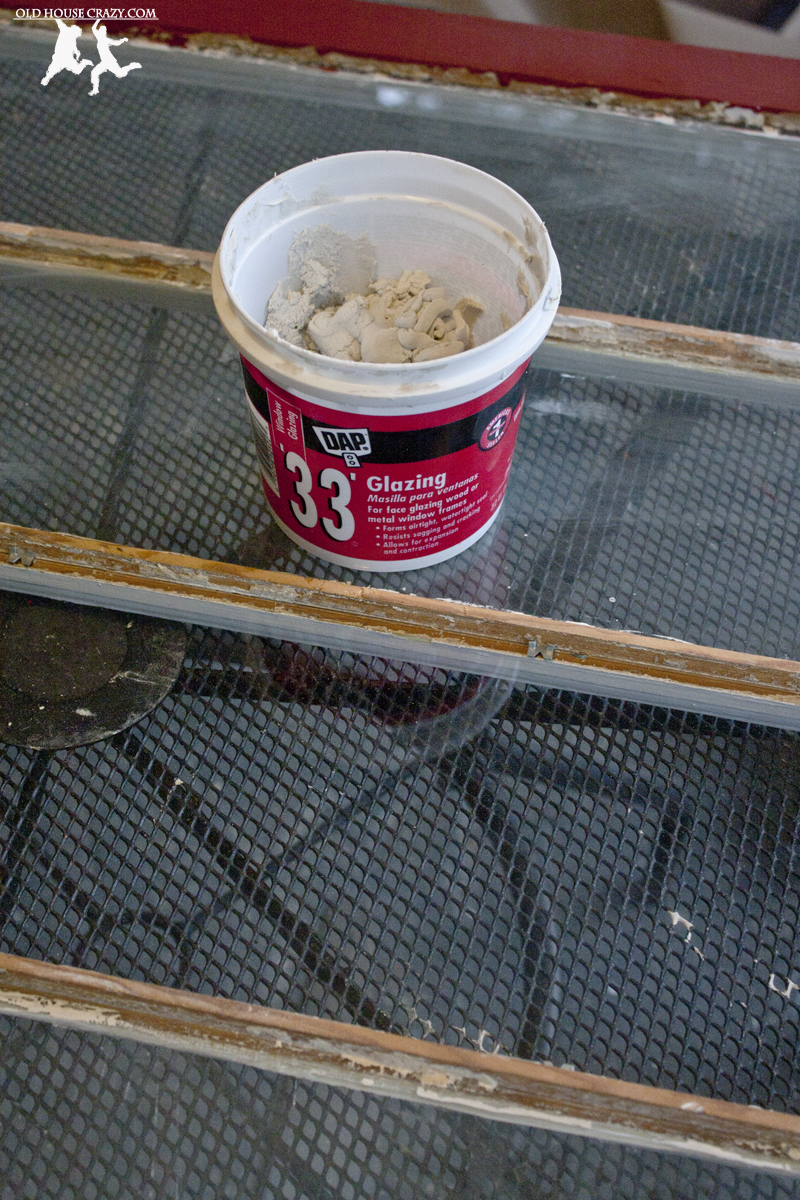
DAP ’33’ glazing compound is what I use to seal my window panes. I’m not sure if there are other products that’ll work, as this is the only glazing compound the hardware stores in my area carry. The technique for applying it is shown in the video below: I take a little in my hands, roll it into a thin snake, and press it around the edges of the glass. I then use a glazing knife to shape it and clean it up. This technique took a while to perfect, so plan to try multiple times on your first window repair.
According to the packaging of DAP ’33’, you’re supposed to let it skin over for a week or so before you paint it with an oil based primer. I got into a discussion at the hardware store about this because the sales staff was sure that the pros paint the compound on the same day they replace the glass. I’m sure they do. Since you’re doing this yourself, you can follow the manufacturer’s directions and wait before you paint. The compound should last longer.
If you’re interested in much more detail, but Terry Meany’s book, Working Windows. That’s the book I used to learn how to restore our windows. It’s fantastic. Thanks for reading. -Robby
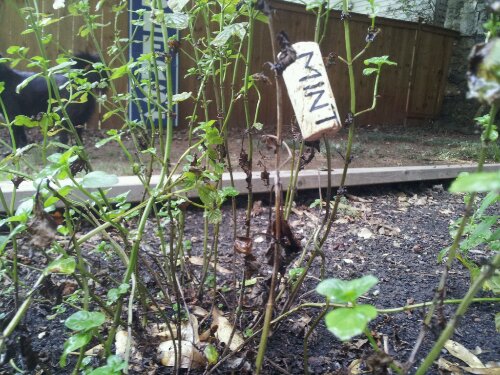
As summer plants are dying off and we are [wishfully] preparing the garden beds for fall, I realized that a few low-profile labels for the plants would be helpful this year. Some of the herbs, especially the mint, die back in the cold months, and the labels should help me hold their place in the bed for spring without accidentally planting something over them.
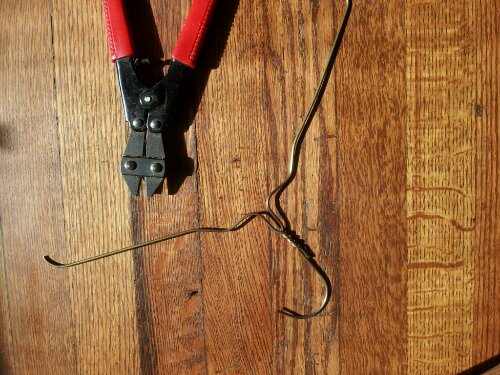
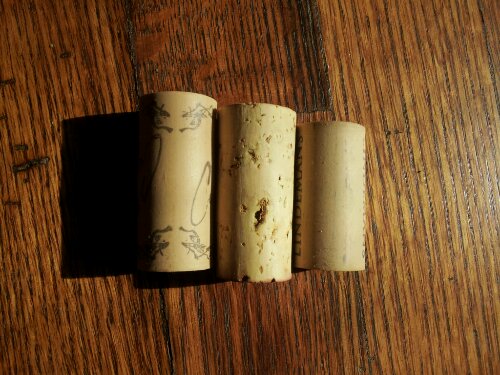
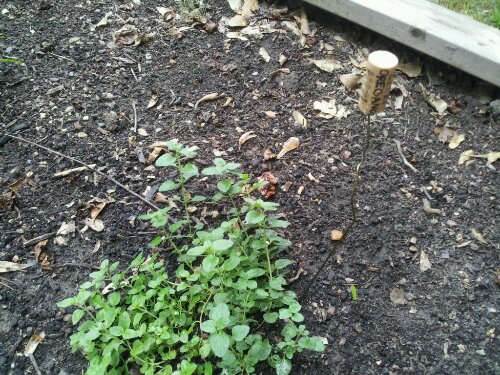
I was able to make three labels in about two minutes using things I already had laying around the house: metal drycleaning hangers, wine corks, and a sharpie.
Step 1, using a sharpie, write the name of a plant on the cork in large, clear letters. Step 2, use a pair of wire cutters to cut a 12″-18″ section of the wire from your hanger, depending on how tall you want the label to be. Step 3, jam one end of the metal securely into the cork, and stick the other end into the ground next to your plant. I found that plastic corks worked better than real corks when it came to sticking the metal through.
With the corks made of plastic, I expect these to stand up to the elements for several years. If anything, the sharpie could fade a little bit, but that is easily remedied. The real cork, on the other hand, looks like it has a pretty low life expectancy, especially in our extreme GA weather. I’m going to let it stay where it is to see how long it will last.
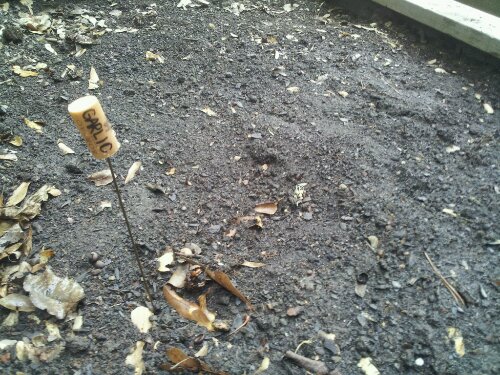
These labels are also helpful for remembering to water something you’ve just planted, like my garlic here.




 Old House Crazy