Reclaimed Wood Wine Glass Rack – DIY

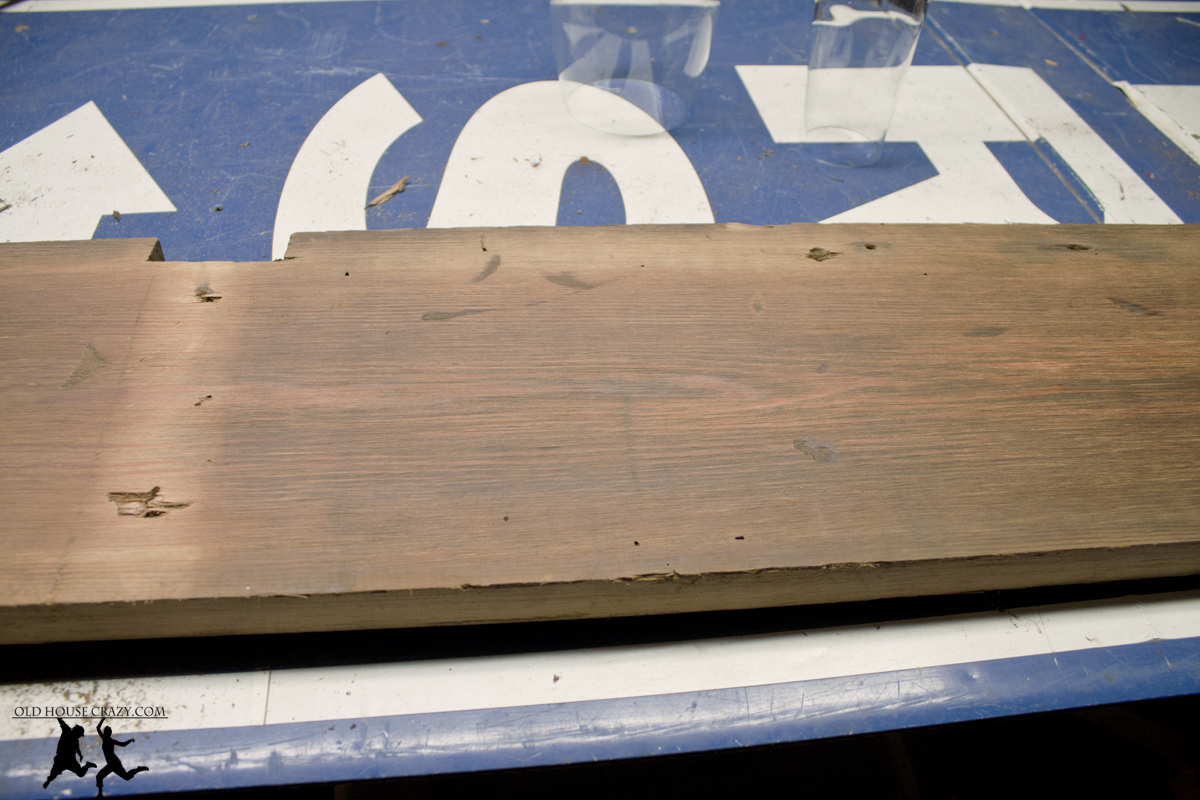
After I completed the seven foot tall heart pine shelf, Christy and I decided that we’d like to add a rack to hold wine glasses. We figured that there would be plenty of room between the shelves to dangle a few glasses and that it would look nice. We’d also be able to de-clutter the area behind our homemade bar. Rather than purchase a prefab rack, I decided to cut one out of another of the leftover stairs we had from the staircase below our house. The photo below shows the stair after sanding with 32-grit paper on a belt sander. Notice the tiny holes in the bottom center of the board. More on those later.
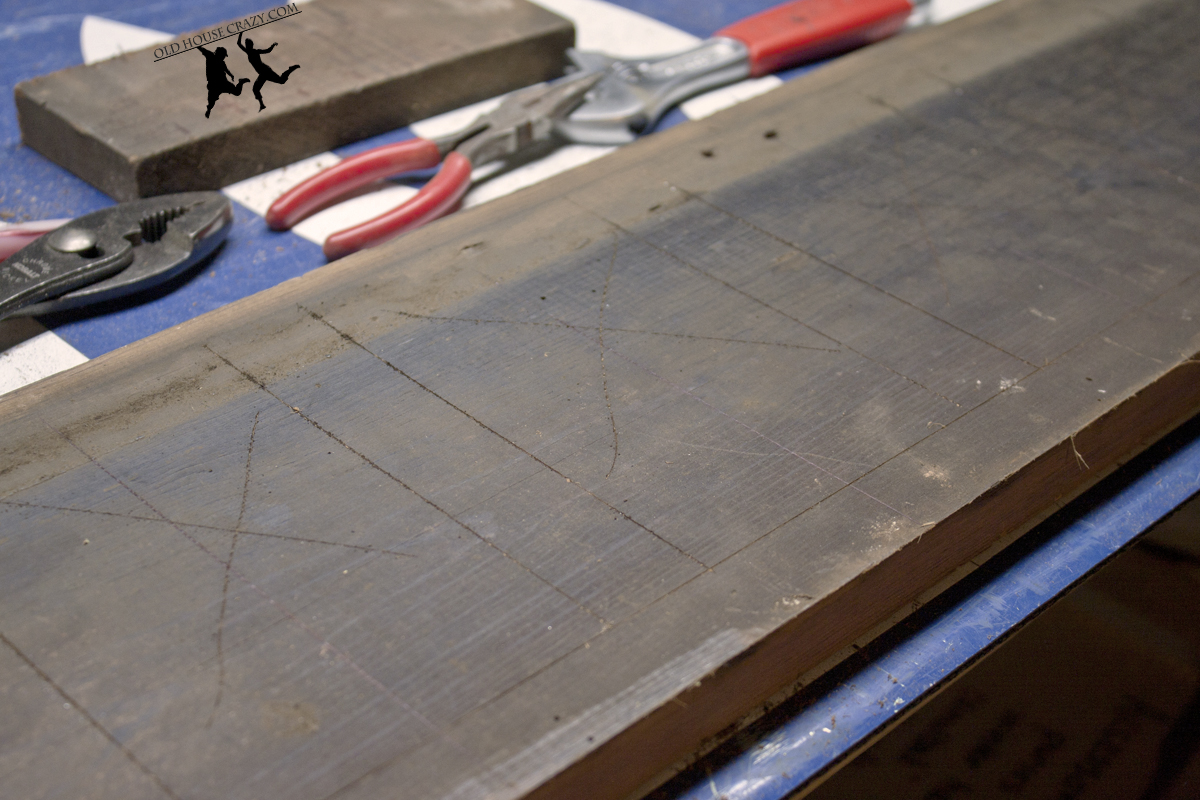
The first thing I needed to do was measure the board and carefully decide how many wine glass slots to use. I took a few of our glasses to the shop and decided that I could only fit six across the width of the shelf and still account for the possiblity of larger glasses in the future. Using this new info, I measured and scored marks in the top, unsanded, side of the board to guide my cuts with the router. I used large X’s to mark the areas of wood that would be cut out. These areas would be cut down halfway through the board and would be the part of the rack that the glass bottoms rest on. I later marked a second series of cuts that would go all the way through the board and would allow the glass stems to pass through the rack.
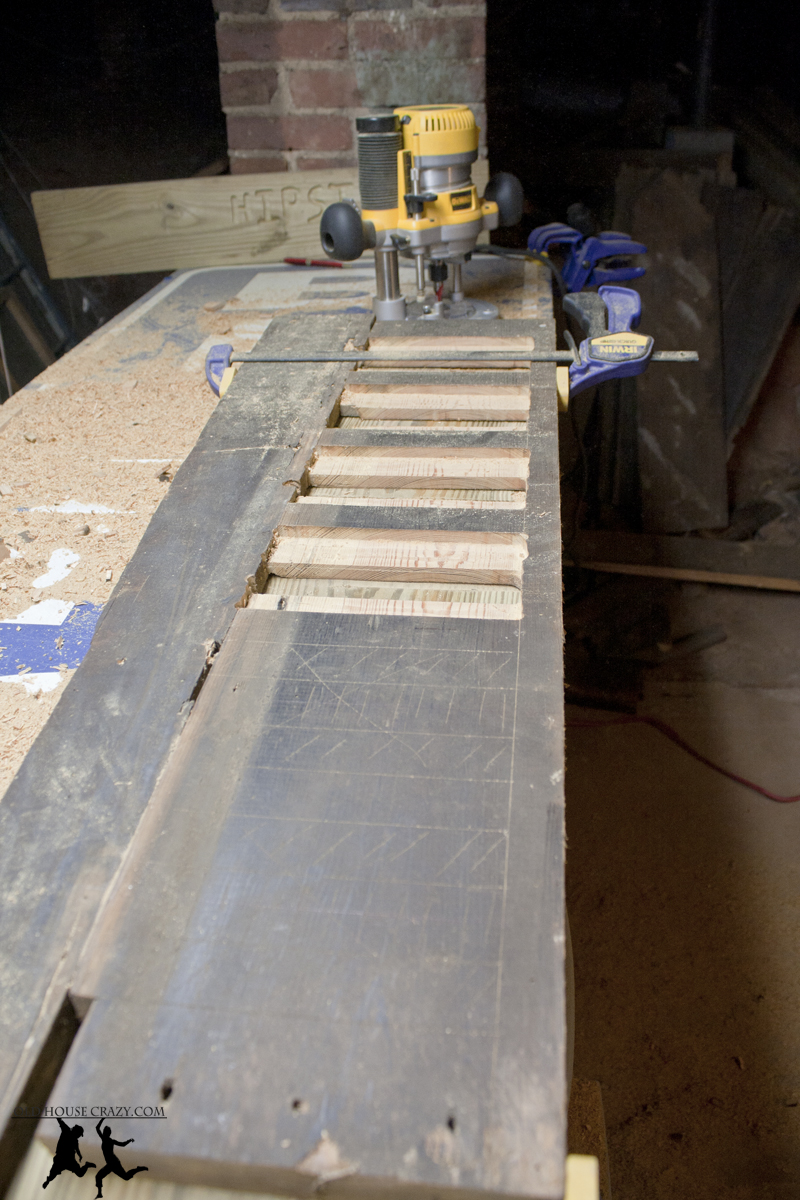
After all was laid out and double-checked, I began cutting. First, I made the cut straight through the board. At first, I just randomly picked to do this cut first, but later realized that, had I made the less deep cut first, I would have lost my guide marks for the through cut. Sometimes we just get lucky. You can see in the photo below that I placed the work piece on another board so that the router bit wouldn’t damage my work bench as it cut all the way through the work piece.

After cutting straight through, I changed the depth of the router bit and cut halfway through the board to complete the first wine glass slot. You’ll notice below that I clamped a second scrap of wood the the edge of my work piece. This prevented chunks of the wine rack from chipping out during routing.

Below you can see how I clamped scrap 2×4’s to the bench to guide my router while I made the cuts.

The first cut was the most stressful, as I wasn’t really sure how it’d all work out. After completing that cut, the rest went rather smoothly. In the photo below, I’ve finished four of the slots. You can also see the marking I used to guide my cuts.
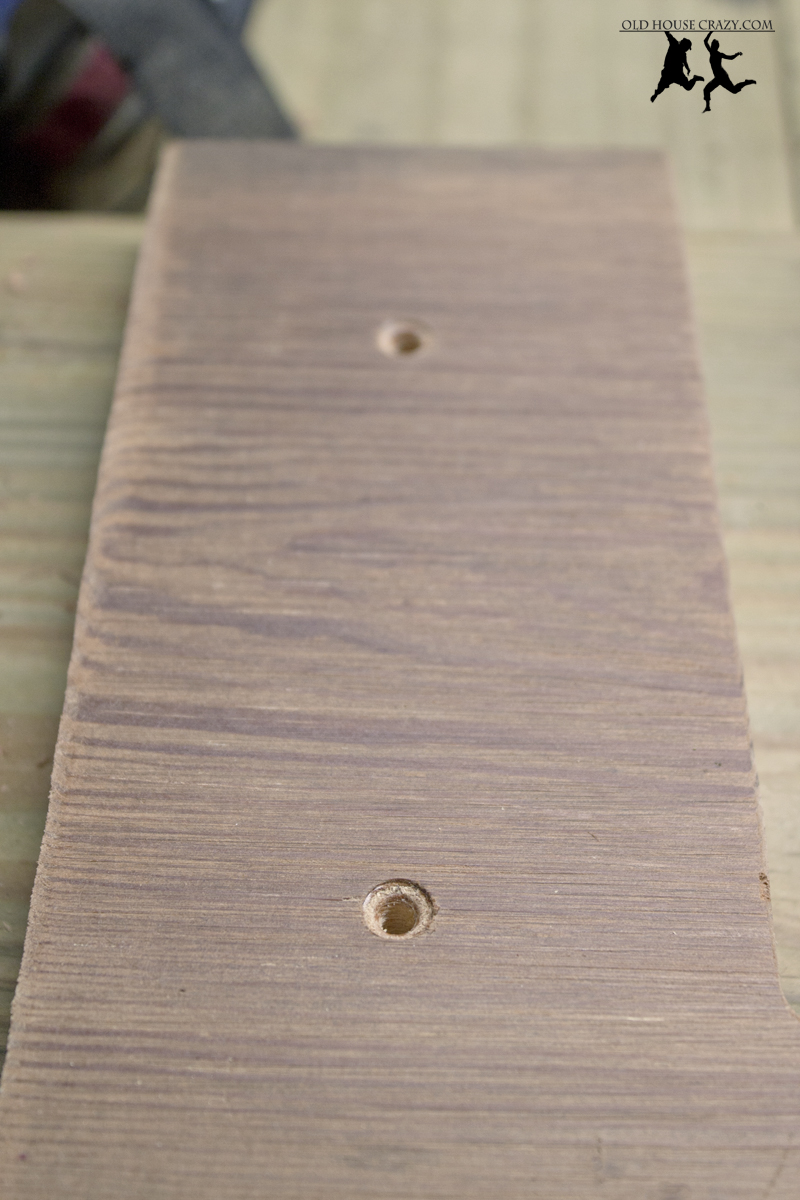
Have you ever heard of wood boring beatles? These stairs were in the crawl space of our home for almost 100 years, and its not surprising that they were snacked upon by critters. Remember those tiny holes in the first photo of this post? Those are the entry points for wood boring beatles, which lay their eggs in wood. When the eggs hatch, the larvae eat through the boards and greatly decrease the structural integrety of the wood. The photo below shows some of the tunnels made by these tiny insects. Imagine if the boards supporting your house were filled with these tunnels. This is why it’s worth it to pay someone (or DIY) to spray your house extensively with insecticides for these little buggers (and termites). Luckily, the damage in this board was minimal.

After cutting all six slots, I sanded the edges and predrilled holes for the mounting screws.
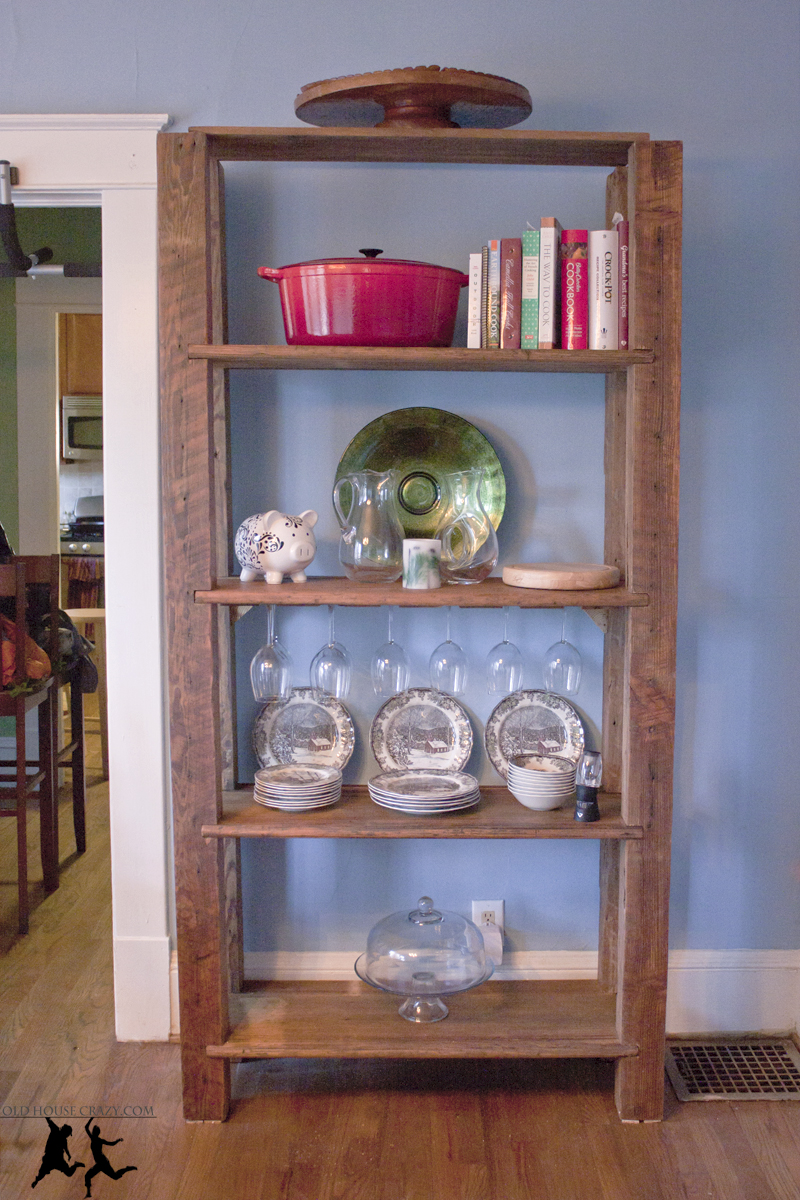
Here’s the final product, installed and with glasses in place.

Thanks for reading. -Robby
Posted in Better than store bought, Dining Room, DIY, Furniture, Heart Pine, Home Built, Tools and Techniques, Woodworking | Tagged , , | 2 Comments

Stabilizing Large Furniture – DIY

The heartpine shelf I built for our dining room ended up being seven feet tall. This didn’t sound all that tall until I realized that it also weighed 200+ pounds. That much height and weight would do some damage if it came crashing down on our floors, so I set out to make this sucker as stable as possible.

200+ Pounds of hard wood, books, dishes, and cast iron would do some damage if it came crashing down.

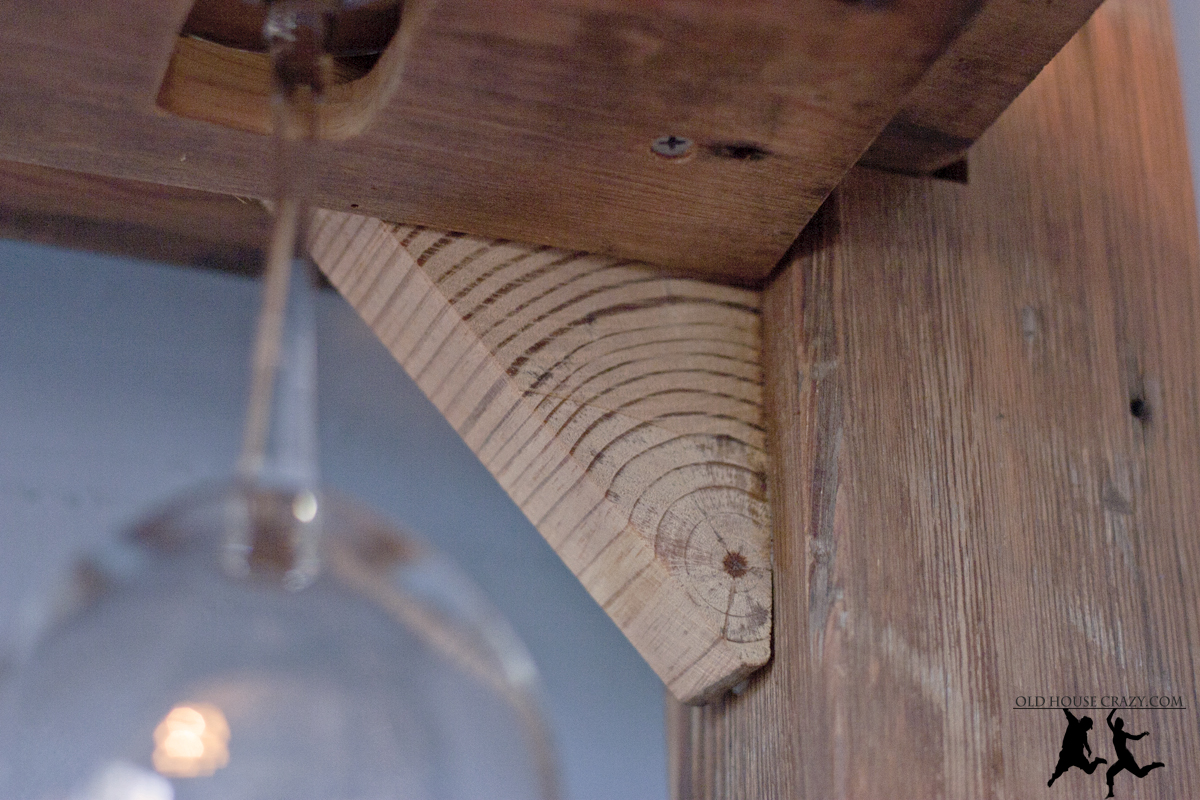
This was a two part process: First, I added triangles of heart pine to several of the corners to ensure that it didn’t rock from side to side when nudged or leaned against. Second, I attached the shelf to the wall using a toggle bolt and a long screw.

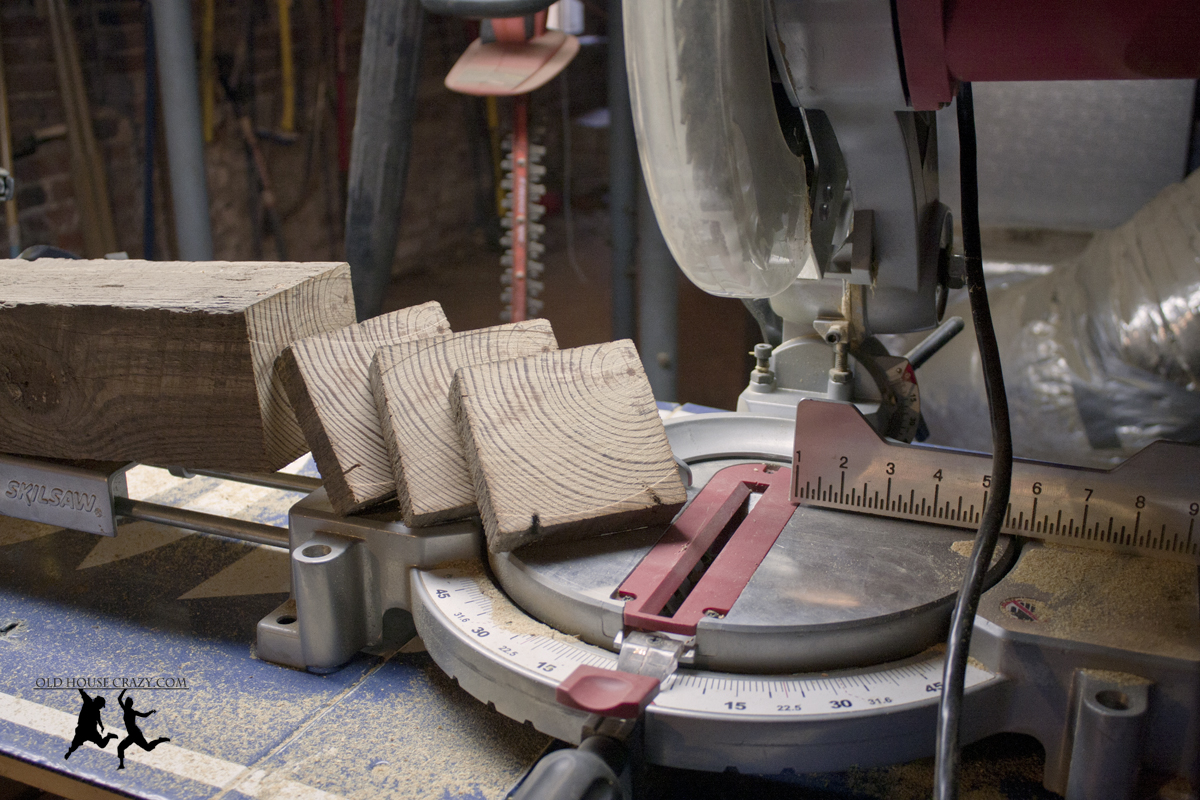
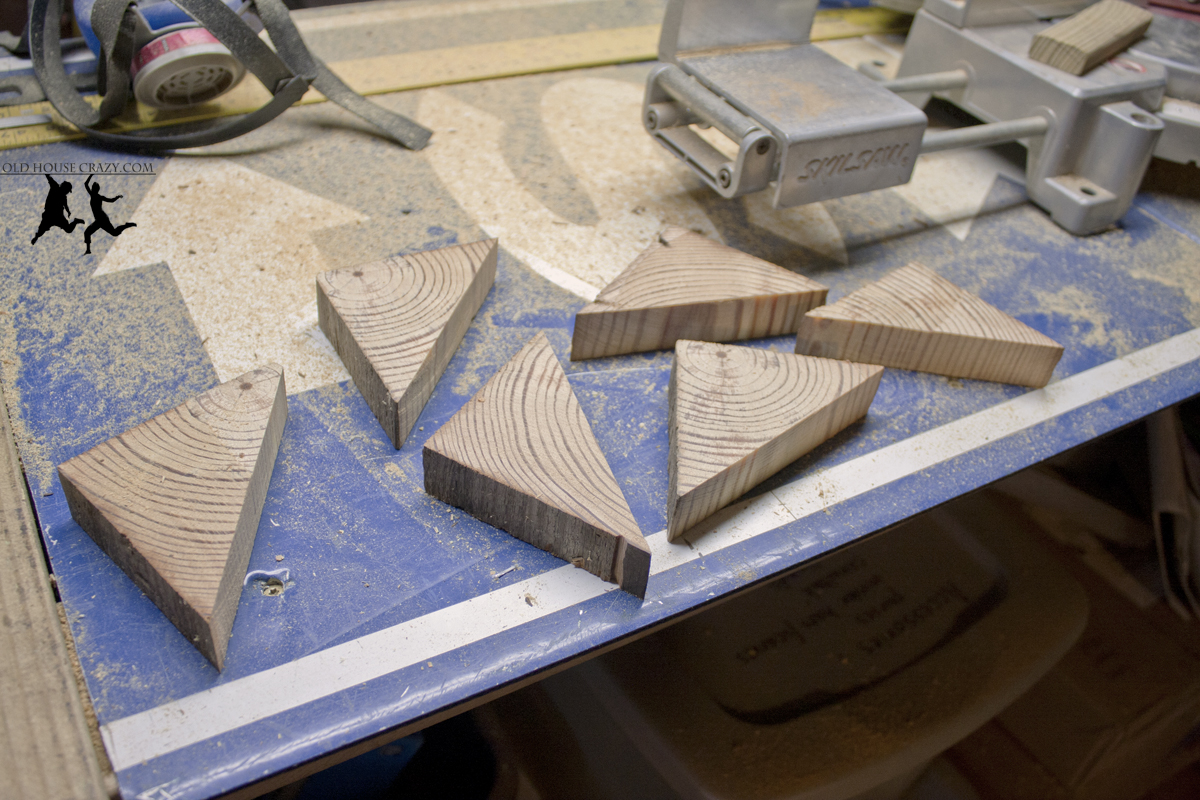
Using my chop saw, I cut one of the leftover heart pine posts into slivers an inch wide. Next, I cut those slivers in half to make heart pine triangles. This could have been done by hand if needed. You can also use any wood you’ve got, or purchase metal brackets that serve exactly the same purpose.

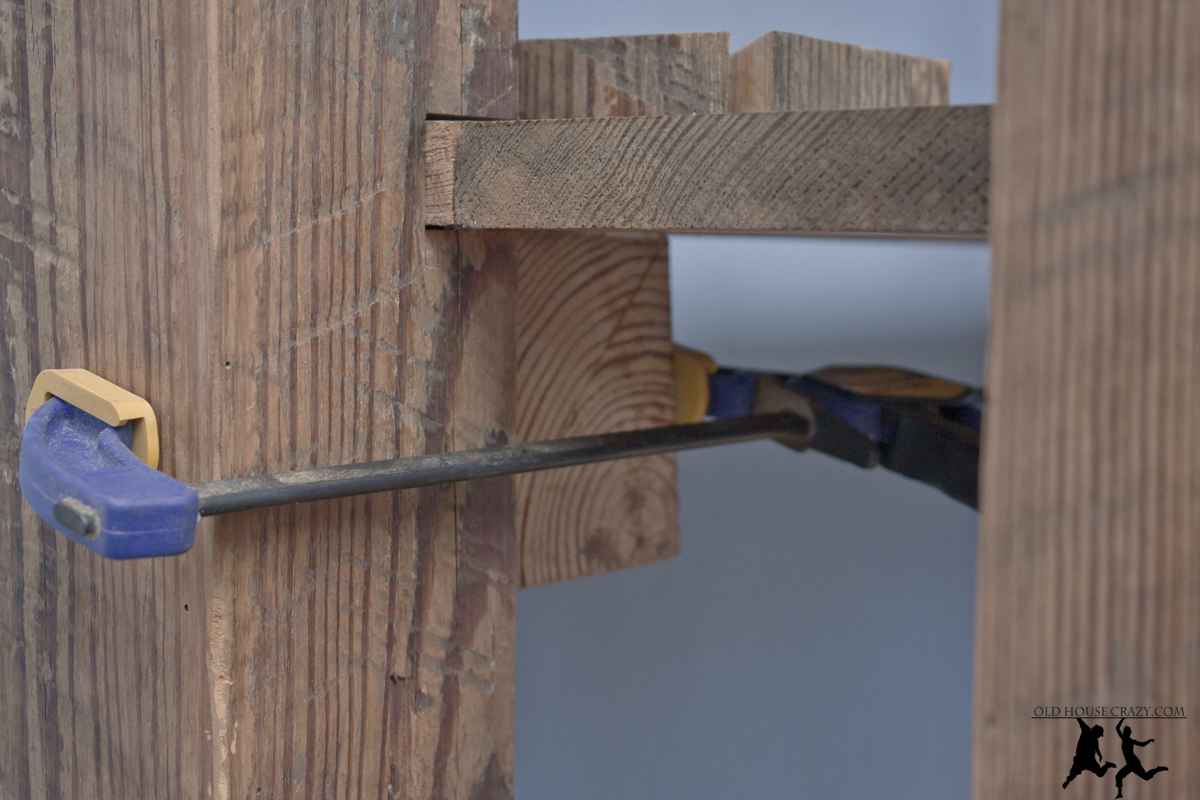
Once the triangles were cut, I fit them into the corners below the two lowest shelves. Using wood glue and clamps, I attached the triangles and let them set for an hour or two. As you see in the photo below, I used a second triangle to properly direct the clamping pressure to the two surfaces being glued.

After the glue dried, I removed the clamps and the shelf had a heck of a lot more stability. It doesn’t sway from side to side at all now.

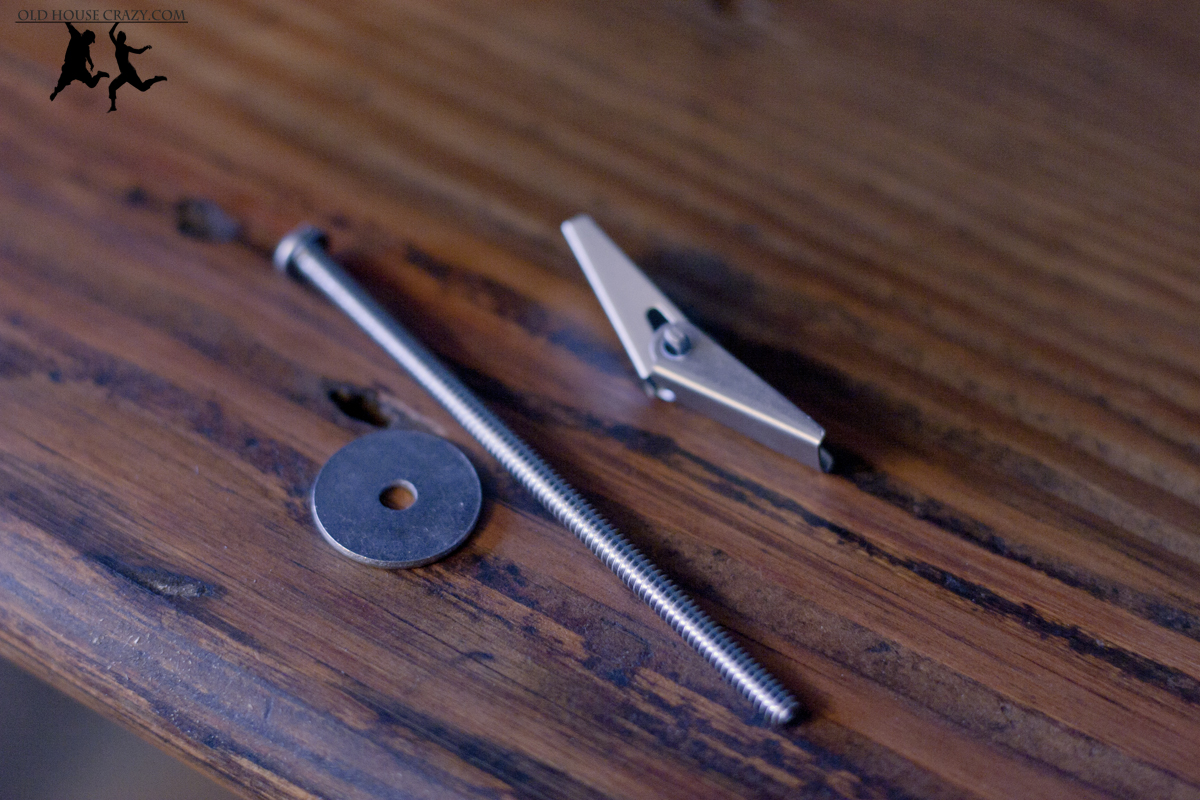
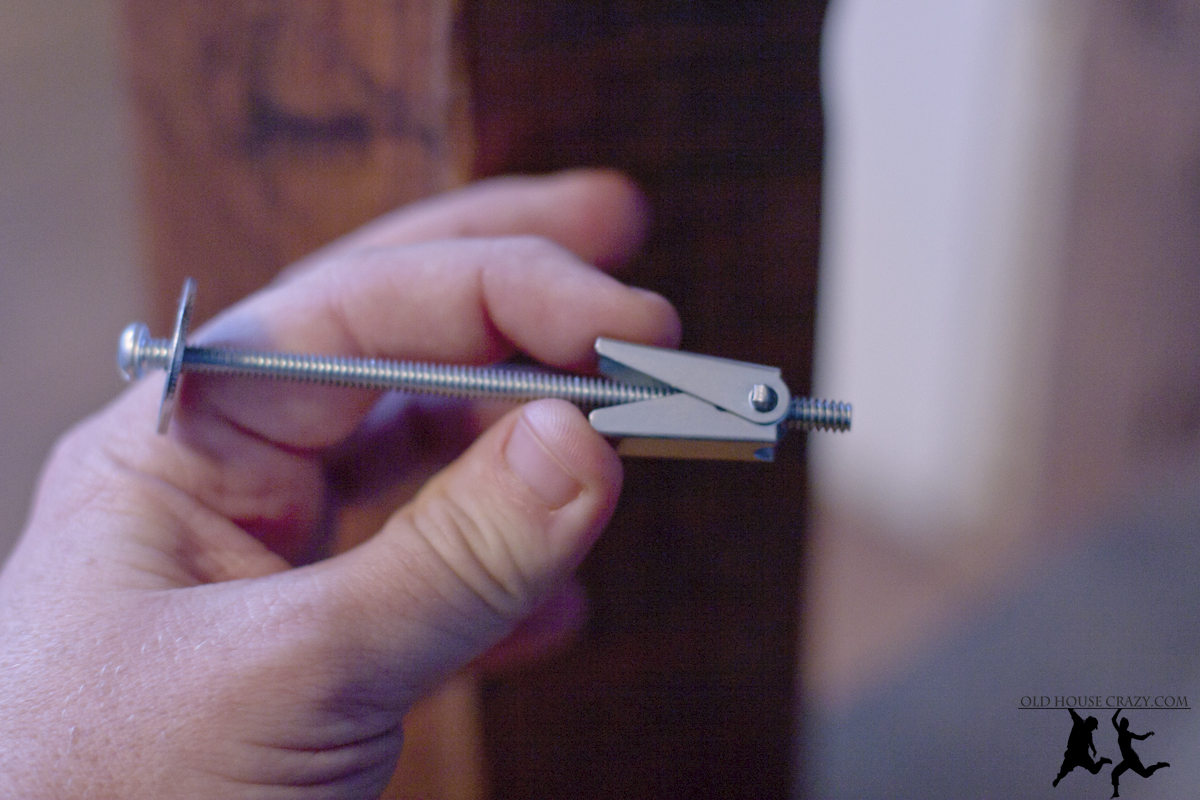
Now that the shelf was stable from side to side, I needed to make sure it stayed up against the wall and didn’t come crashing forward. The photos below shows a toggle bolt and how it works. The first shows the three parts you’ll need to buy. First, the toggle bolt itself. Then a long screw and a washer, sized to fit your needs. Go to your local hardware store and ask for the parts. If you go to one of the big box chains, they’ll sell you special mounting kits that are basically these exact parts, but for much more money. Note – These only work for hollow walls like ours, which are made of plaster. They also work on hollow walls made of sheet rock.

You’ve got to drill a hole in your wall big enough for the bolt to fit through like below.

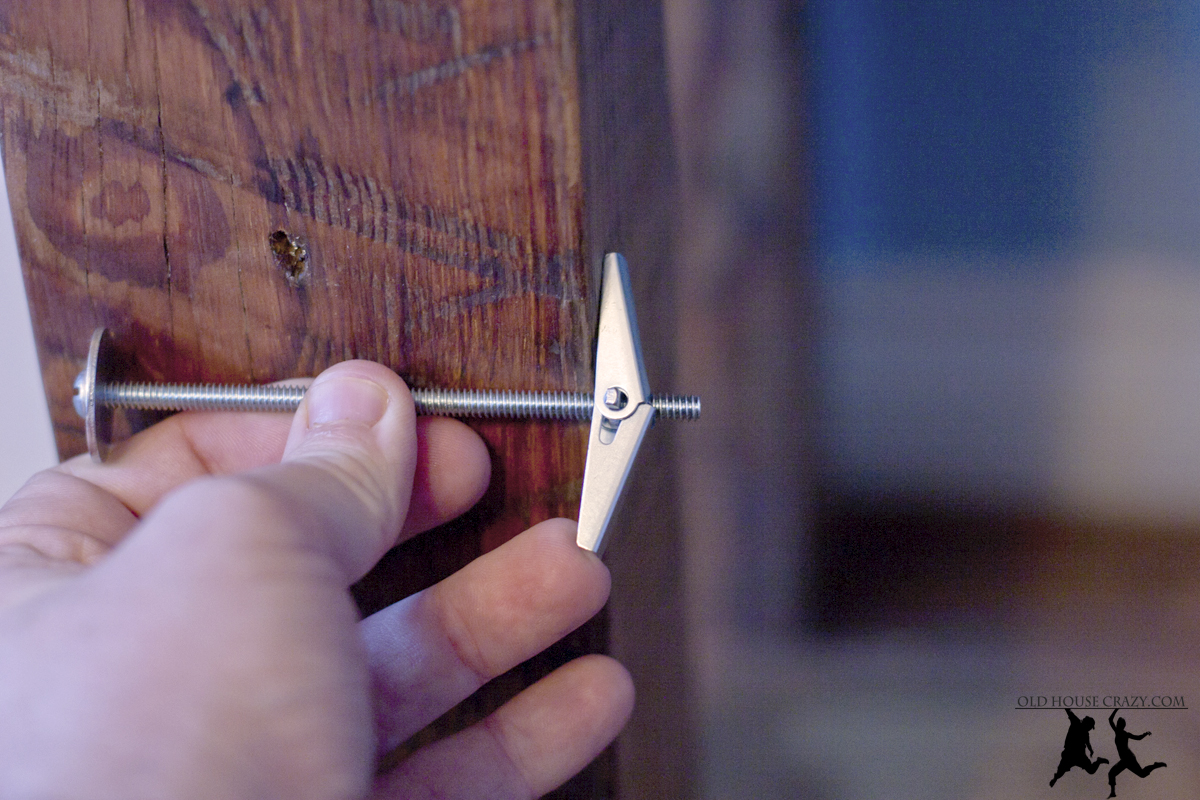
Once the bolt is through the hole, it expands like this and can be tightened as much as needed. It’ll hold onto that wall and keep your large shelves or heavy photos/mirrors/etc from crashing down.

Thanks for reading. -Robby
Posted in Dining Room, DIY, Furniture, Heart Pine, Home Built, Tools and Techniques, Woodworking | Tagged , | 1 Comment

Protecting Outside Pipes from Freezing – DIY

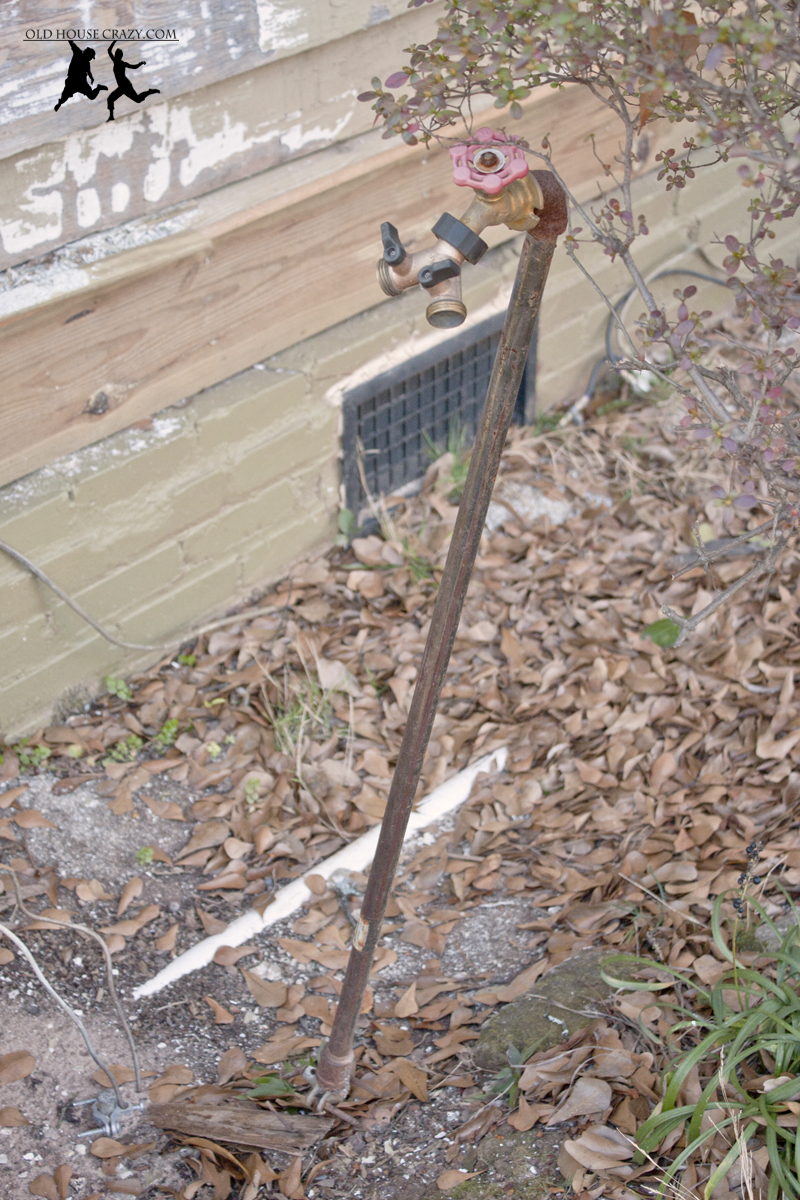
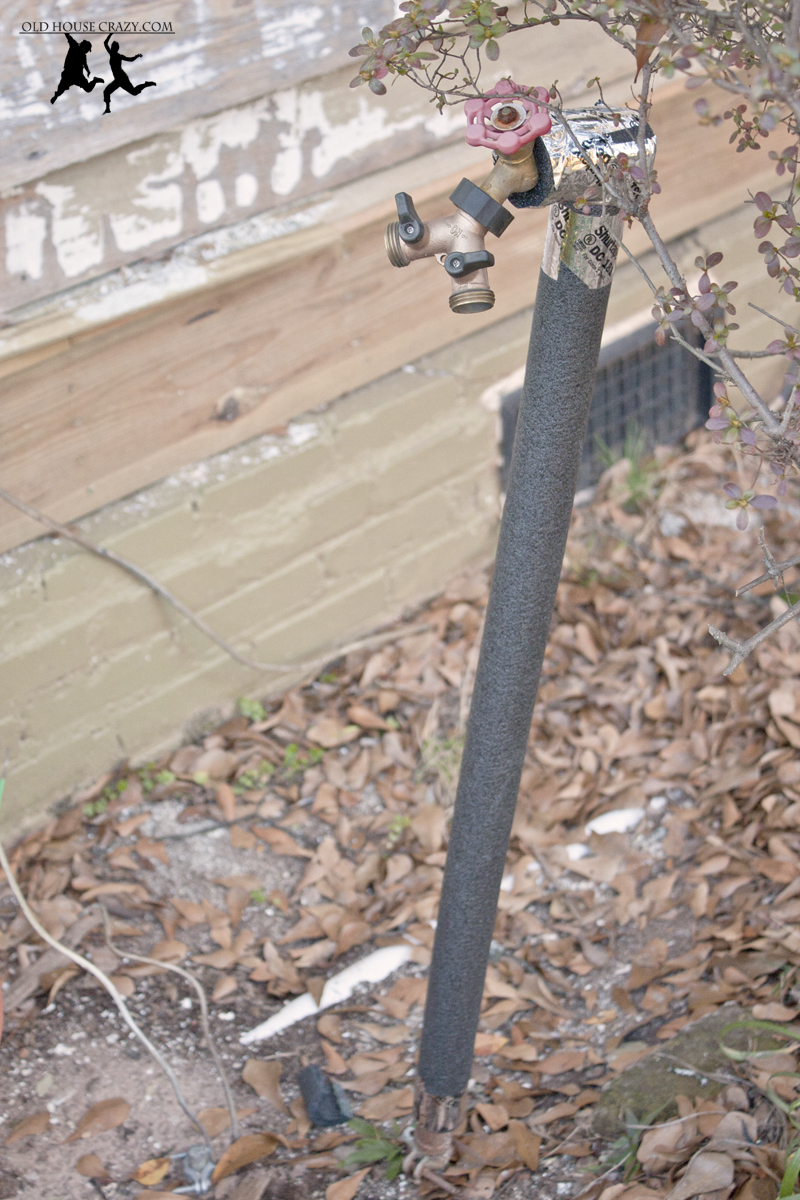
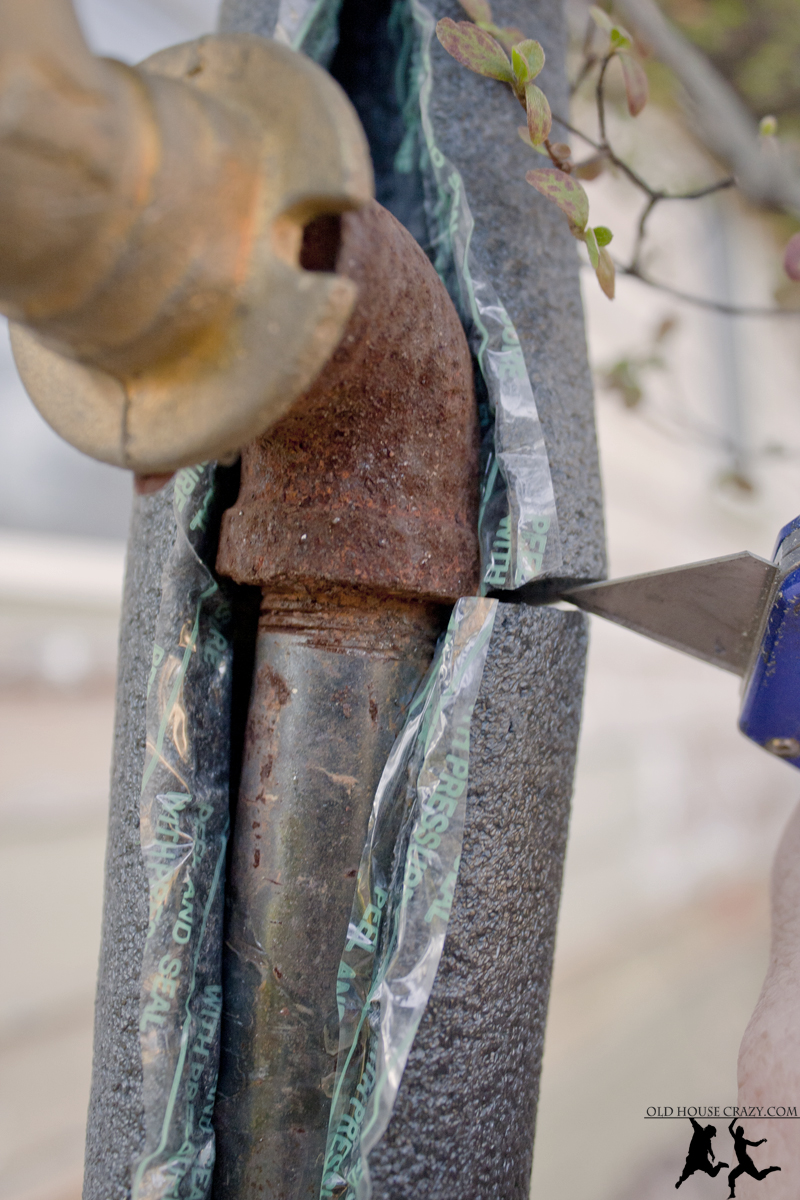
Last year, I replaced our old, broken, 1-inch-from-the-ground outside water spigot with a much taller pipe for easy filling of buckets and general access. I’m considering replacing it with a shorter one next summer; but, for now, I’m worried about it freezing when our crazy Georgia weather decides it’s finally time to get way below freezing. Last week it was in the seventies. As I’m writing, it’s 30 degrees outside. You can see in the photo that we are still in the process of scraping and painting the exterior of our old house. There will be plenty of posts about that later as we finish up this two-year old process.

Why should you insulate your exterior pipes? Well, water is one of the few molecules on earth that expands when it goes from liquid to solid. Most materials shrink when they freeze, as their atoms become less active and compress. Water actually expands about nine percent in volume when it freezes. This is why potholes during your commute get bigger during the winter and why cracks in boulders get bigger with every freeze/thaw cycle, causing rocks to fall and tumble (hence the “watch for fallen rocks” signs in the mountains). If the water in your pipes freezes, it’ll expand and can potentially break your pipes, leaking thousands of gallons of water (money) and making you spend lots on an emergency plumber.

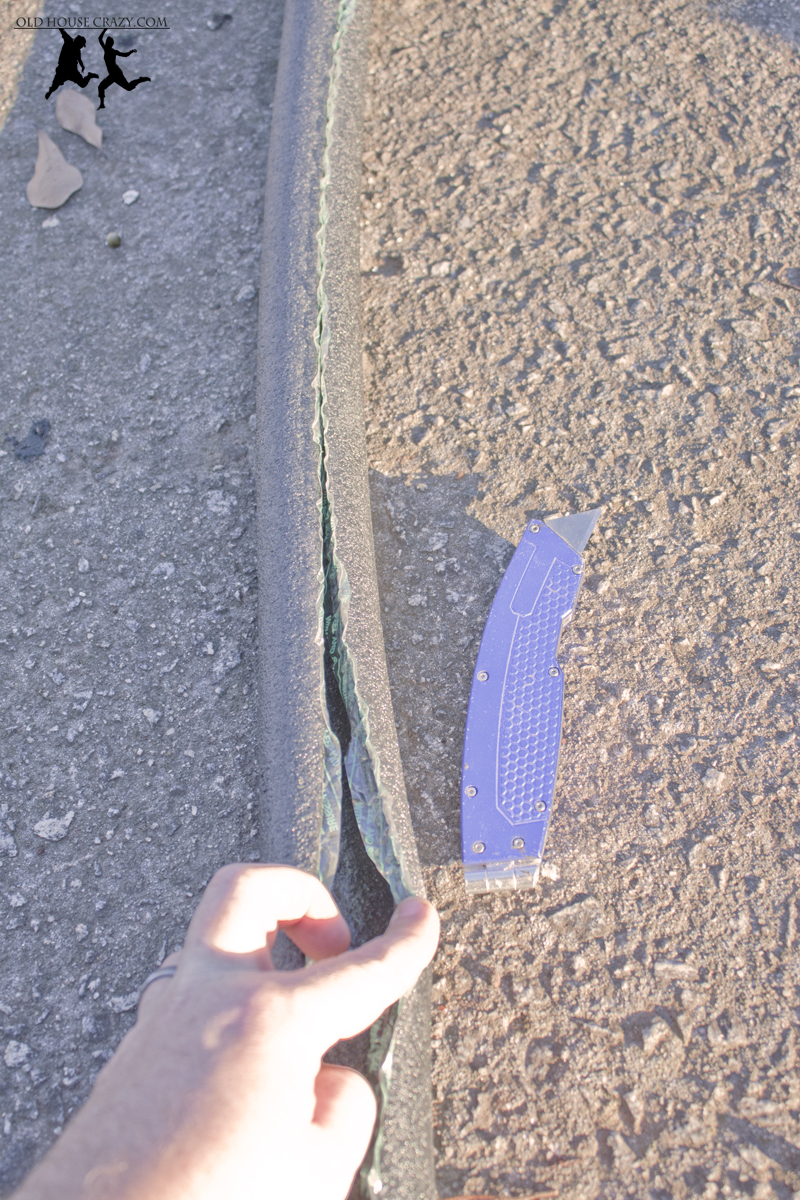
To complete this simple DIY project, I bought some pipe insulation from Lowes in two sizes. You just need to figure out the diameter of your pipes and read the boxes at the hardware store to figure out which ones to buy. The stuff I bought had glue on each of the surfaces for easy application. After cutting it to size, all I needed to do was peel off the backing and stick the sides together.

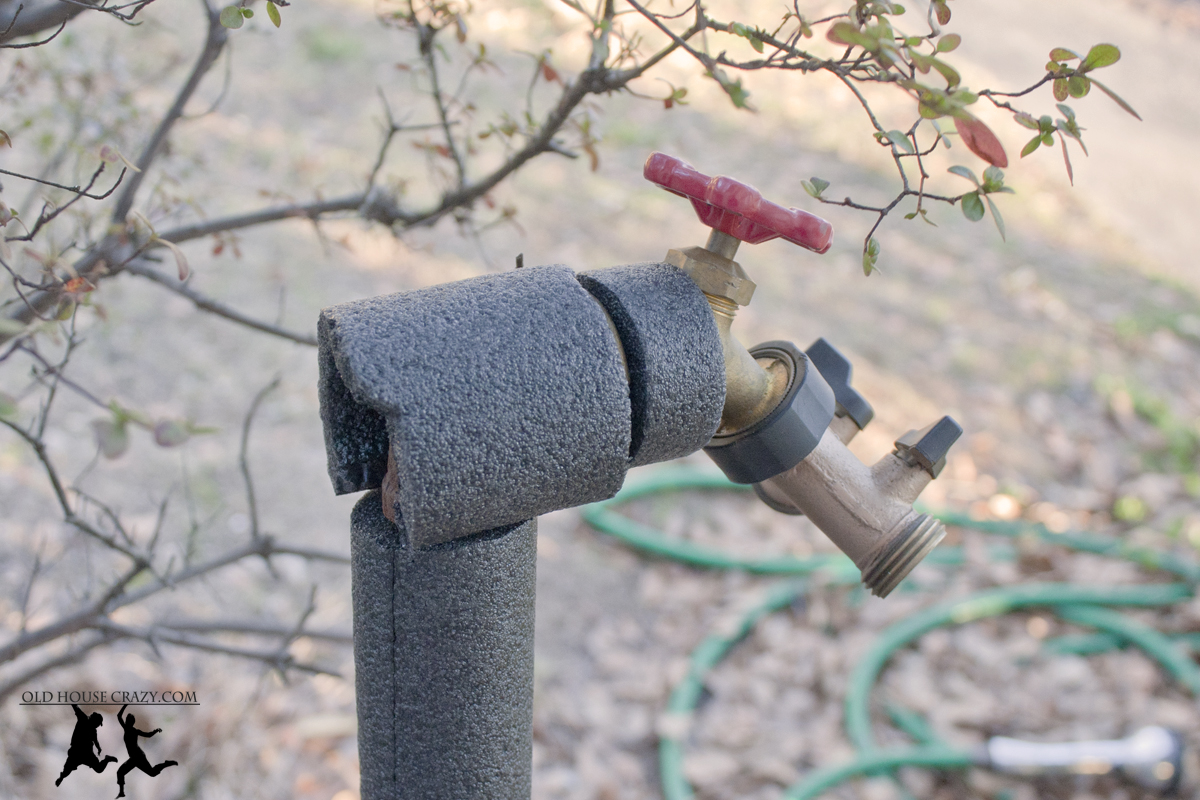
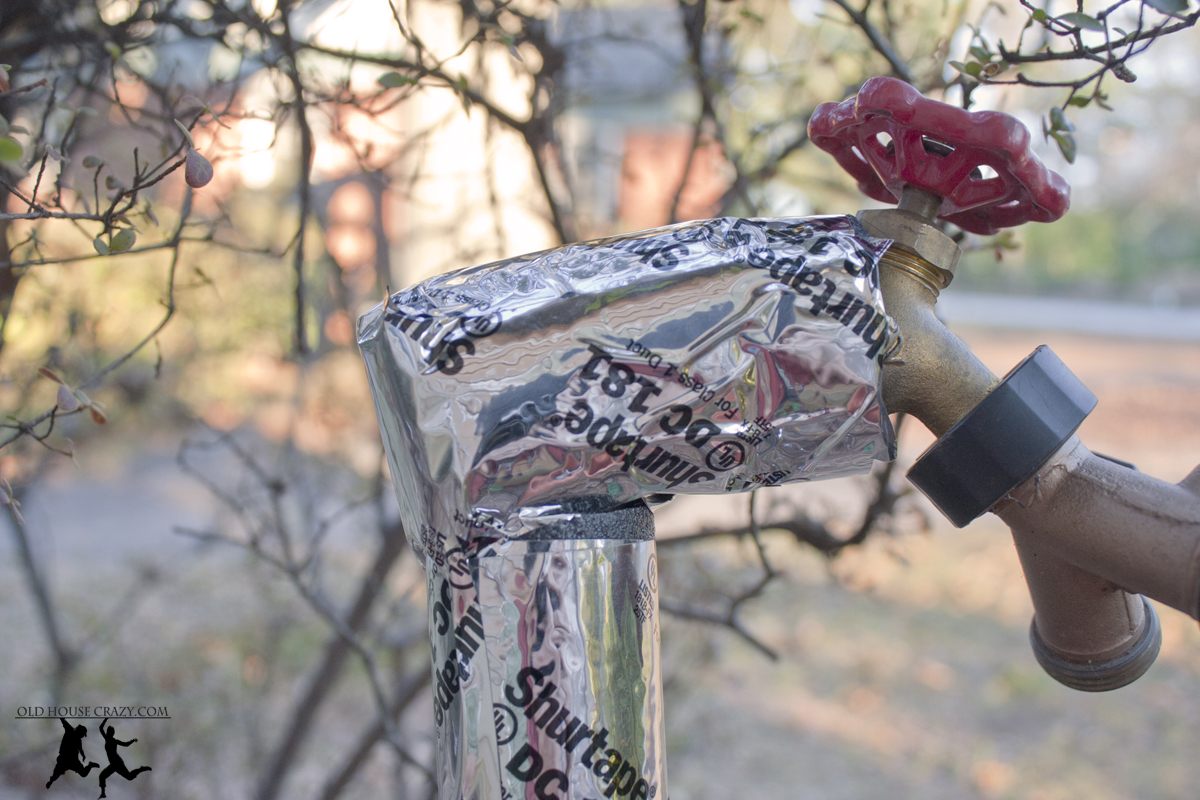
It’s important to cover all of the surfaces of your piping, including corners. You can either miter the edges or do what I did below. I just cut an extra piece and fit it over the pipe, holding it in place with duct tape (I covered the exposed piece in the back with a little sliver of foam before taping).

Here’s the final product, all wrapped up in foam and tape.

I’m not completely convinced that this foam blanket will protect this pipe forever. I’m nervous to have such a long pipe exposed above ground during the few hard freezes that we get. That’s why I’m thinking of replacing it with a shorter pipe in the future.

If you have an attic or crawl space that gets really cold during the winter, you might think of using this same method to insulate any pipes that run through those spaces. I can’t imagine a broken pipe leaking cold water through my ceiling onto my face while I’m sleeping. Thanks for reading.

Posted in DIY, Don't Hire a Professional, Plumbing, Tools and Techniques | Tagged , , , , | 1 Comment