Porch Makeover

When Robby and I started the job of improving and painting the entire exterior of the house, we were partially motivated by the feelings we had while sitting on the front porch. They were love-hate feelings: we loved the space and function of the porch, but hated the thick, peeling layers of ugly paint that stared at us while we kicked back. During the warmer months (about 9 months out of the year in Atlanta), we frequently spend more waking hours outside on the porch than inside, so the porch was high on the list of spaces we wanted to address. Since starting this process, we’ve received many compliments from folks in the neighborhood about the increased curb appeal & value & blah blah blah, but truthfully we did this work much more for our own enjoyment than for anything else.
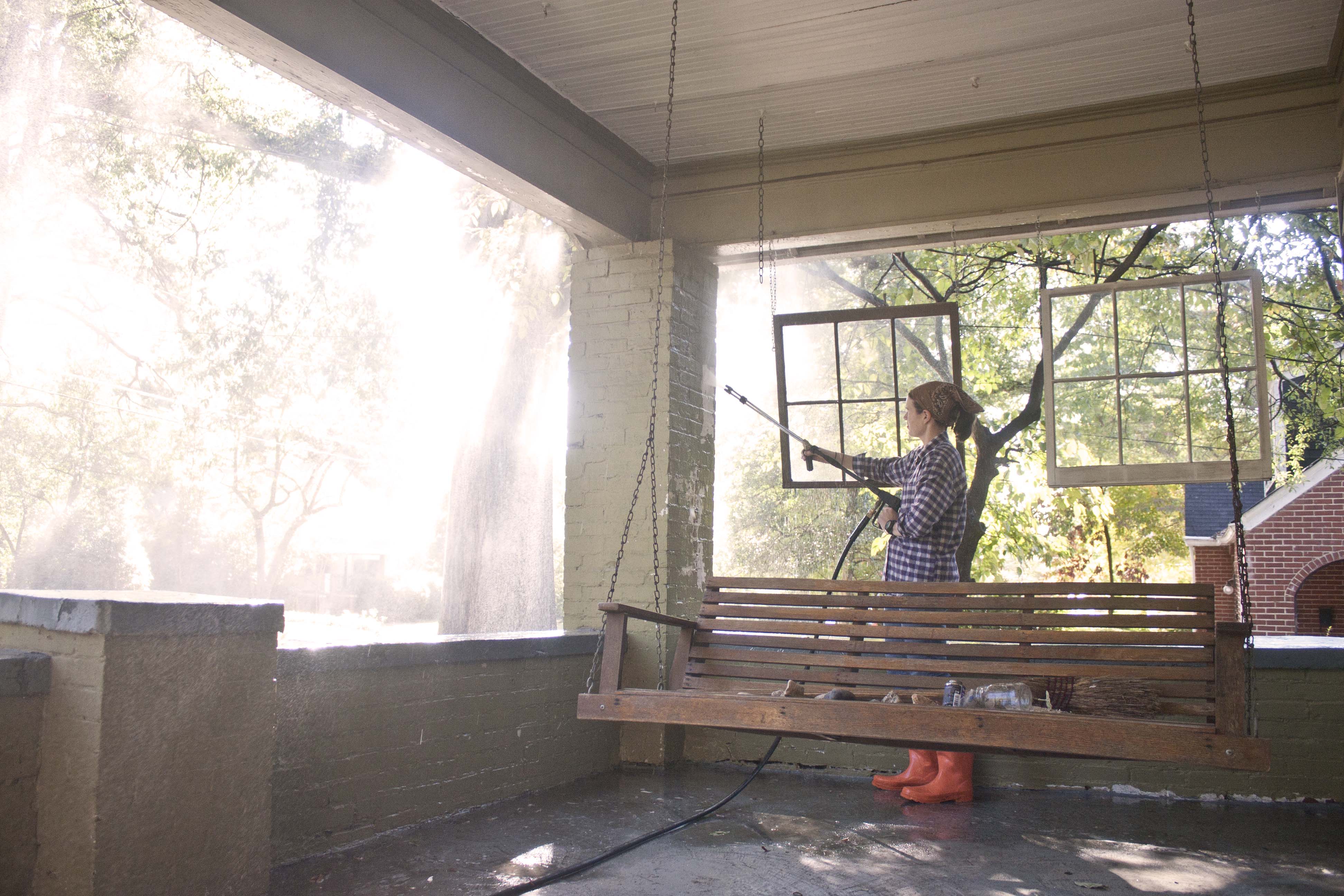
(The above photo shows the old paint color, porch swing that needed some love, and mis-matched hanging window sashes)

The prior owners of our house painted it the infamous pea soup green from top to bottom. While we were able to get past this during the buying process, for the past 3 years it has been something that makes us shudder every time we get up close to the exterior, like when we’re hanging out on the porch, and especially when we have company during daylight hours. With spring time being prime porch weather, we psyched ourselves up and tackled a major portion of the porch work a couple weeks ago, and have since really enjoyed the new scenery.
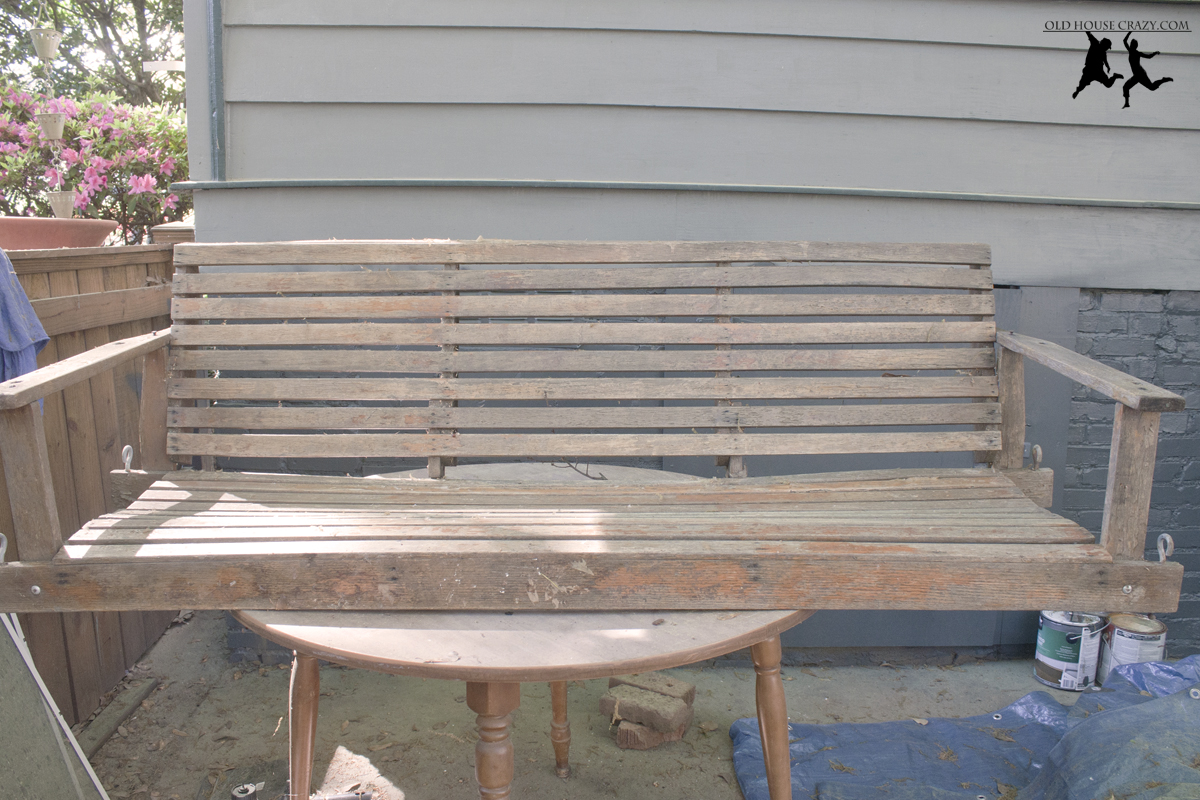
(Above: porch swing right before the make over)

Bungalows like ours built in the 1920s were historically painted with a three or four-color paint scheme. Whatever the main wall color, one or two shades darker is the foundation color, and then a complementary trim color and [optional] accent color are chosen to bring everything together. It might sound crazy, but it’s what people did back then and we think it’s pretty charming. Having multiple colors does make the painting process slower (more brushes to wash out, more cans of paint to shake up, more concentration & effort when painting), but also more satisfying once it’s all completed. We are painting in a four color scheme, with two of those colors (foundation and accent) showcased on the made-over porch.
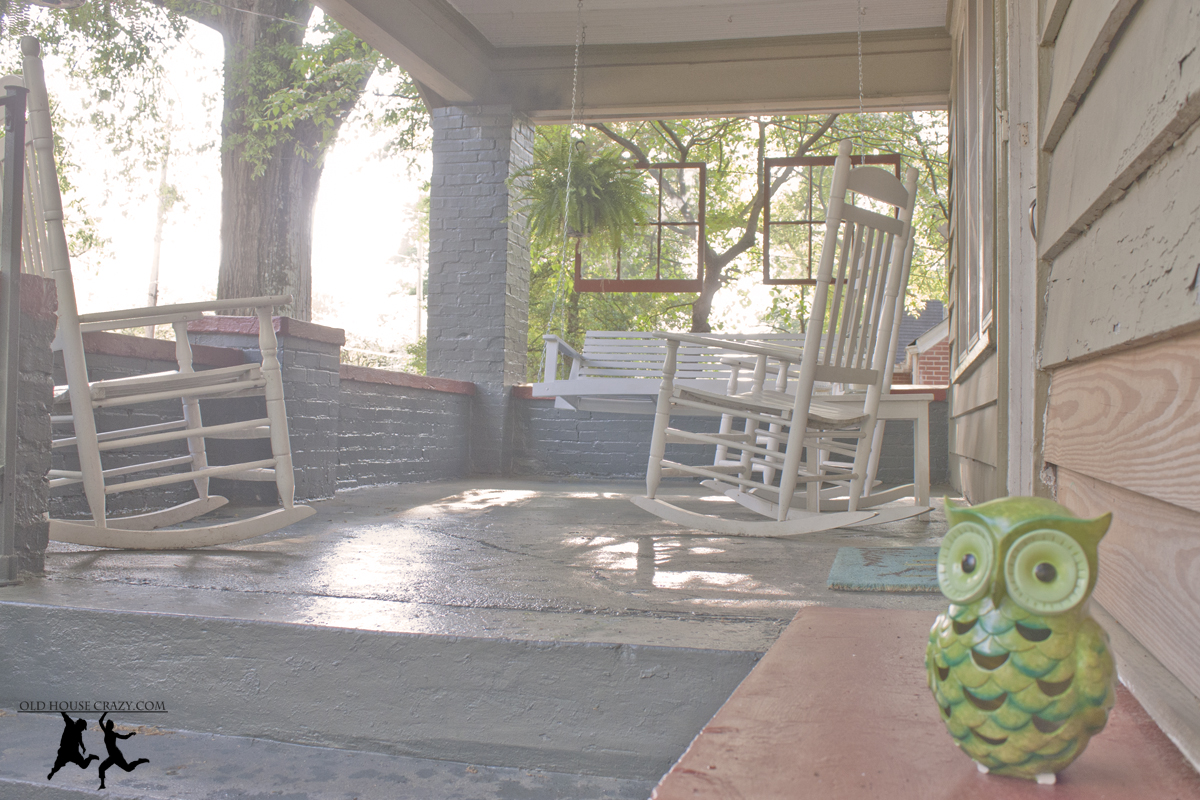
In addition to the floor and masonry paint job, Robby took our sad, chipped-up porch swing and sanded and painted it to match the rest of our white porch furniture. Instead of mis-matched furniture that, although not immediately noticeable and bothersome, was distracting, we now have a nice, subtle flow of clean, white furniture on the porch. While Robby had the swing down for painting, he also took the time to move the hooks a little farther toward the edge of the porch to give everything else a roomier, less-crowded feel. He also re-painted the hanging window sashes to match the red accent color of the porch rail, which ties them back to the house nicely, whereas before they were neat, but semi-random porch decor.
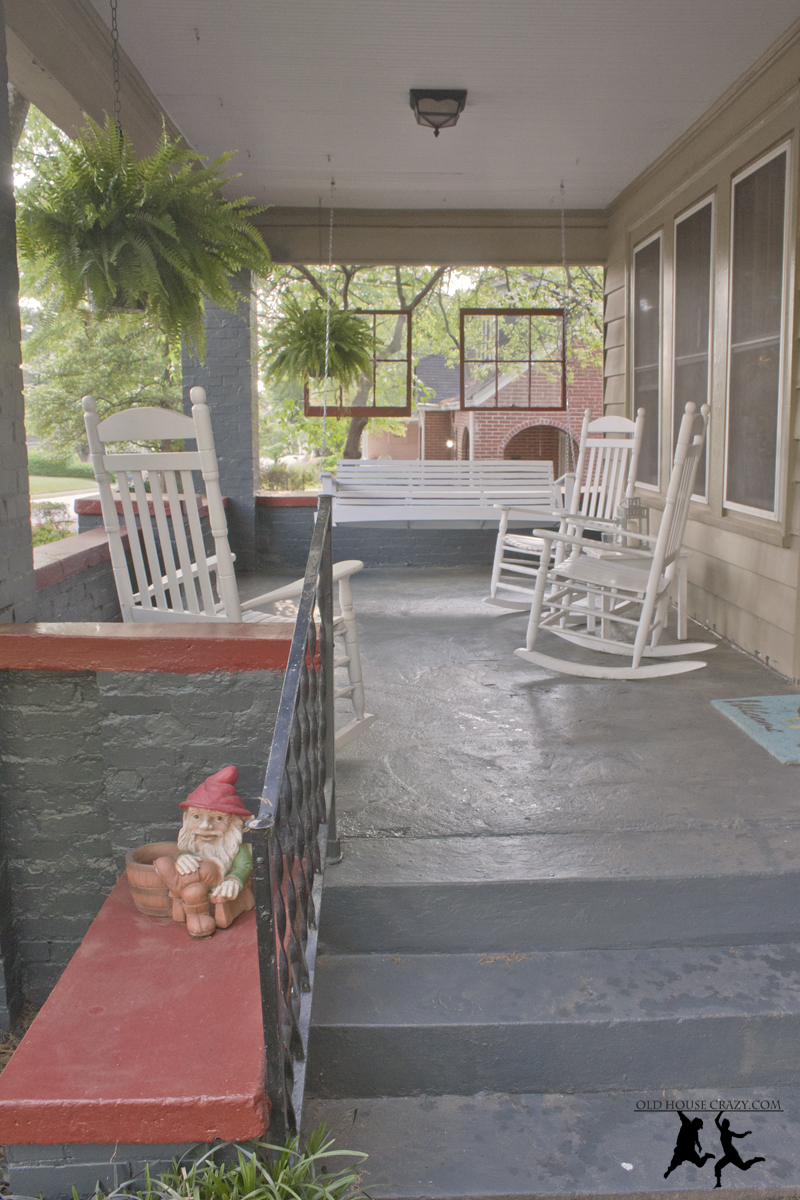
Finally, I picked out two lush Boston ferns at my local Lowes to hang from the inner corners of the porch ceiling. These were the finishing touch on our make over. Large hanging ferns remind me of the laid-back, beautiful old porches in Charleston that I love so much, and they require little maintenance. I’ve found that early in the season the plant selection is the best, as the store employees haven’t had the chance to under-water or scorch them yet. We have a few extra sets of unused hooks in the ceiling, so there is still opportunity to hang some other baskets with shade-loving plants or flowers. As the season goes on, I’d like to learn how to make some coordinating cushions for the seats of the rocking chairs and the swing like these or these that I found on Pinterest, so stay tuned!

Still to be completed on the porch are the wall and the windows behind the rocking chairs, which will be scraped down, painted in our chosen scheme, and restored.

Thanks for reading,

Christy

Posted in DIY, Front Porch, Furniture, Painting, Uncategorized | Tagged , , , | 4 Comments

Reclaimed Heart Pine Farmhouse Table – DIY – Part 5 – Final Assembly

Part 1 – Milling Old Lumber

Part 2 – Glue Up – Bread Board Ends

Part 3 – Butterfly Joinery – Prepping the Legs

Part 4 – Mortise and Tenon Joints – Understructure

Part 5 – Final Assembly

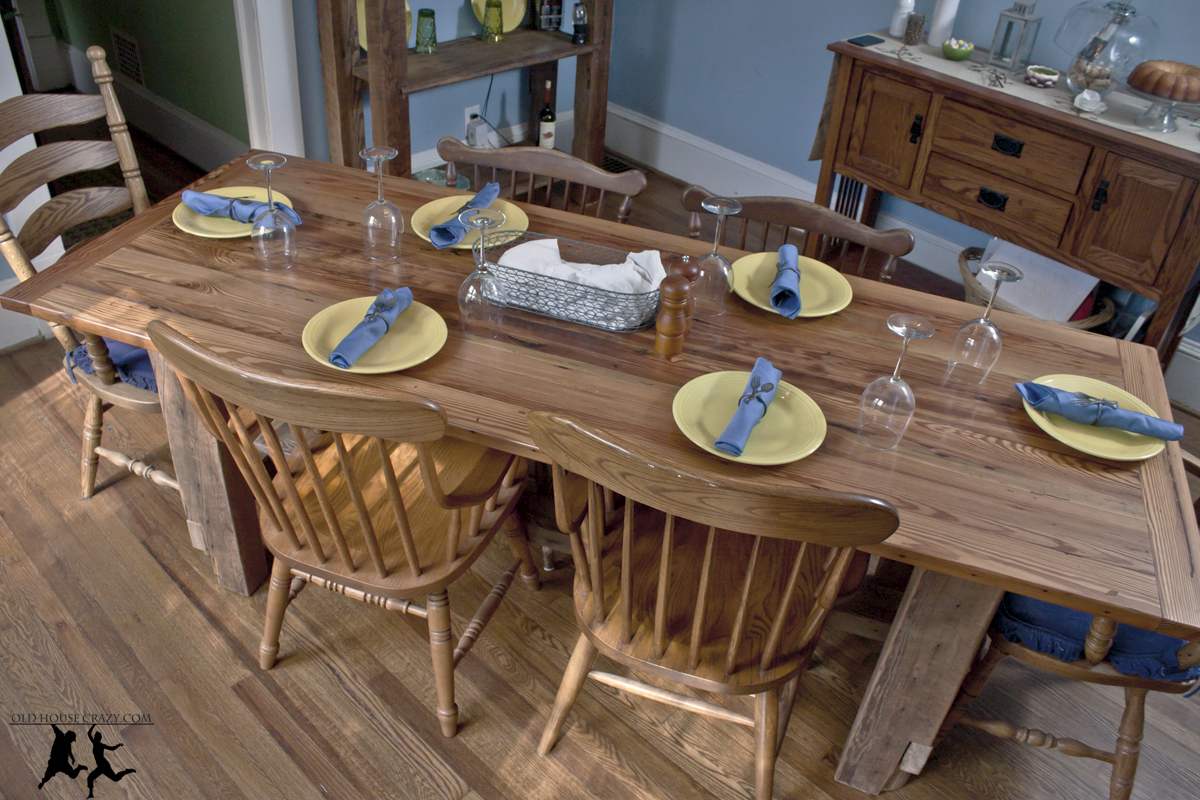
It’s taken three months of weekends, holidays, and spring break, but I’ve finally finished building our reclaimed heart pine farmhouse table. As you can see in the photo above, I have coated the table top (both sides – top and bottom) with five coats of polyurethane to protect the surfaces from water marks and scratches. The scratches are less of a concern because of all the nail holes. It is important to use the same type of finish and same number of coats on the top and bottom of your slab because you want the two sides to have the same relationship with the environment. That is, if the top has five coats and the bottom has one coat, the bottom will allow more moisture in and your table could warp into a bow. Sucks to be that guy.

I have decided to leave the understructure unfinished for a couple of reasons. First, the beams are not planed flat and I didn’t remove or fill in the blemishes like I did with the top. Making those weathered boards shiny might look out of place. Second, the understructure of the table has the exact look and character as the 7-foot shelf I built before I began the table, which is also unfinished. If we decide at a later time that we’d like to finish the shelf and understructure, we can.

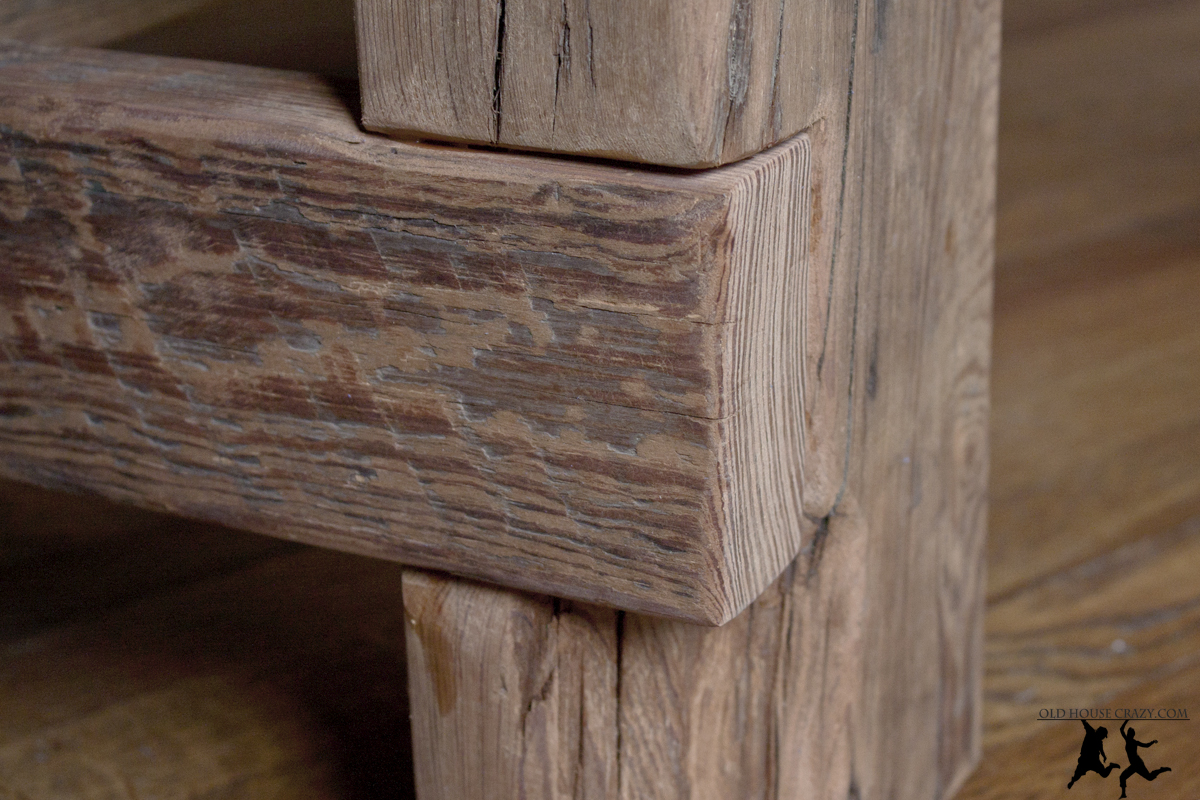
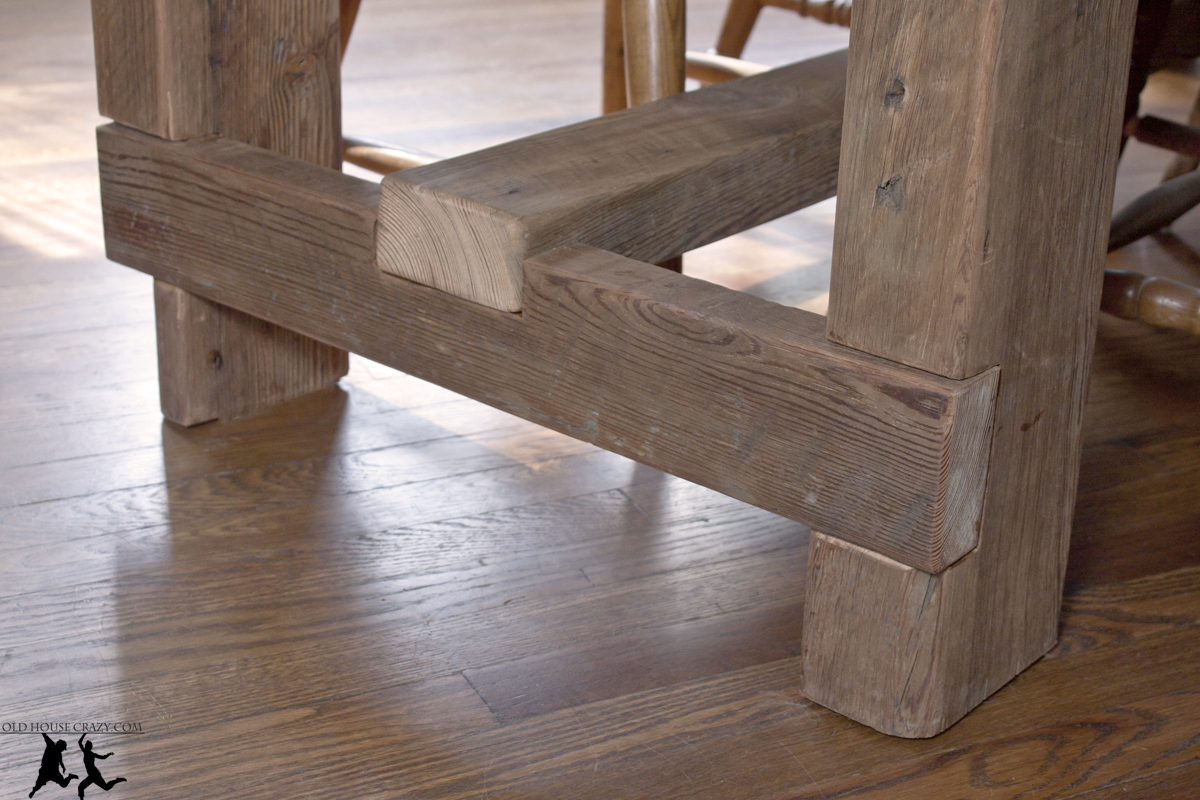
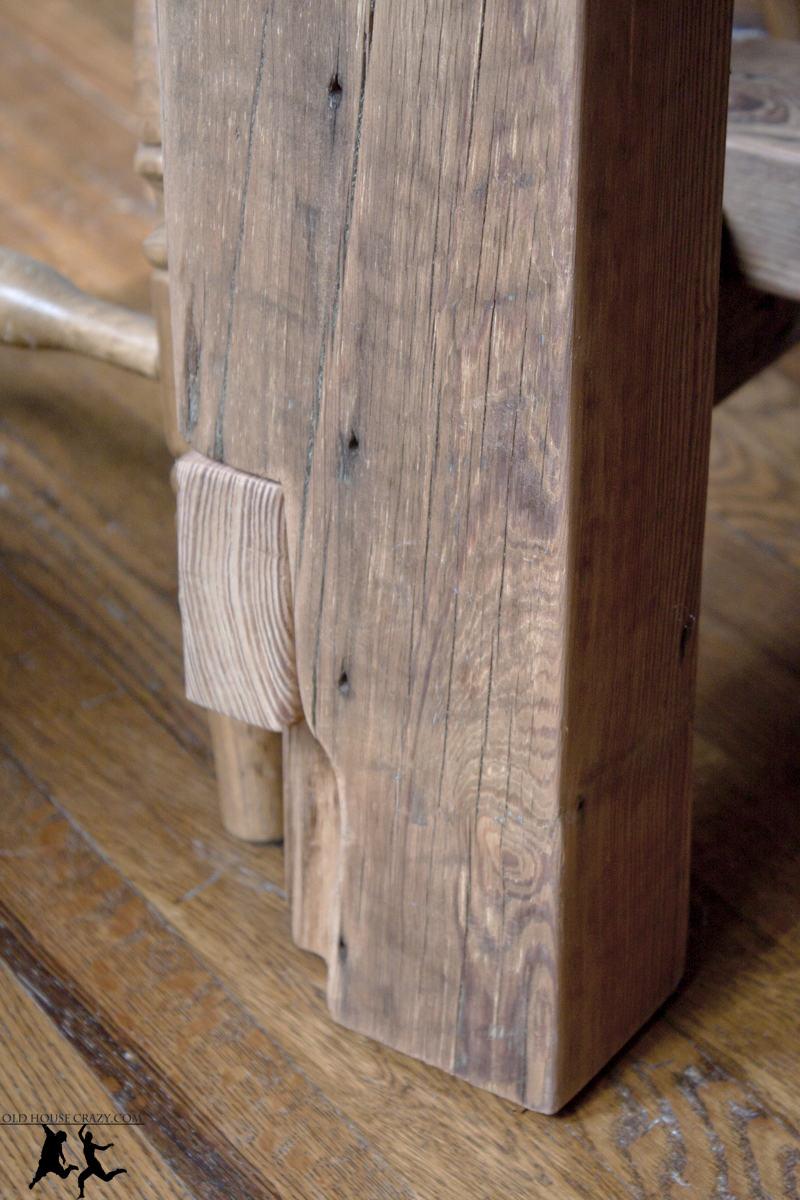
Leg and joint details above and below.

After sanding with 32, 60, 120, and 220 grit sand paper, the 100-year-old beams have an incredible patina and are smooth to the touch – no splinters.

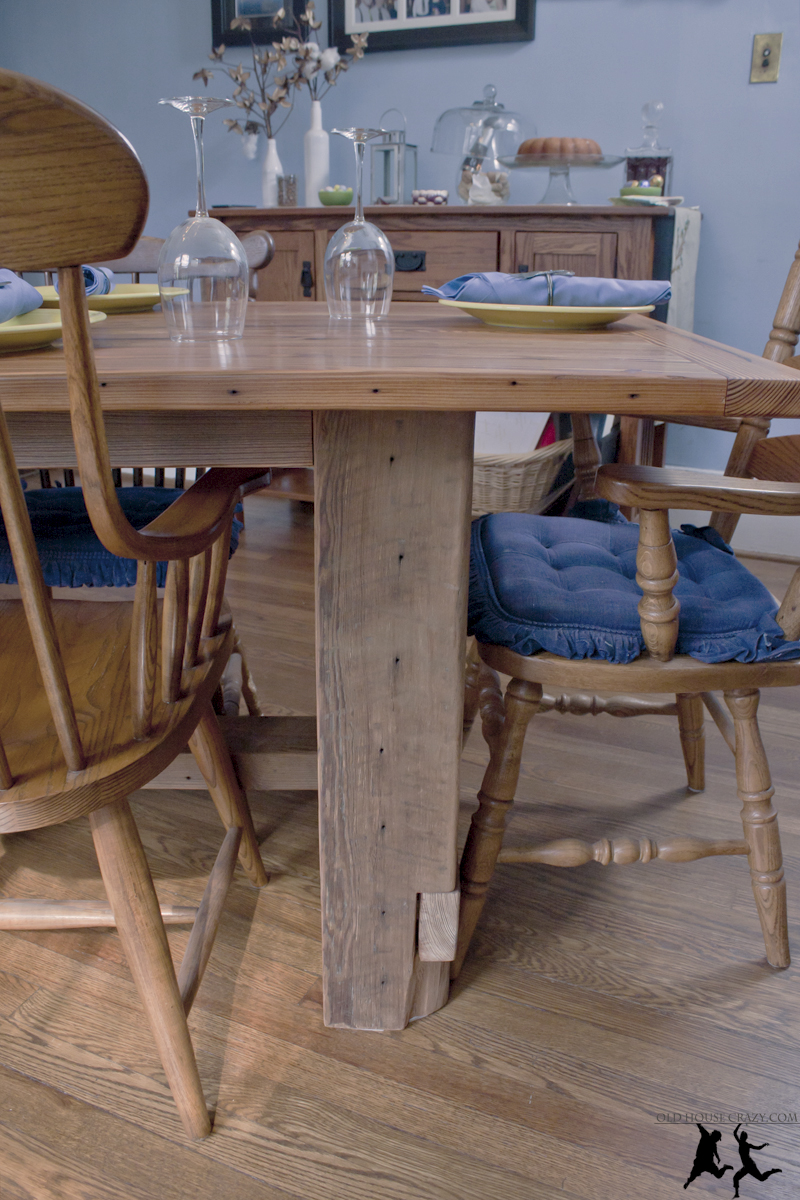
The photograph below shows the table top after it’s treatment with five coats of polyurethane. You can see the contrast in color between the sealed wood of the top and the unsealed wood of the understructure. I really like the contrast. What are your thoughts?

We set the table with our new Fiesta dinner plates in yellow, blue cloth napkins, and wine glasses for supper club Saturday night.

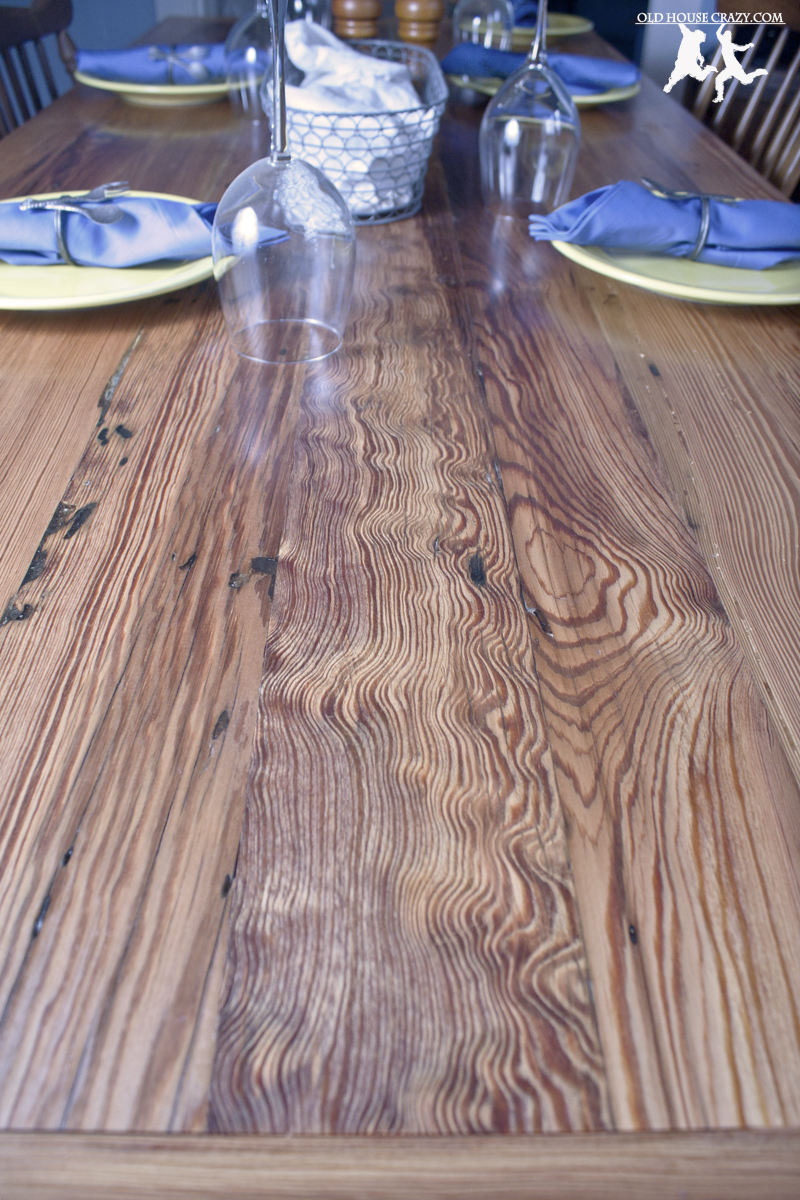
All of the lumber came from floor joists and framing timbers from farm homes built between 1895-1910. I really like the look of holes left when I removed the nails.

We bought the solid oak chairs at a liquidation auction of a local oak furniture business. If you’re looking for nice things, check out your local auction houses. You won’t find what you’re looking for the first time you go, but the hunt is a lot of fun.

Above, you can see the butterfly inlay I used to keep the deep crack in the table top from spreading. The crack is also filled with epoxy, giving it the dark color.

The center, wavy board in the table top is so full of pine resin that I’m sure it would catch fire with a single match, even after 100 years. The resin is what gives heart pine its wonderful smell, dark purple tones, and the southern name “fatlighter”.

Charlie seems to enjoy the table. However, I think she’s dissappointed that she can no longer lay out through the center of the table between our legs. We’ll post more as we continue to transform our dining room into the space we’ve always wanted. Look for heart pine picture rails coming soon. Thanks for reading -Robby

Posted in Better than store bought, Dining Room, DIY, Furniture, Heart Pine, Home Built, Repurposed, Tools and Techniques, Woodworking | Tagged , , , , , , , , , , , | 43 Comments

Reclaimed Heart Pine Farmhouse Table – DIY – Part 4 – Mortise and Tenon Joinery – The Understructure

Part 1 – Milling Old Lumber

Part 2 – Glue Up – Bread Board Ends

Part 3 – Butterfly Joinery – Prepping the Legs

Part 4 – Mortise and Tenon Joints – Understructure

Part 5 – Final Assembly

The farmhouse table for our dining room is complete. It is beautiful. We served dinner to our friends at supper club on Saturday and then Easter lunch to my family today. It has served every purpose we had hoped it would. Before I show photographs of the finished product, which is incredible, I am writing this post to describe how I put together the jigsaw puzzle that is the understructure. I will write a post about the final assembly tomorrow.

As I’ve described in previous posts, I wanted a table that was both functional and beautiful, but that also had heirloom quality in its craftsmanship. I am in no way claiming to be a fine woodworker. My techniques are amateur at best. However, keep in mind as you read the posts about this table that there is not a single wood screw in the entire structure of this table. I did my best to use authentic joinery methods to bring together 100+ year old heart pine beams that were salvaged from old farmhouses. While the joints I created aren’t perfect, they help hold together a one of a kind table that will be in our family for generations.

In part 3, I showed you how I prepped the legs. In this post, I’d like to show you how I used a chisel and hammer to cut mortise and tenon joints to connect the aprons to the legs. Mortise and tenon joints are extremely strong. Look under your dining room table where the legs attach to the aprons (the aprons are the boards that connect the legs under the slab or table top). Do you see shiny hardware? Corner brackets? Wood screws? Chances are, if you see any of that stuff, the legs aren’t mortised.

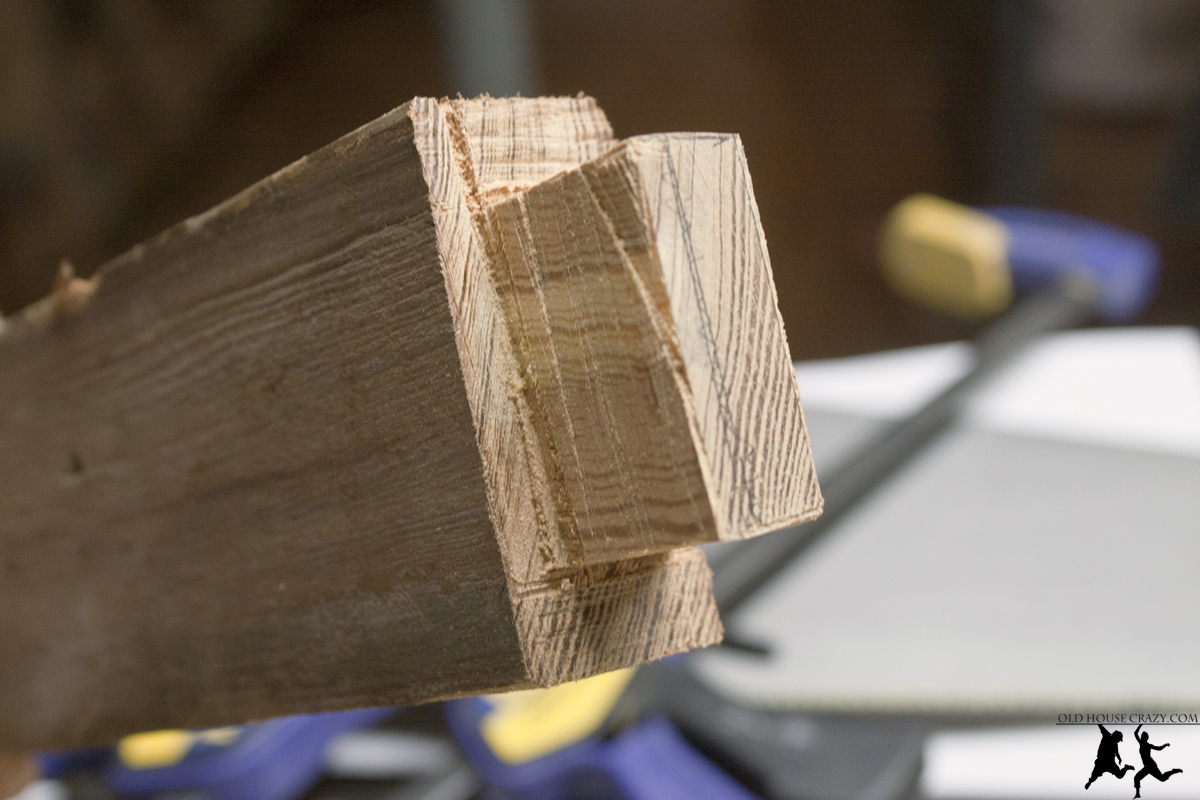
A mortise and tenon joint involves cutting a slot, or mortise, in the leg. You then cut down the apron so that the end is smaller than the rest of the board and is sized to fit into the mortise. This is the tenon. By using this joint, you greatly increase the surface area of contact between the two table parts. This allows you to apply glue to a greater area and strengthen the bond between the parts. This joint never loosens or wobbles (if properly constructed).

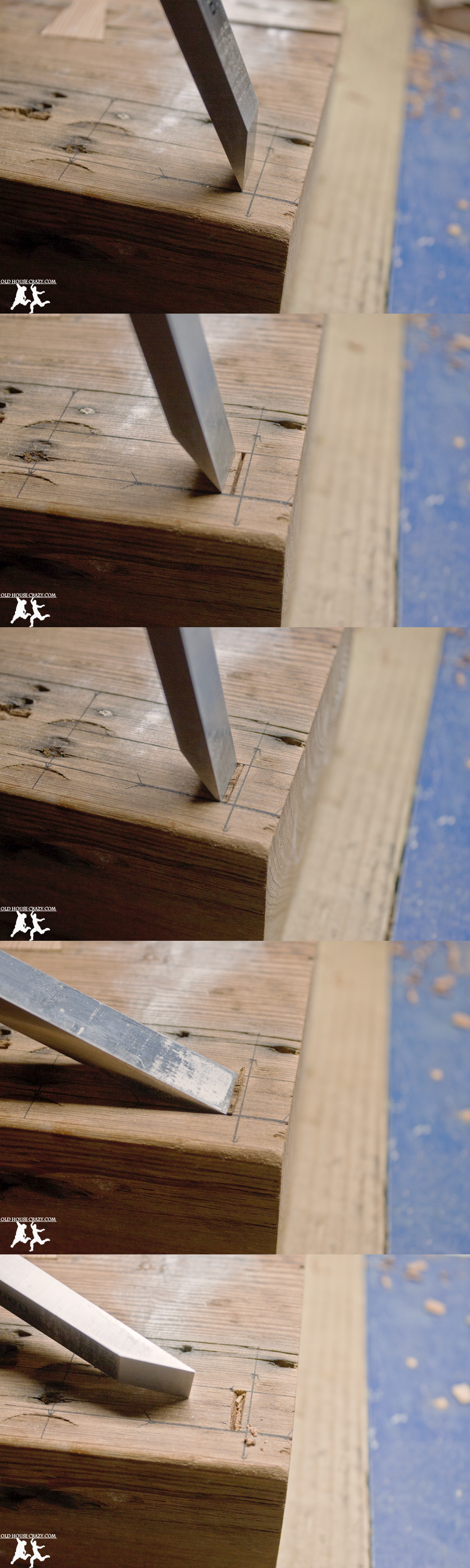
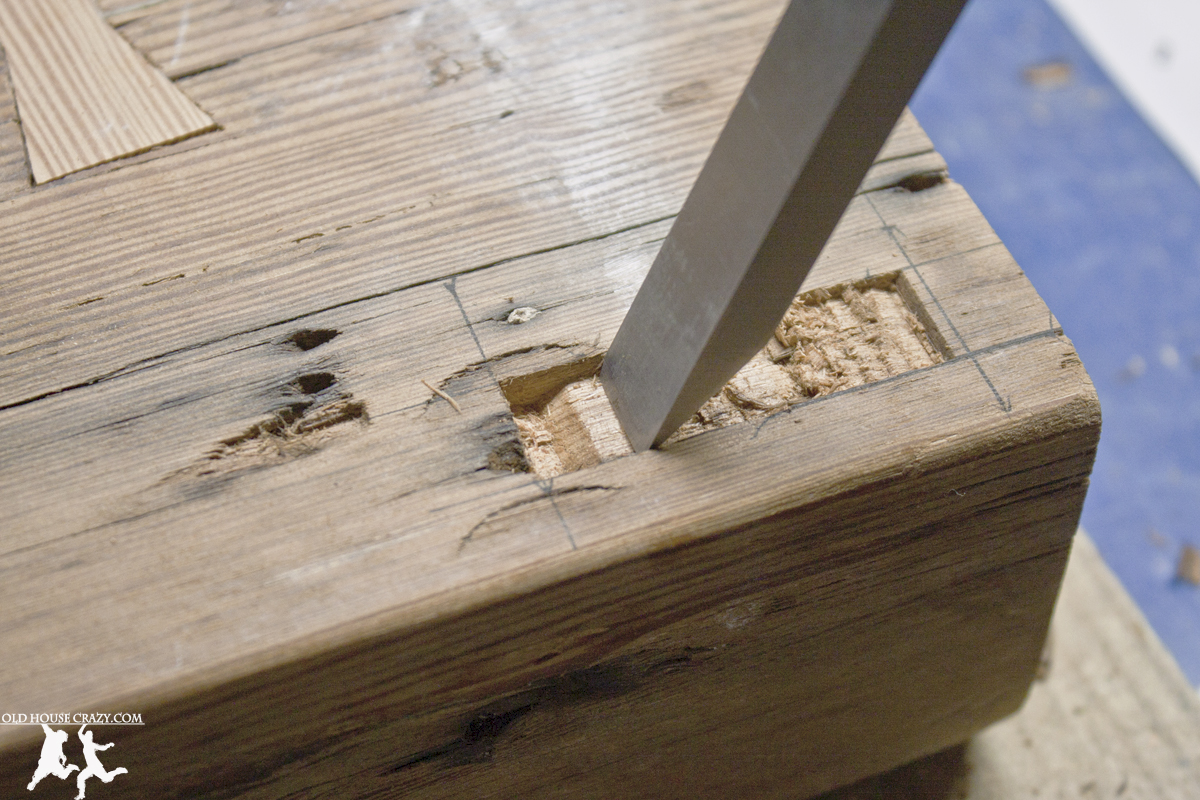
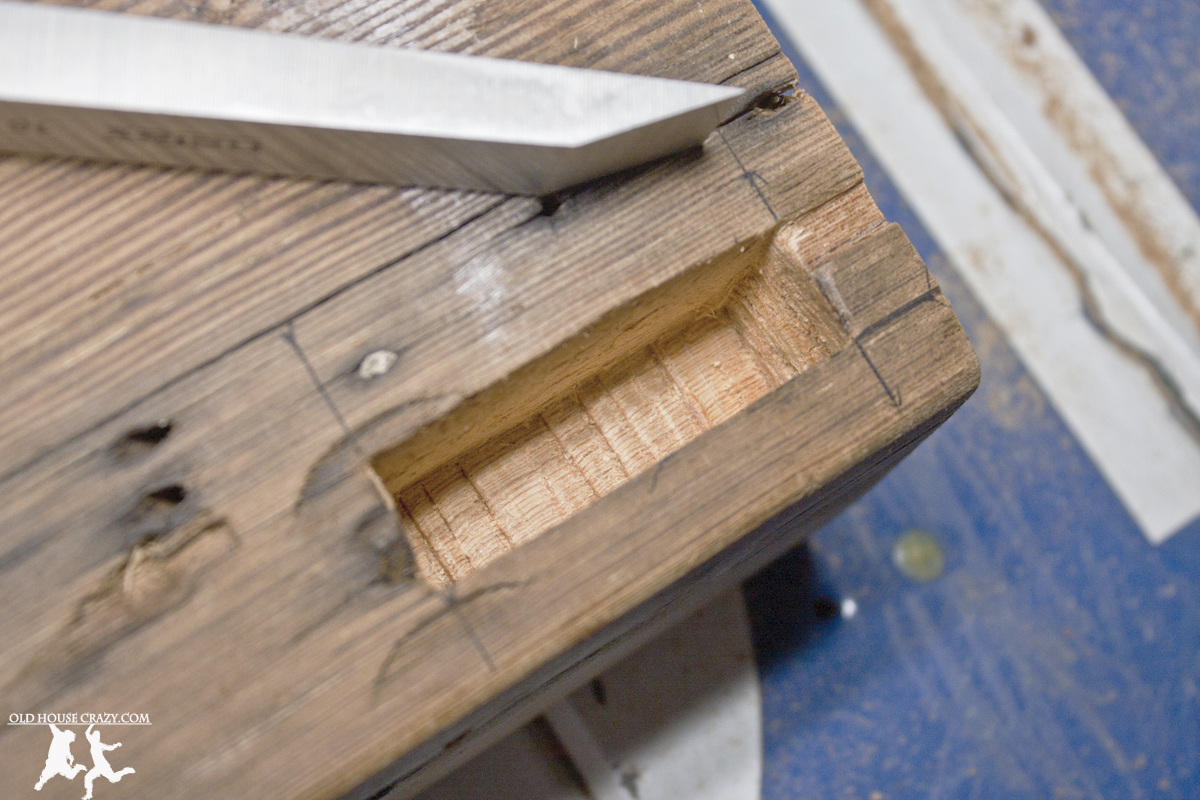
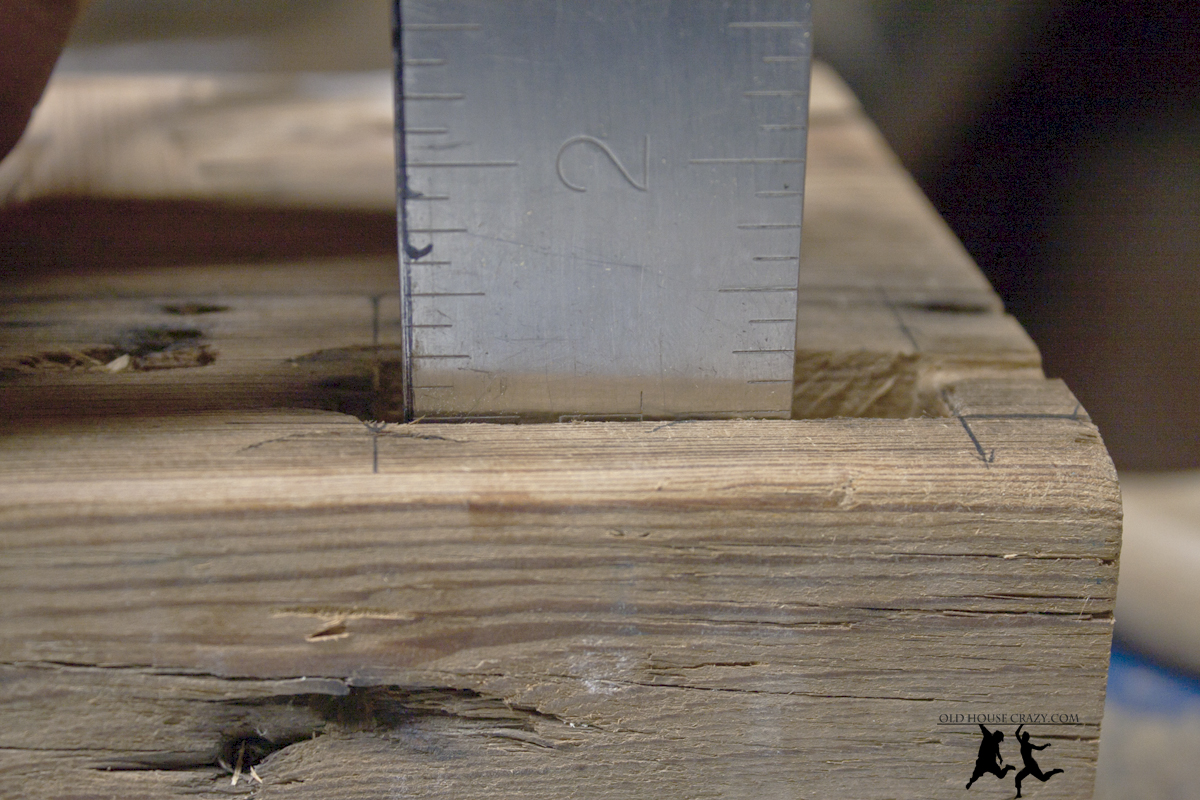
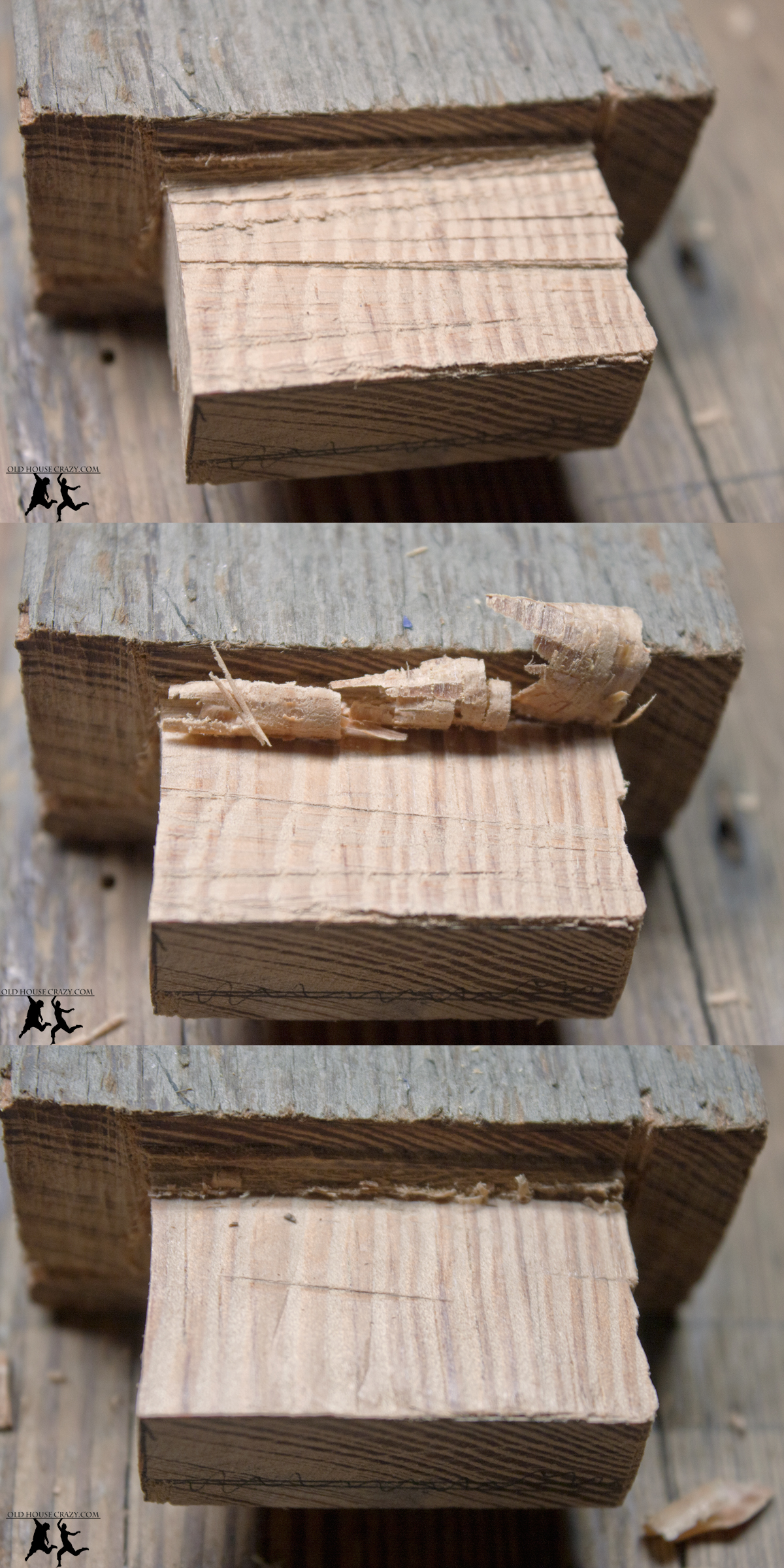
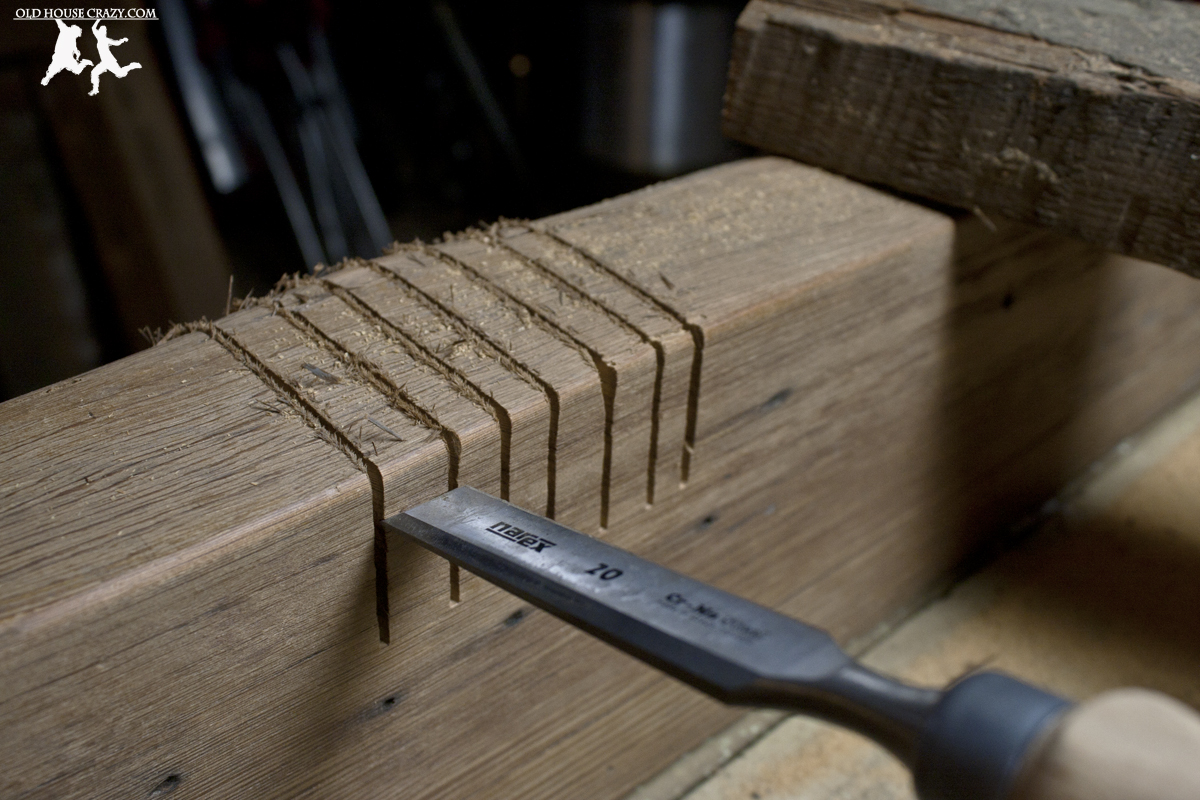
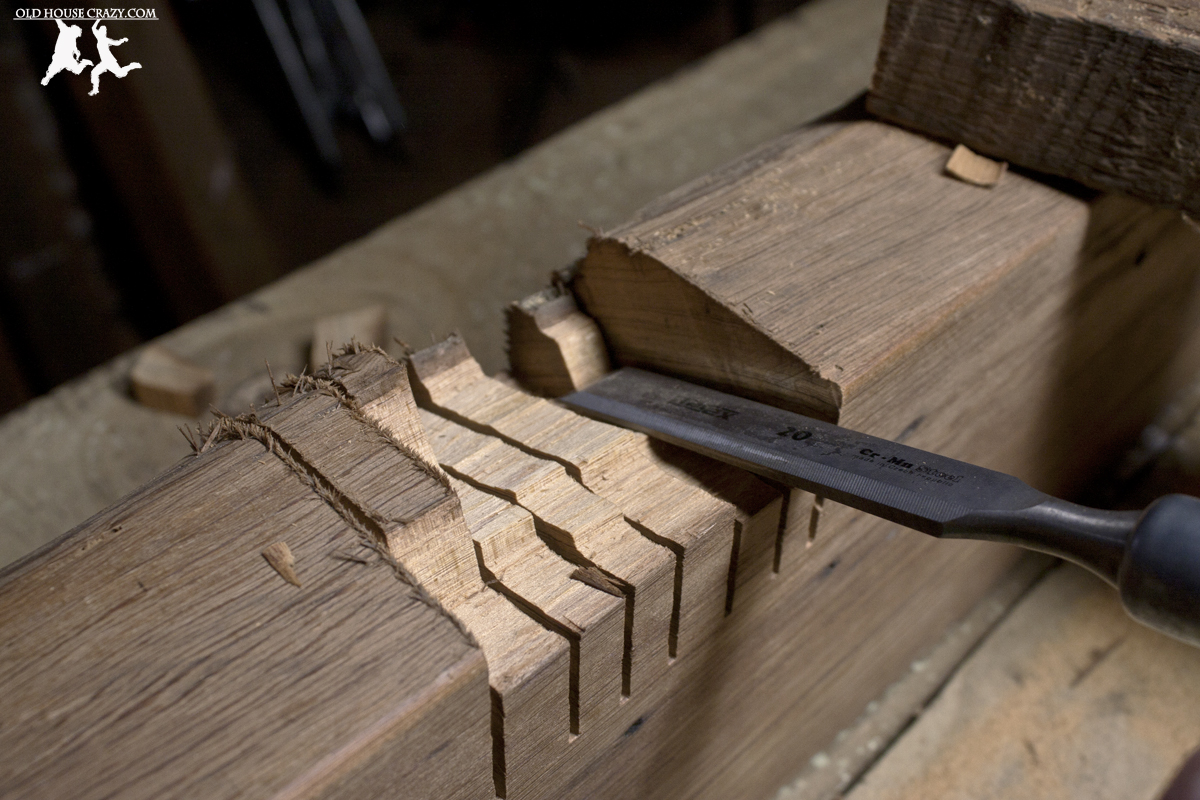
If you scroll up a bit, you can see a series of five photos that illustrate the method I used to cut the eight mortises for this table. I purchased a mortising chisel that was exactly the width of the mortises I wanted to cut. After marking the location for a mortise, I placed the chisel just inside the area I wanted to remove. A swift strike with my rubber hammer cut a groove in the surface of the wood. I then moved the chisel about an eighth of an inch further along and struck it with the mallet again. By leveraging the chisel I removed a tiny bit of scrap wood. I continued this pattern until I reached the end of the mortise. Then, I turned around and went in the other direction.

I repeated this process until I had dug out an inch-deep mortise. The mortising chisel is incredible at creating a mortise that is perfectly straight-sided.

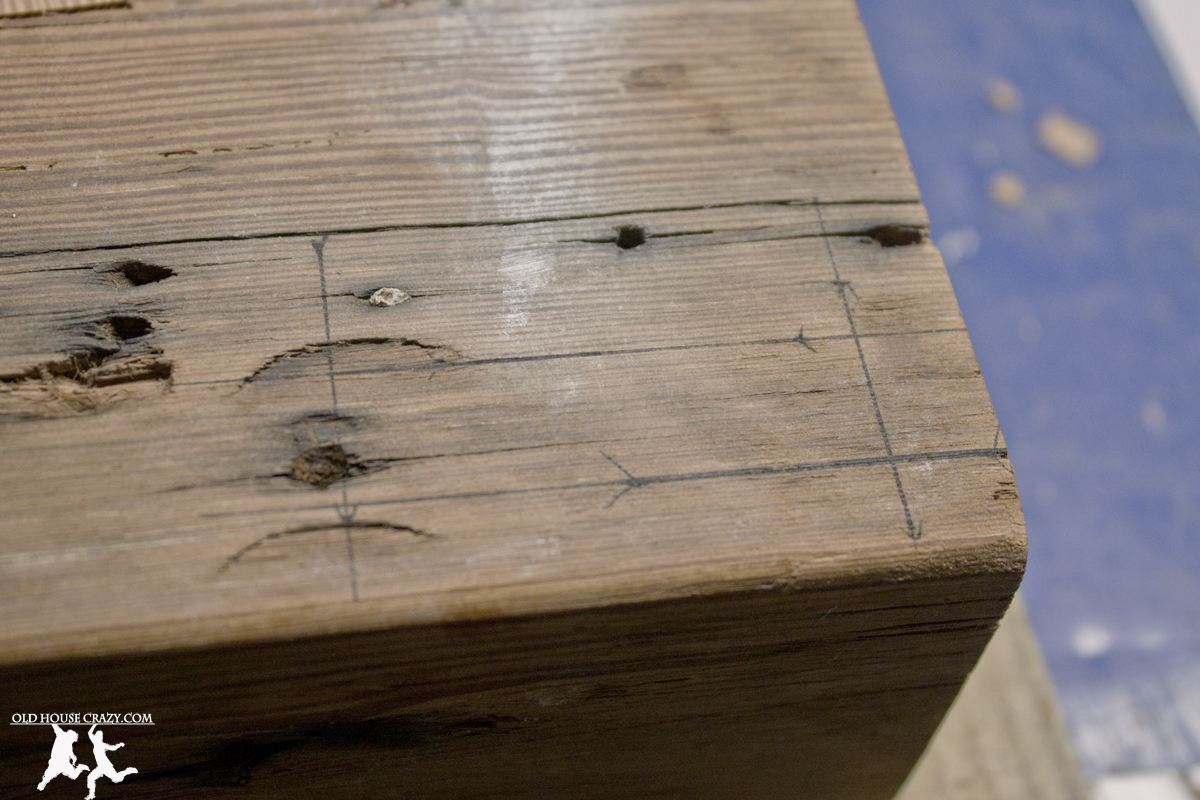
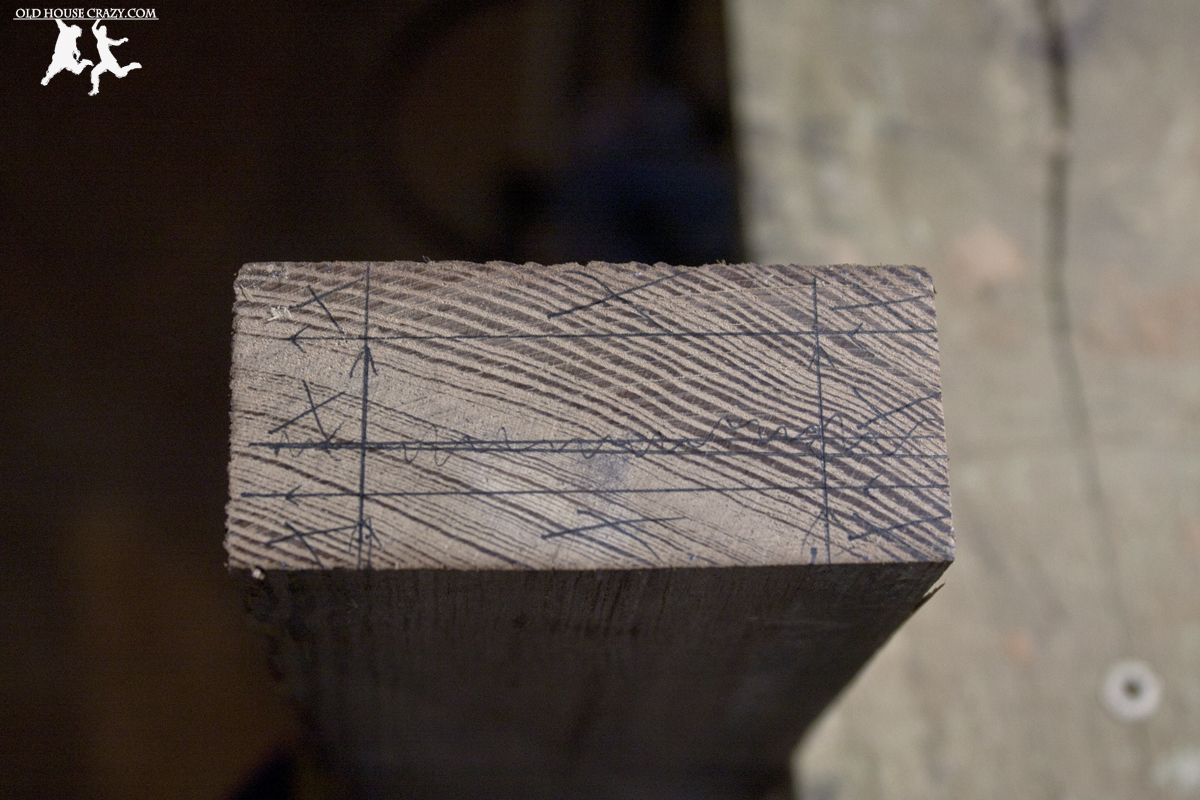
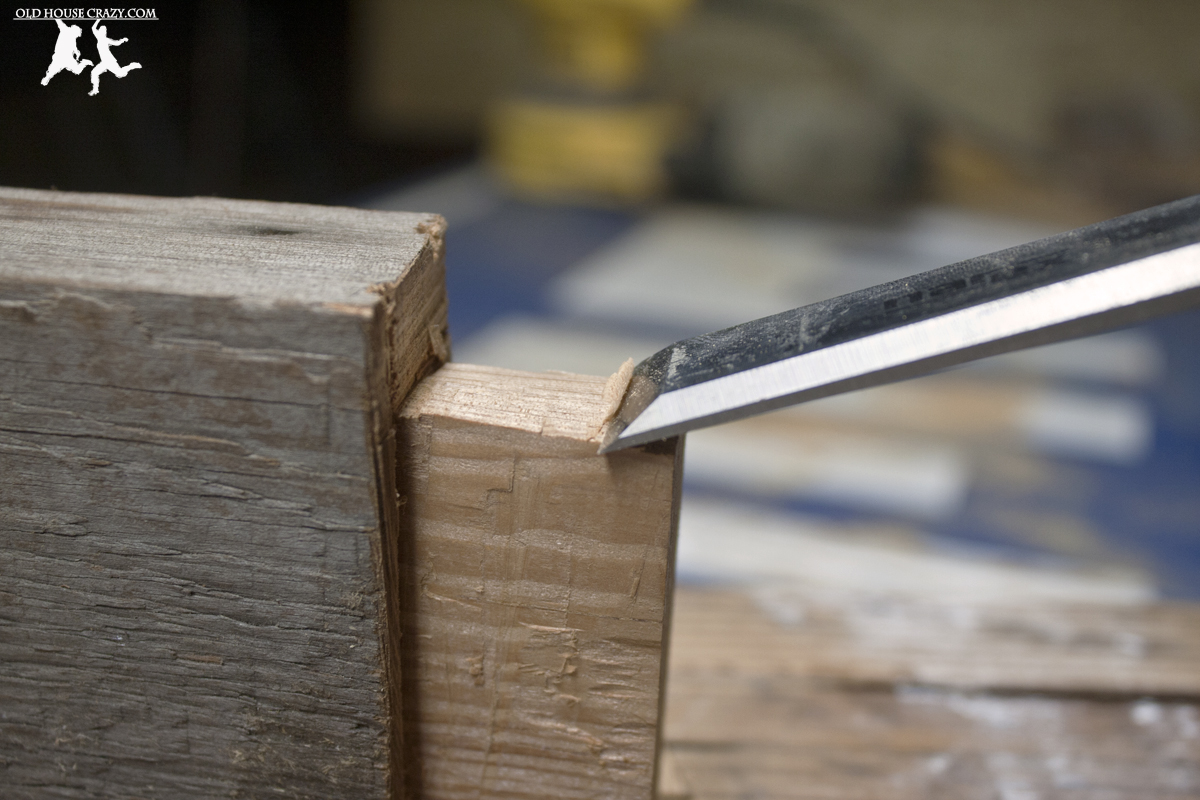
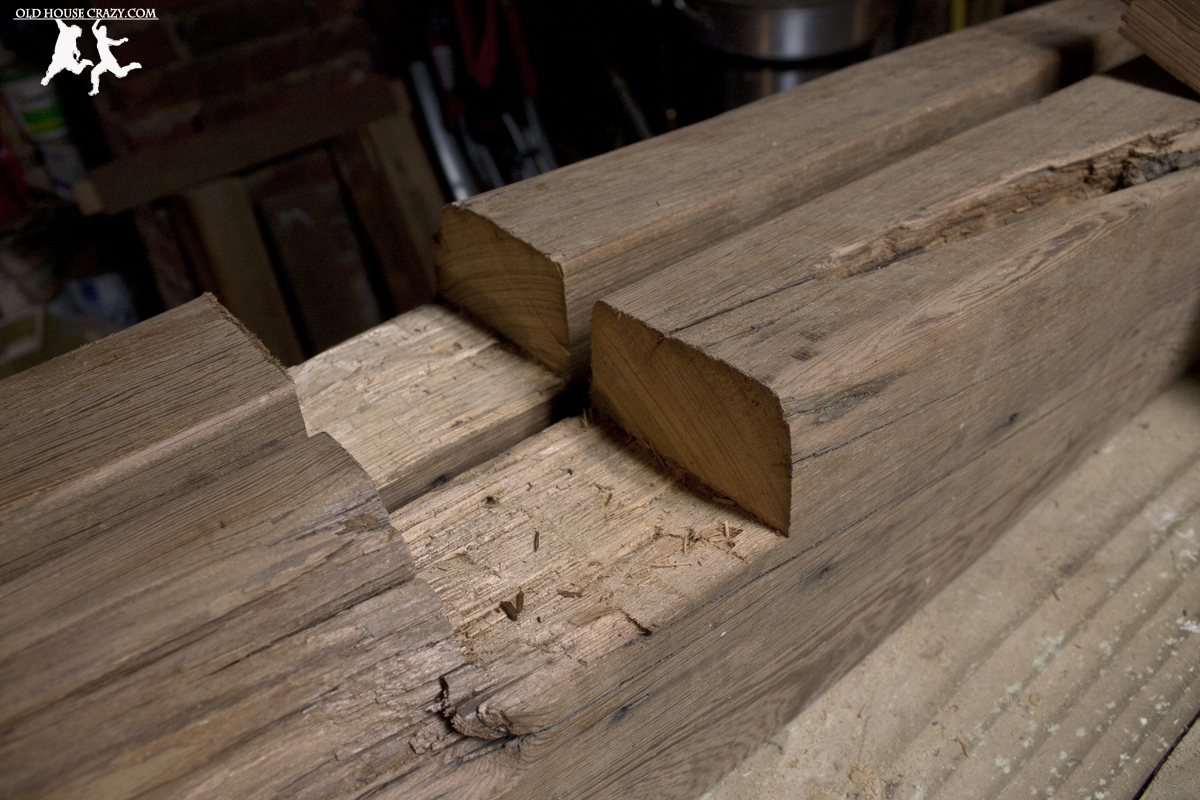
It’s important to note that I cut each mortise before I cut the tenons. Think about this for a second. It’s much easier to make a tenon smaller than it is to make a hole smaller. It is for this reason that I purposely cut the tenons too big by at least 1/8th of an inch in both directions. You can see in the photo above that I made a few marking errors. Measure three times, check twice, cut once.

I used a hand saw to cut the waste away from the tenons. It was a pain. I really wish I had a thousand dollar table saw with the workshop space to use it. But for now, by hand is all I have and it’s how people have built furniture for centuries.

Once the tenons were cut, I used a chisel to remove paper-thin pieces of wood until the tenons barely fit into the mortises. I still had to use a mallet to force the joints together, but not so hard that I couldn’t remove the tenons to apply glue.

The mortise and tenon joints that I cut for this table are not perfect, but they are still stronger than corner brackets.

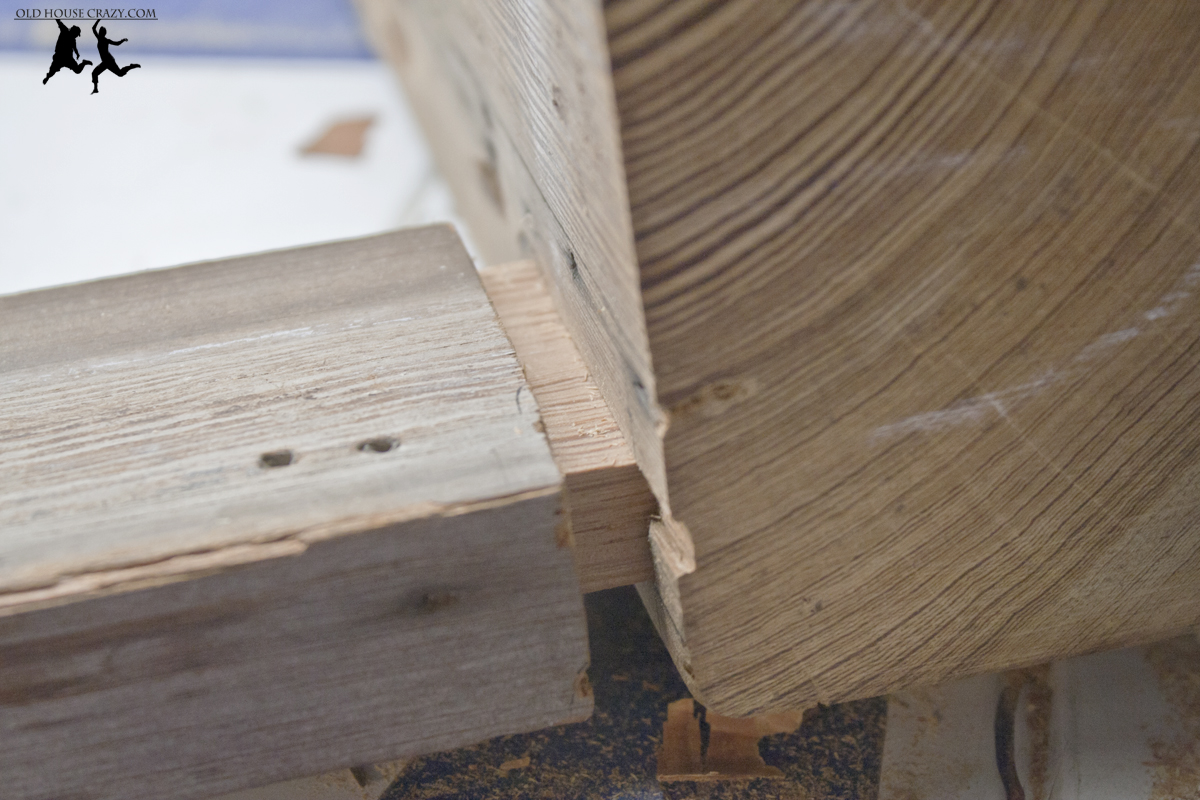
Once I had all of the mortise and tenon joints cut and adjusted, I cut large mortises for the framing boards and the stretcher that would extend between the legs of the table. I did that by cutting several grooves with the circular saw and chiseling out the waste.

I felt like I was cheating by using the circular saw, but I was le tired and needed the table done by supper club.

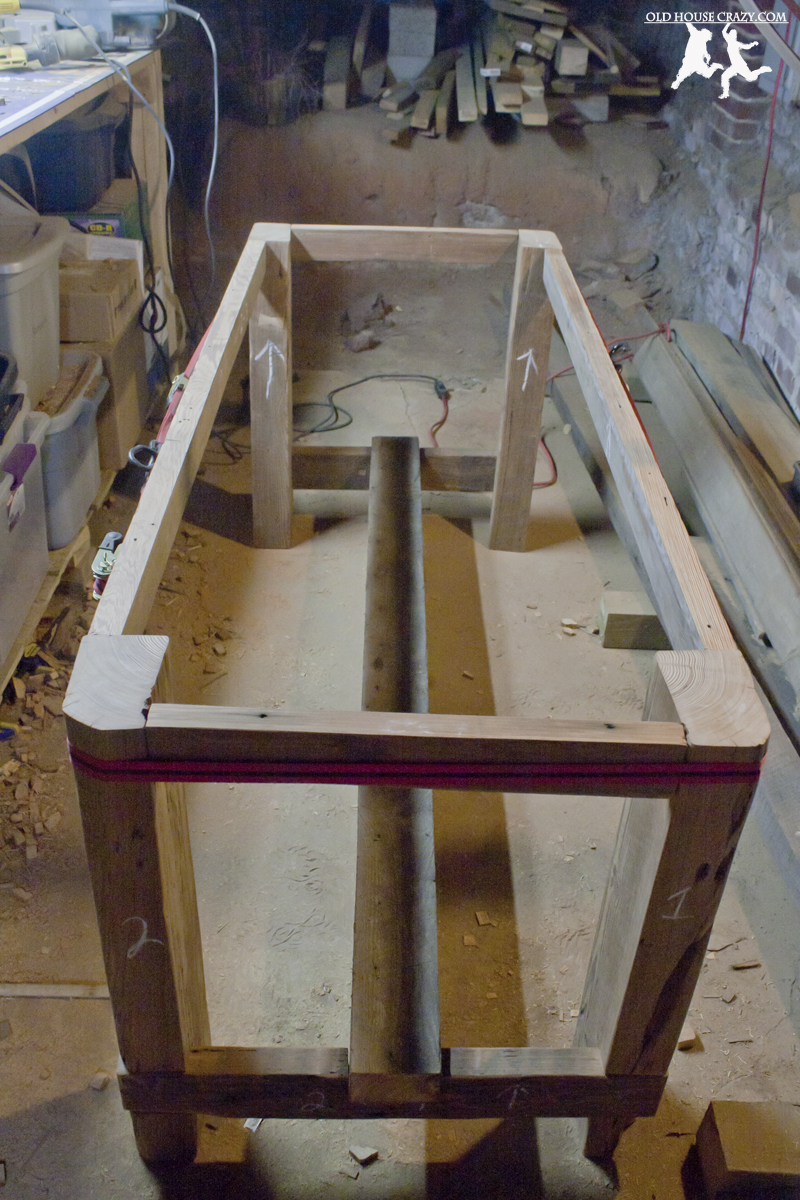
The final photo I’m including with this post shows the understructure of the table fully assembled in my crawl space laboratory/workshop. None of the joints were glued and it was held up using ratcheting tie-downs from my pickup truck. My next post will include the fully assembled table. Thanks for reading – Robby.

Posted in Better than store bought, Dining Room, DIY, Furniture, Heart Pine, Home Built, Repurposed, Tools and Techniques, Woodworking | Tagged , , , , , , , , , , , , , , | 10 Comments